

The skincare industry has a real noise problem. Walk down any beauty aisle or open TikTok on a given Tuesday and you’re met with a hundred products promising to transform your skin. It’s exhausting. New ingredients, new routines, and new anxiety every other week.
I stumbled across KraveBeauty on social media a handful of years ago, when their product line was only two or three products deep. No overwhelming routine, or ten step system. Just simple ingredients, a clear purpose, and a brand that seemed to genuinely understand that more is not always more.
What caught me first was Great Barrier Relief. The name alone told me exactly what it did and what I needed. The cherry on top was the short ingredient list that I could understand and read. This product, and therefore this brand, immediately felt safe and attainable in a space that rarely feels either.
That simplicity is not accidental. KraveBeauty was built on a single belief: that skincare should work for your skin, not against your wallet, your patience, or the planet. In a society addicted to excess, that is a radical position to take. And it turns out, it is also a brilliant marketing strategy.

Why Is Restraint a Growth Strategy?
When a DTC ecommerce brand is dropping new SKUs every few weeks, the ones before it feel a little less important. The launch becomes the marketing, not the product.

KraveBeauty built their entire model on the opposite belief. In a category where brands routinely drop seasonal collections and limited edition SKUs to stay relevant, the brand has intentionally maintained a capsule lineup of approximately nine products, releasing roughly one new product per year. The most telling proof point came between 2020 and 2022, when KraveBeauty launched nothing at all and still grew 250-300% year-over-year in DTC sales, by Yoo’s account.

Founder Liah Yoo has been direct about why. “When I saw the skincare space exploding with so many trend-driven and unnecessary products, I said, let’s slow down.” Not because the market told her to, but because it was the right thing to do for the customer and the planet.
That decision reveals something most brands won’t admit: loyalty built on substance outlasts loyalty built on novelty. When your product line is small and intentional, every product has to earn its place and keep earning it. No new launch to redirect attention or generate more quick revenue. Just the product, and whether it actually works.
In a market addicted to more, doing less on purpose is its own kind of radical. And that kind of conviction comes from the person who built the brand.
When the Founder Is the Brand
There is a difference between a founder who markets a brand and a founder who is the brand. Liah Yoo is the latter.
Before KraveBeauty existed, Liah had spent years documenting her own skin struggles as someone genuinely trying to figure it out. She built her following by being honest about what worked and what didn’t. When she eventually launched a product, her audience didn’t need convincing. They had watched her get there and trusted her.
That trust shows up in how KraveBeauty communicates even when they’re not selling anything. The KAB Lab content series breaks down product ingredients and their purpose not to impress, but to educate. The brand doesn’t ask customers to trust the formula, it explains exactly why the formula works. To me, KraveBeauty operates on three pillars: simple, scientific, and sustainable. And unlike most brands that plaster generic values on an about page, you can trace each one back to every product, every ingredient decision, and every piece of content they put out.
Most skincare brands benefit from keeping you slightly confused. Another product for another concern, another step you didn’t know you needed. KAB Lab does the opposite, it teaches you enough to make your own decisions, which sounds like a bad business model until you realize that customers who actually understand what they’re buying are the most loyal ones you’ll ever have.
This is what separates KraveBeauty from the wave of influencer-founded beauty brands. Liah didn’t build an audience and then find a product to sell them. She lived the problem, found the solution, and built the brand from there. The community and credibility came first, the product came after.
And that same values-first thinking extends beyond content and product, leading all the way to the supply chain.
Sustainability Isn’t a Page on Their Website
When KraveBeauty’s tamanu oil supplier discontinued the ingredient without explanation, most brands would have found another distributor and moved on. KraveBeauty went directly to the source, partnering with Women’s Earth Alliance to work with a farming community in Indonesia, gaining full visibility into how the oil is grown, harvested, and processed, expected to help women tamanu farmers achieve a more than 50% increase in income.
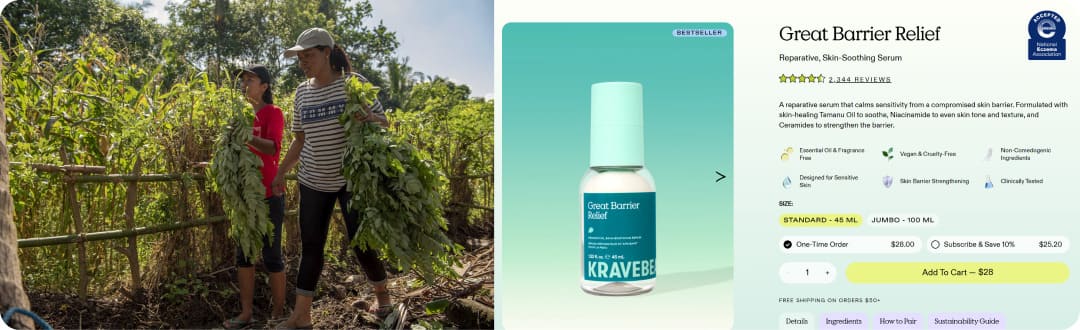
That’s not a sustainability initiative. That’s what sustainability actually looks like when it’s built into how a brand operates rather than how it markets itself.
The beauty industry has a greenwashing problem. Recyclable packaging here, a vague “clean ingredients” claim there, a pledge that sounds good in a press release but doesn’t survive much scrutiny. KraveBeauty, though:
- Holds Climate Neutral and Plastic Neutral certifications
- Is a member of 1% for the Planet
- Became a Certified B Corporation in 2024
Liah launched Press Reset Ventures, a $1 million fund financed from KraveBeauty’s own profits, to invest in other sustainable beauty brands. Even the limited product line is a sustainability decision itself. Fewer SKUs means less packaging, less waste, less of everything the industry defaults to more of.
Sustainability is one of the most abused words in beauty marketing. KraveBeauty is one of the few brands that has actually earned the right to use it.
Fortunately, the same transparency that runs through their sourcing decisions shows up even stronger in how they treat their consumers.
The Brand That Gives Its Community a Seat at the Table
Of everything I’ve observed about KraveBeauty, the way they treat their community is what stands out most to me. Not because they post consistently or respond to comments, but because their community has a genuine seat at the table.
When customer feedback signaled that Oil La La, their viral acne serum and bestseller, wasn’t performing the way it should, KraveBeauty pulled it from their site entirely. They went back to the lab, simplified the formula, made it more stable and heat resistant, and came back with Oil La La 2.0. Their own words: “We lost out on a lot of money because of this decision and we’d do it again.” That’s not reputation management, it’s a brand that actually listens to its community.
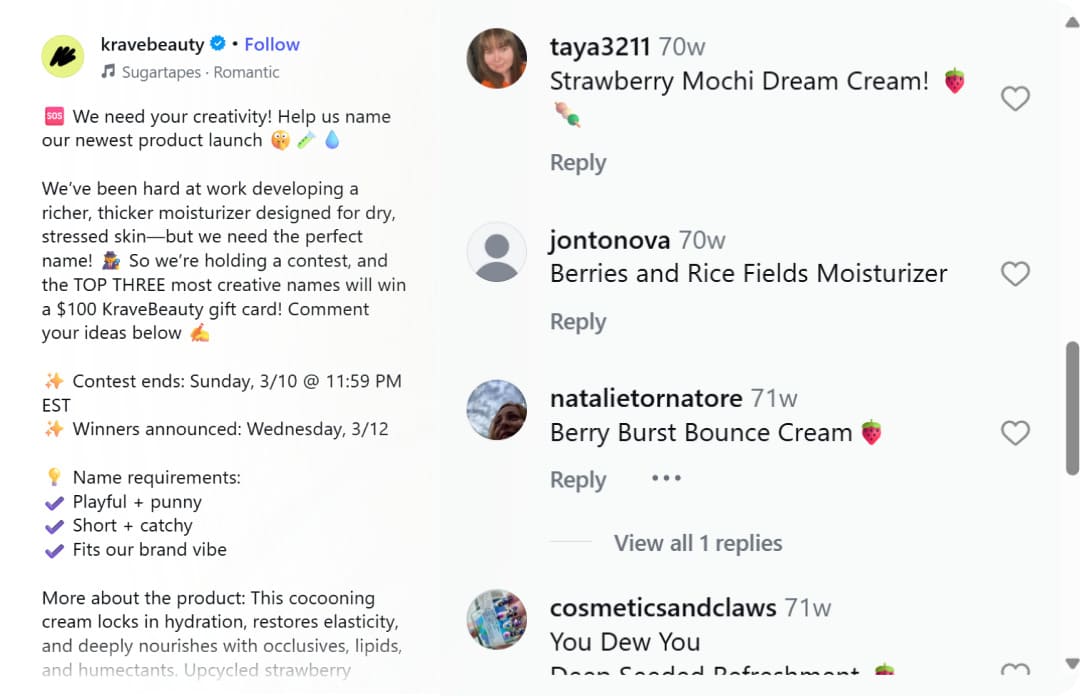
And it shows up in the fun moments too. When KraveBeauty was developing a new moisturizer for dry, stressed skin, they didn’t do it on their own. They posted on social media and asked their community to name it, giving followers the brand criteria and a real shot at winning a gift card. It sounds simple but it’s actually a sophisticated brand move; when a customer has a hand in naming your product, they have a stake in its success before it even launches.
At the core of it, people want to feel seen, included, and like their opinion actually matters. KraveBeauty understands that better than most brands.
What Can Brands Learn From KraveBeauty?
KraveBeauty proves that the strongest brand strategies are built on conviction. A clear point of view, products that genuinely earn trust, and a community that feels like it actually matters; these are the inputs that make every dollar of media spend work harder.
That’s the real lesson for brands with budget. Paid social can find your audience at scale and it can put your product in front of the right person at the right moment. But it can’t manufacture the reason they should care, that part has to already exist.
When I first stumbled across Great Barrier Relief, no ad told me to trust it. The product did, its simplicity did. It gave me a feeling that this brand actually understood what I needed at that moment. In a space that keeps getting louder, KraveBeauty chose a different frequency and somehow, that’s exactly how they got heard.
KraveBeauty Marketing: Frequently Asked Questions
What is KraveBeauty’s marketing strategy?
KraveBeauty markets through conviction rather than launch cadence: a capsule line of roughly nine products, founder-led education through Liah Yoo’s content and the KAB Lab series, sustainability built into sourcing and operations, and community co-creation. The product and values do the persuading, which makes paid media more efficient rather than replacing it.
Who founded KraveBeauty?
KraveBeauty was founded by Liah Yoo, a skincare content creator who spent years publicly documenting her own skin struggles before launching the brand. Because her audience watched her test what worked firsthand, the brand launched with pre-built trust rather than needing to manufacture it through advertising.
Why does KraveBeauty release so few products?
Intentional restraint. Rather than chasing seasonal drops, KraveBeauty maintains a capsule lineup and releases roughly one product per year, and between 2020 and 2022 launched nothing at all while growing 250% year over year. Fewer SKUs also means less packaging and waste, making the small line a sustainability decision too.
Is KraveBeauty actually sustainable?
Its claims are unusually verifiable: the brand holds Climate Neutral and Plastic Neutral certifications, belongs to 1% for the Planet, and became a Certified B Corporation in 2024. It also sources tamanu oil directly through a Women’s Earth Alliance farming partnership in Indonesia and funds other sustainable beauty brands through Press Reset Ventures.
What is Great Barrier Relief?
Great Barrier Relief is KraveBeauty’s barrier-repair treatment and one of its signature products, built around a short, readable ingredient list including directly sourced tamanu oil. Its self-explanatory name and simple formula embody the brand’s “skincare that works for your skin, not against your wallet” positioning.