

At this point, everyone and their mother has heard of the famous indie darling that is A24. The merch, the newsletter, the vaguely cursed horror slate. But there is another studio giving A24 a run for their money and actively rewriting the rules of independent cinema. This production company just won its seventh consecutive Palme d’Or at Cannes Film Festival; a streak no distributor in the festival’s history has ever touched. That studio is Neon, and it did not get there by chasing A24’s aesthetic. It got there by refusing to play the same game as literally everyone else in the industry.
A few months before that win, Neon sold a significant stake to Department M and launched Neon TV, a quiet but consequential move for a studio that has spent nine years operating with almost no name recognition outside the industry it’s been reshaping.
The easy explanation for their success is that audiences are exhausted by algorithm-fed content and are craving something that feels handmade. That’s true, but it’s incomplete. The real story is that Neon figured out how scarcity and platform architecture actually work together right now, and most of the industry is still building strategy for a version of the internet that no longer exists.
What Is Neon Film Studio?
Neon is an independent film distribution and production studio founded in 2017 by Tom Quinn, a distribution veteran who had previously run boutique labels including Radius and Magnolia. The company is based in Santa Monica and backed by Dan Friedkin’s investment vehicle 30West, part of the broader Friedkin Group. Despite its outsized influence on festival cinema, Neon has stayed lean by design, buying finished films rather than financing large slates and building focused theatrical and awards campaigns around each acquisition.
Neon’s model sits opposite the one most of the industry automated a decade ago. Instead of running acquisitions through test screenings, comp data, and audience prediction software, Quinn has spoken openly about targeting the scripts other distributors consider too risky to touch: material that has no comparable box office, no obvious commercial hook, and no data trail to justify the buy. Neon acquires in the early stages before that data can be produced. Their acquisition framework prioritizes human intuition within a landscape that has largely sought to automate the creative greenlight process out of existence.

Why Does Neon Keep Winning the Palme d’Or?
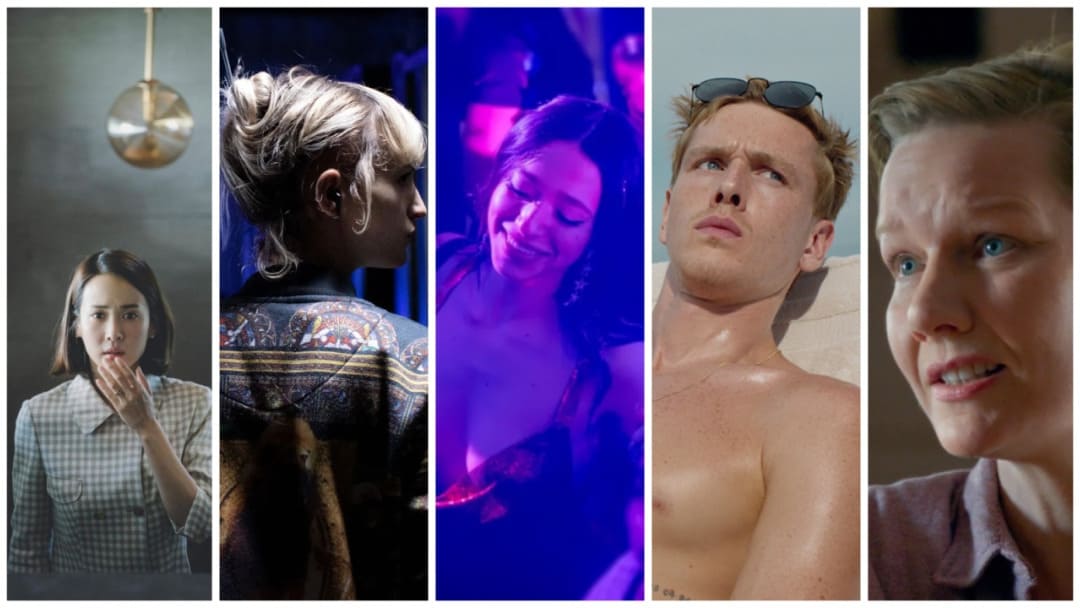
Neon has now backed seven consecutive Palme d’Or winners at Cannes: Bong Joon Ho’s “Parasite” in 2019, Julia Ducournau’s “Titane” in 2021, Ruben Östlund’s “Triangle of Sadness” in 2022, Justine Triet’s “Anatomy of a Fall” in 2023, Sean Baker’s “Anora” in 2024, Jafar Panahi’s “It Was Just an Accident” in 2025, and Cristian Mungiu’s “Fjord” in 2026. No other North American distributor has come close to that run, and no distributor of any nationality has ever strung together seven straight wins at Cannes before.
The mechanics behind the streak are less mysterious than the result suggests. Neon arrives at Cannes with deals already locked in on a slate of competition films before the jury has seen a frame, sometimes six or seven titles deep in a single year. Rather than a singular wager on a title, this represents a portfolio strategy applied to a festival environment that most distributors approach with an all-or-nothing mentality.
Quinn has said the studio specifically targets films other distributors consider too commercially uncertain to acquire: heavily subtitled, tonally difficult, built around a director’s vision rather than a marketable premise. He buys those films before test screenings, comparable box office data, and before anyone else can talk him out of it. It’s precisely what a recommendation algorithm or audience-testing model is built to prevent. This level of taste defies automation; it requires consistent, high-stakes bets, and letting the track record speak for itself.
The real benefit of this approach is the compounding effect it creates over time.
What Is Neon’s Most Successful Film?
By pure box office, “Longlegs” is Neon’s biggest commercial breakout, grossing over $100 million globally against a release budget of under $10 million. But measured by prestige and industry validation, the studio’s most successful bets are “Parasite” and “Anora,” the two Palme d’Or winners in Neon’s streak that went on to also win Best Picture at the Academy Awards, a crossover from festival darling to mainstream Oscar winner that specialty distributors rarely pull off.
In nine years, Neon has amassed 57 Oscar nominations, was named The Hollywood Reporter’s Independent Studio of the Year in 2024, and took home the Clio Award for Studio of the Year that same year. This enduring consistency defines the studio’s true competitive advantage: a portfolio of excellence where success is measured by the sustained caliber of the entire slate, rather than the performance of any single breakout title.
How Is Neon Different From A24?
The comparison is inevitable given how both studios occupy the specialty distribution space, but the strategies diverge sharply. A24 built a brand around a recognizable aesthetic sensibility and a merchandising engine that turns fans into a built-in audience before a film even opens.
Neon has built its identity around acquisition discipline and Cannes dominance instead, betting on directors and festival pedigree over a consistent visual brand. Where A24 markets the studio itself as a lifestyle signifier, Neon has largely let the films and their awards trajectories do that work, staying deliberately under the radar until a specific release, like Longlegs, forces a spotlight onto the marketing team itself.
What Is “Longlegs,” and How Did Neon Market It?
“Longlegs” is a 2024 horror film directed by Osgood Perkins, starring Maika Monroe as an FBI agent hunting a killer played by Nicolas Cage. It is the case study every marketer studying Neon eventually lands on, and for good reason.
The film’s entire release budget, covering creative, media, theatrical, and publicity, ran just under $10 million. It opened to $22.6 million domestically and went on to gross over $100 million globally, making it the highest-grossing independent film of that year and Neon’s second-highest earner behind “Parasite.”
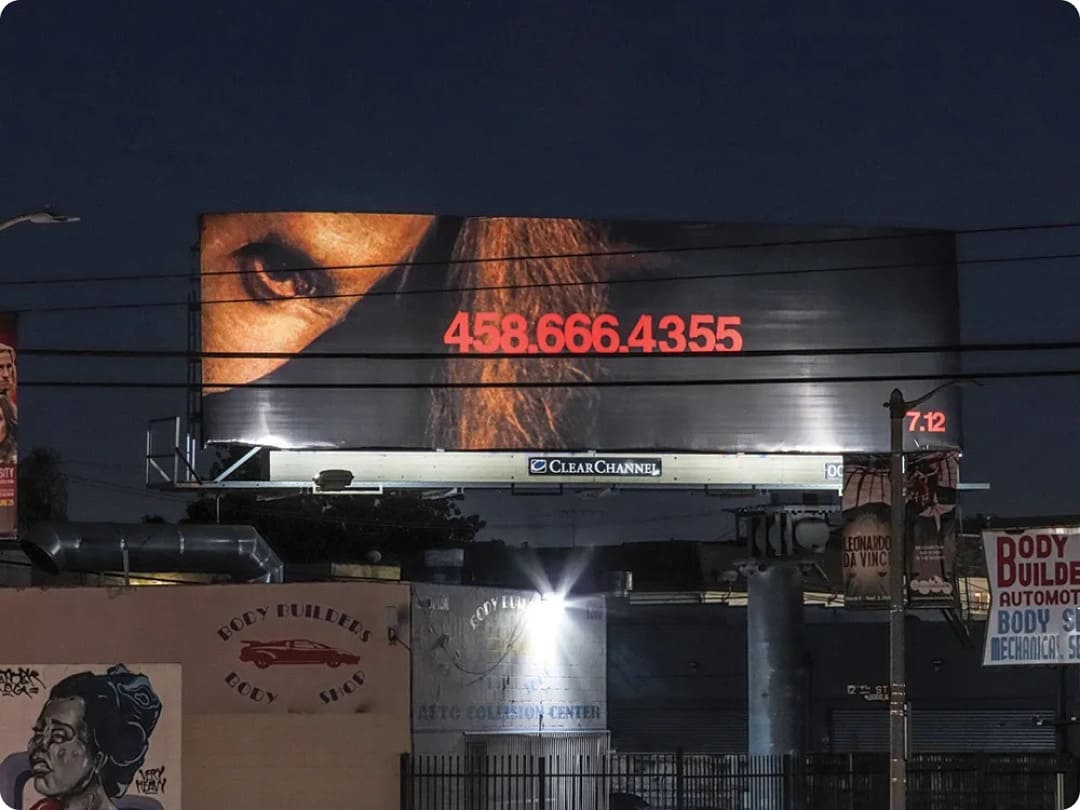
Neon’s marketing lead at the time, Christian Parkes, was candid about the thinking behind it. An earlier, more conventional trailer cut existed and was scrapped. In its place, the team ran a deliberately sparse campaign: billboards on cheaper stretches of LA’s La Brea Avenue, priced at roughly $7,000 rather than the $250,000 a Sunset Boulevard placement would cost, cropped to show only a sliver of Cage’s face or a single eye. One billboard carried nothing but a phone number, which connected callers to a recorded, in-character message from Cage. That single billboard alone generated more than 1.4 million calls from 68 countries.
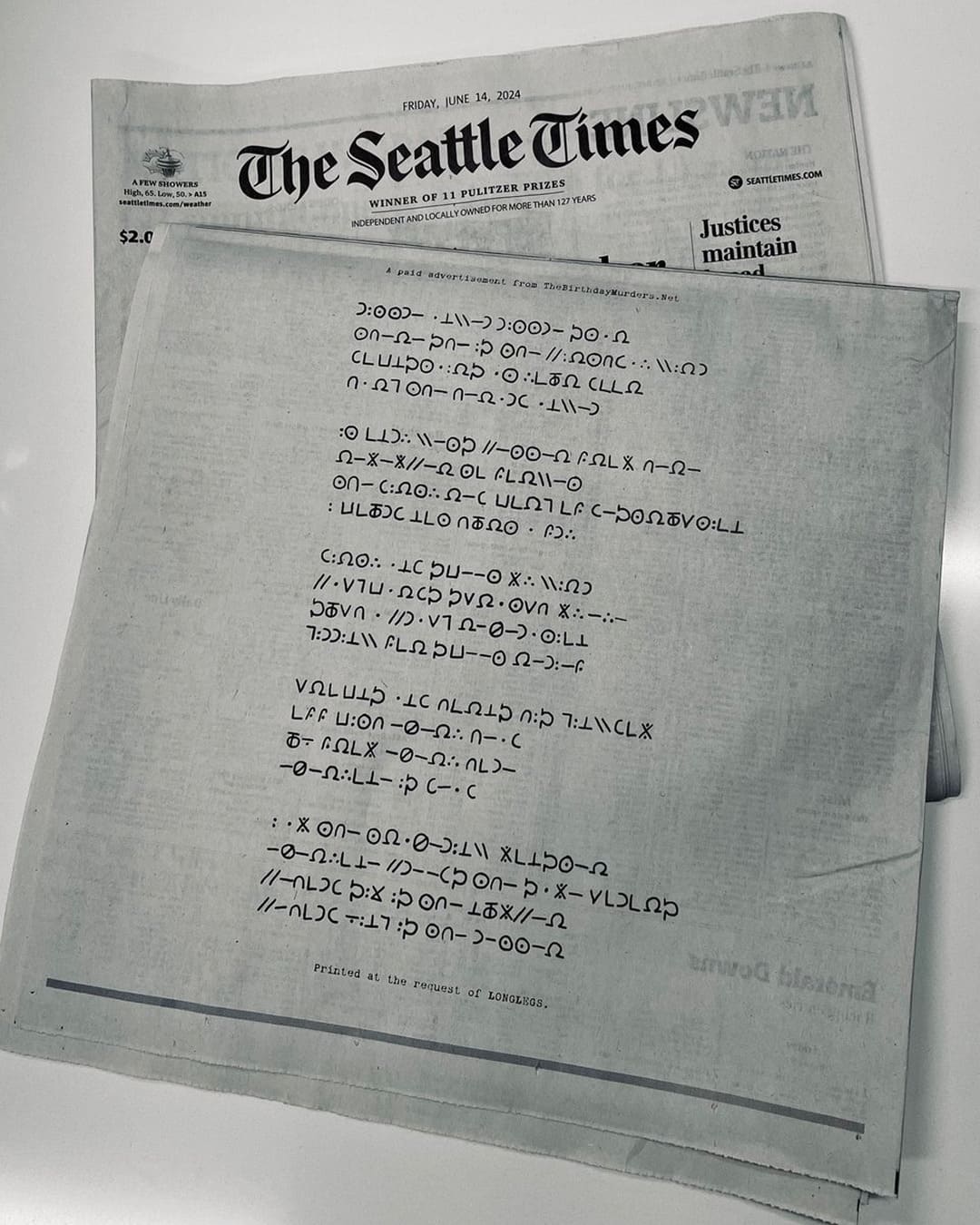
Parkes has pointed directly to “Jaws” as the campaign’s blueprint: the reason the shark works is that you barely see it. Neon applied the same logic to Cage. Alongside the billboards, the team took out a Zodiac Killer-style cryptic ad in the San Francisco Chronicle, closing with the line “printed at the request of Longlegs,” a direct nod to the real Zodiac’s demands of that same paper decades earlier.
None of this would have worked the same way twenty years ago. A phone number on a billboard and a cryptic newspaper ad used to stay contained within the format that ran them. Today, TikTok and Reddit turn a single breadcrumb into a fully crowdsourced investigation within hours. Neon didn’t invent the mystery-box marketing playbook, but it understood that the discovery infrastructure underneath it had changed completely, and it built the entire campaign around that shift rather than around the film’s stars.
The Platforms Powering the Indie Film Renaissance
Neon’s strategy doesn’t exist in a vacuum; it’s anchored by an entire ecosystem of platforms that have reshaped how niche cinema is discovered, discussed, and monetized. This shift effectively transfers the burden of curation from traditional marketing budgets to the organic behaviors of the audience.
MUBI offers the most compelling parallel. The arthouse streaming service and distributor was recently valued at $1 billion following a $100 million raise. The platform focuses on reaching the specific global audience already primed to consume it. This presents a fundamentally different unit economics challenge than the one traditional studio marketing was built to solve, and it is one MUBI has leveraged to build a uniquely resilient, almost “own-goal-proof” business model.

Letterboxd has done something similar for film criticism, turning what used to be a passive review into a social feed. A film’s cultural standing now gets built through ranked lists, reviews, and diary entries from other viewers, not through a studio’s press push.
Layer in director-specific Discord servers and Substack newsletters doing the ongoing fandom work that mailed fan clubs used to handle, plus aggregator and smart-link tools letting a small studio manage theatrical, streaming, and direct-to-consumer distribution without six separate vendor relationships, and you have an entirely new distribution architecture. Neon didn’t invent this distribution architecture; they were simply the first studio disciplined enough to architect a winning strategy upon its foundation.
What Is Department M, and Why Did Neon Sell a Stake to Them?
In July 2026, Neon closed a deal selling a significant stake to Department M, a production company founded in 2024 by Mike Larocca and Michael Schaefer. As part of the transaction, Schaefer became Neon’s chief content officer while Larocca joined Neon’s board, remaining at Department M. The deal brought in growth capital and gave Neon the resources to launch Neon TV, its first push into owned television production rather than pure acquisition and distribution. Tom Quinn remains CEO, and the Friedkin Group remains a significant shareholder and board member.
What Is Neon TV, and Does Neon Do Streaming?
Neon TV is the studio’s new television division, formed as part of the Department M deal and led by EVP of Television Carina Sposato, an Emmy winner for producing Netflix’s “Adolescence.” It marks Neon’s shift from being purely a curator and distributor of finished festival films into an owned content pipeline, similar to the move streaming platforms made roughly a decade ago when they stopped licensing back catalogs and started producing originals. Neon spent seven years converting curatorial trust into a recognizable brand. Now it’s converting that brand into an owned production business.
What Is Neon’s Upcoming Slate, and What Has Neon Acquired?
Neon arrived at Cannes 2026 with pre-festival deals already in place on six of the competition’s films, including eventual Palme d’Or winner “Fjord,” along with “All of a Sudden,” “Hope,” “Paper Tiger,” “Sheep in the Box,” and “The Unknown.” Backing roughly a quarter of the main competition slate at the world’s most prestigious festival is not the move of a scrappy boutique label anymore. This is the move of a studio that has effectively graduated to mini-major status while keeping the acquisition instincts that got it there.
What Scarcity Means Now
The internet was supposed to kill scarcity. Infinite shelf space, infinite content, everything available all the time, forever. Instead, infinite content made curation the actual scarce resource, and the brands that understood that first are the ones currently winning.
Withholding a trailer isn’t nostalgia for old-school mystique. Backing a script nobody else wants isn’t just gut instinct performed for its own sake. Both are rational responses to an ecosystem where information is free and attention is not. Neon isn’t succeeding despite being small and selective. It’s succeeding because being small and selective is a compelling strategy now, while studios still optimizing for reach instead of restraint are solving a distribution problem that algorithms already solved for free.