

We all have that one friend who swears they “didn’t need to go to film school to do an analysis”… or is that just me? Letterboxd isn’t a “new” thing at this point (in fact, it’s been around for 15 years), but I truly think its rise began during the COVID lockdown. Those who weren’t baking sourdough or learning TikTok dances decided to become film buffs. And since we couldn’t get together in person and discuss our thoughts, we (yes, we) turned to the little digital film diaries on our screens.
Before we dig into the meat and potatoes of how Letterboxd marketing works, how marketing on Letterboxd works, and my analysis of why it does (or doesn’t, no spoilers yet) work, let’s start from the beginning.
When & How Was Letterboxd Founded?
Letterboxd was founded in 2011 by Matthew Buchanan and Karl von Randow. They launched the platform as an alternative to the data-driven Internet Movie Database (more lovingly known as IMDb) and the critic-focused Rotten Tomatoes. The app blew up completely during the pandemic, which just so happened to create the perfect environment for the binge-watchers and those who were generally bored to consume, consume, and consume some more media.
But let’s zoom in on the growth story between Letterboxd’s 2011 founding and its 2020 explosion. Letterboxd launched to the public in 2013 and spent years as a passion project for hardcore cinephiles; in early 2020, it had just 1.7 million users.
Then, rather than peaking and fading like so many lockdown-era apps did, Letterboxd kept growing:
|
Year / Milestone |
Registered Members |
YoY Growth |
|---|---|---|
|
Jan 2020 (pre-pandemic) |
1.7M |
– |
|
Jan 2021 |
3M |
+76% |
|
Dec 2021 |
4.1M |
+37% |
|
Sep 2023 (10M milestone) |
10M |
~+144% |
|
Dec 2023 |
11.4M |
+14% |
|
Jun 2024 |
15M |
+32% |
|
Dec 2024 |
17M |
+49% (full year) |
|
Early 2026 (current) |
26M+ |
~+53% |
For my math-challenged friends out there, that’s a roughly 15x increase in just six years. Its controlling investor, Canadian holding company Tiny, is reportedly now exploring a sale that values it as one of digital media’s rare and genuine growth stories. The list of potential buyers? CNBC, MS NOW parent company Versant, and The Ankler.
So now that we’ve told the growth story of Letterboxd from a business lens, let’s get to the real juicy part: how Letterboxd proved that a community-first brand marketing strategy can drive real results by capturing a tapped-in audience and delivering high-quality content.
What Is the Marketing Strategy of Letterboxd?
For the platform itself, Letterboxd generates revenue through a tiered membership structure (free, Pro at $19/year, and Patron), display advertising, brand partnerships with studios and festivals, and most recently, through the Letterboxd Video Store, its new TVOD rental service (we’ll get into this one later).
But that’s not the full picture; Letterboxd has acknowledged that they remain undermonetized relative to peers, relying heavily on programmatic advertising rather than premium sponsorship deals (now that I think about it, an area its potential acquirers will likely look to develop).
But here’s the thing that I want to talk about: Letterboxd doesn’t really have a “marketing strategy” in the way that most brands think about one. There’s no paid acquisition flywheel (just some programmatic ads), no growth-hacking playbook, no major rebranding moment leading to a 180 in revenue generation that I can point to.
What it has is something a lot harder to manufacture: a product that people genuinely love, and a community that does the recruiting for them.
But if you pull back the lens a little, there are some very deliberate moves happening underneath that organic surface. Here are four reasons the Letterboxd marketing strategy actually works.
1. The Product Is the Marketing
This one often gets overlooked, but it shouldn’t. Letterboxd reviews have become their own recognizable format on the internet; the same way a Tweet (or an X post is what we’re calling them now, I guess) is clearly just that, or a Tumblr post is clearly a Tumblr post (if you know, you know).
They show up as screenshots on Reddit, as quote cards on Instagram, as content on accounts like “Letterboxd Reviews with Threatening Auras” on X (one of my personal favorites), which has built a following almost entirely out of surfacing the platform’s most unhinged one-liners. That’s free distribution Letterboxd didn’t have to buy.
Part of why the reviews spread so naturally is the interface itself. Letterboxd doesn’t feel like other social media. The films take center stage, not the people. You can follow friends and see what they’re watching, but you’re never screaming into the void the way you might be with five Instagram followers and a dream.
The app strips out the ego stakes, which paradoxically makes people more willing to post and more likely to share. Visitors often describe the platform as feeling like “vintage internet” and eagerly encourage their friends to join. The numbers bear that out:
From 1.7 million to 26 million in six years. No major paid push, no algorithm pivot, no rebrand. Just a community that kept texting the link to its friends. A new member joins every five seconds as of 2026.
And the engagement hasn’t just kept pace with that growth… It’s outrun it. Reviews written annually went from under 300,000 in 2012 to nearly 100 million by 2024. That’s a 3,300% increase, for anyone keeping score.
To recap: the product keeps people coming back, and the product keeps spreading itself.
2. It Taps Into the Psychology of Collecting (& Competing)
There’s a reason Goodreads exists. And Merlin Bird ID. And Beli. And Letterboxd. People love logging things! (or is that just me?) There’s a quiet but powerful psychological satisfaction in building a collection, tracking progress, and having a personal record of something you care about.
Letterboxd understood this early, and it built the whole experience around it.
But it goes one layer deeper than just having a place to log the movies you watch. Letterboxd subtly activates the part of your brain that wants to be the most interesting person in the room. You want your taste to stand out. You want your review to be the one someone screenshots.
That drive to differentiate (to be “the most X” or “the best Y” in your friend group) creates a personal investment in the platform that’s genuinely hard to manufacture through traditional marketing.
I have a friend who has a Letterboxd account called “Goop Reviews”; his ratings for movies are solely based on whether they’re “Goop-certified”… and lemme tell you, I eat that right up.
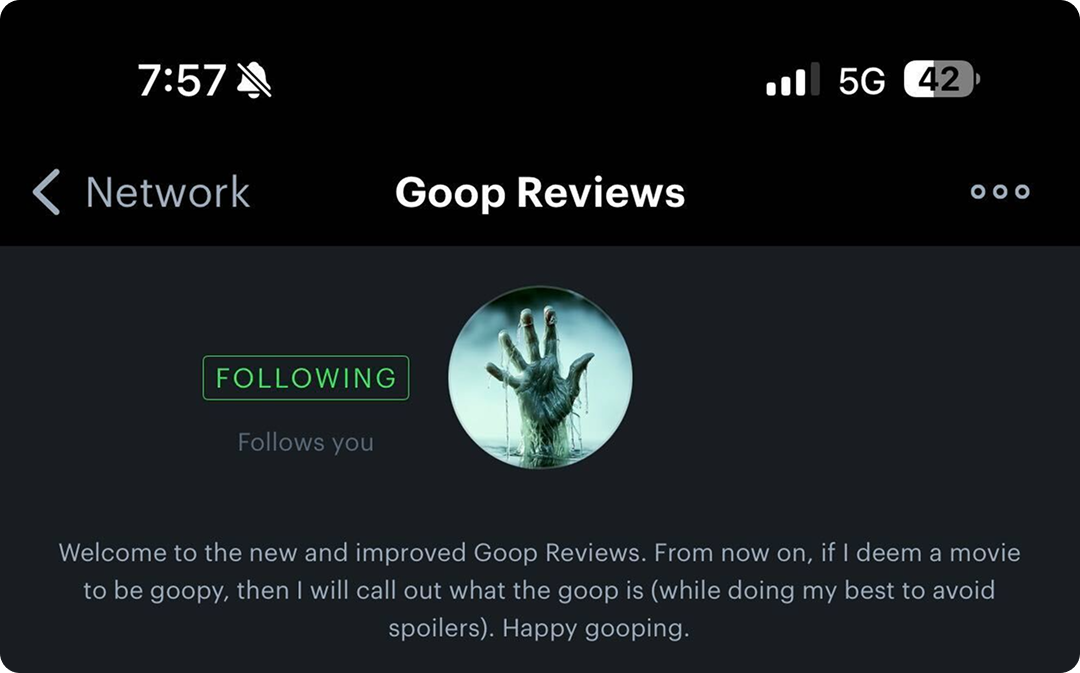
My weird friends aside, the brand provides film fans of all ages and levels of taste a centralized place to discuss their thoughts on established classics and new favorites.
The editorial team doesn’t play gatekeeper; it publishes average scores, surfaces what your friends are watching, and lets anyone’s one-sentence joke sit alongside an academic essay with equal weight. The result is an aspirational platform that doesn’t feel intimidating. Users from across the world track their activity, log progress, and start conversations.
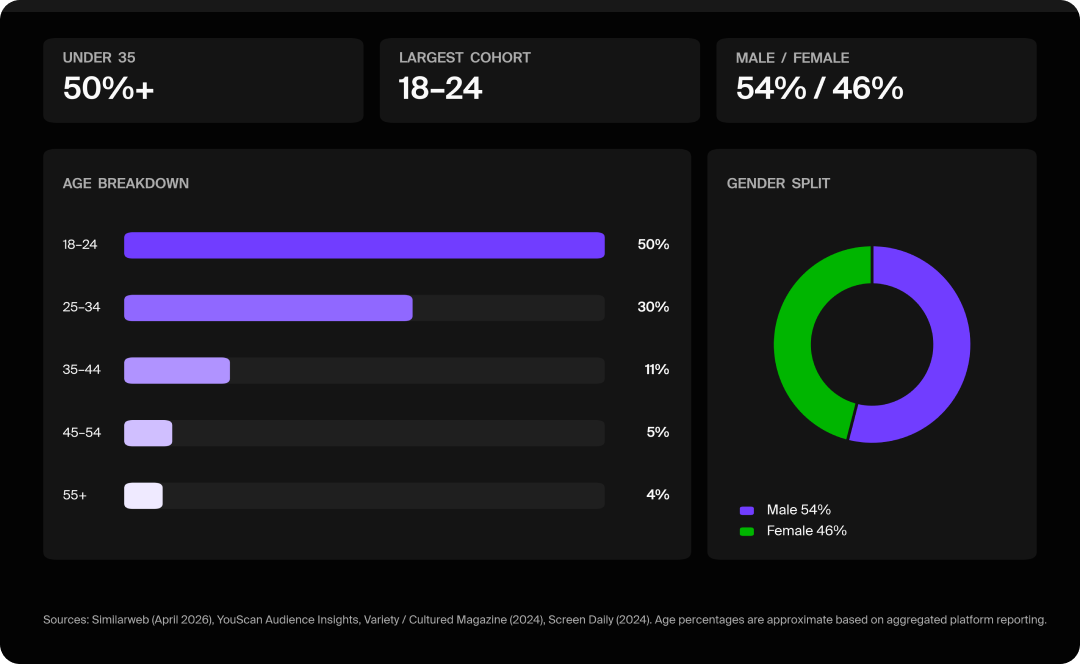
When last reported, more than half of them were under 35. They’re the “Letterboxd generation,” a phrase NBCUniversal Entertainment chairwoman Donna Langley used at TIFF in 2025 to describe an audience more committed to the theatrical experience than any other.
That level of community buy-in doesn’t happen by accident. It happens when a product is designed to make its users proud of using it.
3. It Earned Real Buy-In From the Film Industry
When Martin Scorsese joined Letterboxd and immediately became its most-followed user, that wasn’t a sponsorship. That was a vote of confidence (from one of the most respected directors alive, by the way) that this platform matters.
He even published a curated list of films that inspired Killers of the Flower Moon alongside his account launch. That’s the kind of authentic industry endorsement you can’t manufacture with a media budget.
That said, this level of community-building doesn’t happen without highly intentional product design. Letterboxd is, at its core, a “built by X, for X” product (made by film people, for film people), and the industry has felt that from the start.
Studios like Sony Pictures, Lionsgate, and NEON now maintain official HQ accounts. The Cannes Film Festival and the Oscars are on the platform. Distributors track watchlist additions and ratings in real time to gauge audience demand for festival titles before they commit to distribution deals.
More recently, Charli XCX started logging horror movies and cult favorites without any announcement, and the internet noticed. That kind of organic celebrity presence—unsponsored, unscripted, just a person using an app they like—continues to drive new users in ways a paid partnership rarely can.
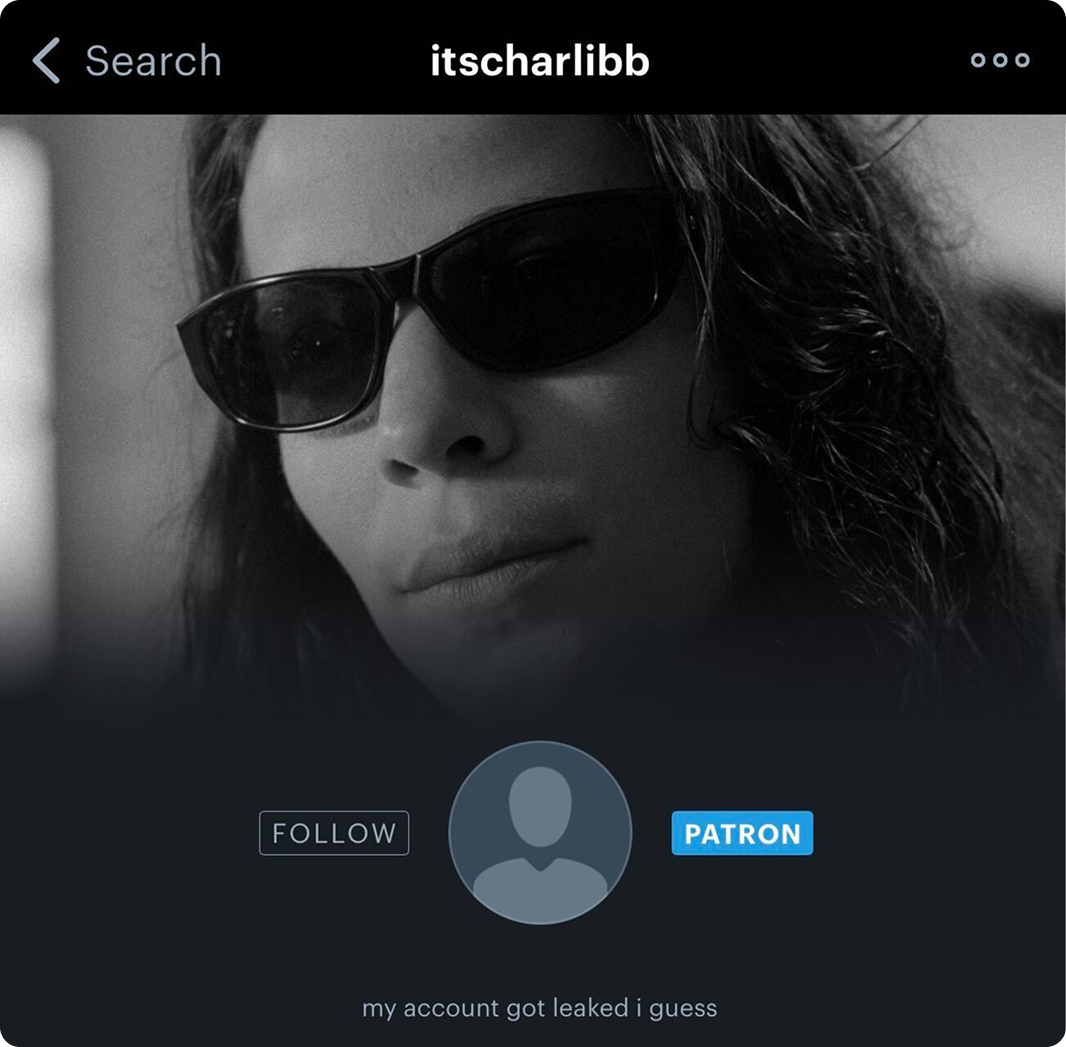
Letterboxd’s marketing team is also sharp about pulling UGC into its own promotion. Pull-quotes from community reviews show up in trailers, on posters, in press materials. The user becomes part of the story. That cycle of recognition keeps the community engaged and keeps the content spreading.
4. Video Marketing Is a Natural Fit (& It Shows)
Look, for a film app, leaning into video marketing is kind of an obvious call. But the execution is what makes it work.
Letterboxd’s flagship video series, “Four Favorites,” is a simple concept: point a camera at a director, an actor, or a filmmaker and ask them to name their four favorite films right now. It maps directly onto the core profile feature every Letterboxd user has: their own four favorites, visible to anyone who visits their page.
Inspired by formats like Vogue’s “73 Questions” or GQ’s “10 Essentials,” it works because the audience can immediately play along. You watch Tom Hanks name his picks and open the app to compare. The parasocial connection happens in under thirty seconds.
Then there’s “Reading Your Reviews,” a catch-all series where directors and actors read real Letterboxd reviews of their own films. It’s playful, it’s self-aware, and it genuinely celebrates the community. And ooooh, there’s an air of suspense: there’s always a chance the review being read is yours. That ego hook kills every time.
Adding this Project Hail Mary “Guess Your Movie” video with Ryan Gosling and Sandra Hüller below because it’s a movie that I saw recently that I loved.
Letterboxd also produces longer-form video content, all while keeping the industry relevancy tight and defined: stuff like director career retrospectives, tours of surviving video rental stores, and behind-the-scenes footage from press tours where talent makes a stop at Letterboxd HQ specifically.
Even as part of a traditional promotional circuit, filmmakers want to be there. That’s a level of cultural legitimacy that most platforms spend years trying to buy.
The video content works because it’s genuinely additive; it gives the community things they can’t get anywhere else, and it keeps the platform’s name attached to the conversations that matter most in film culture.
5. The Product Keeps Listening, Too
Beyond the brand-building, Letterboxd has closed the consumer-focused marketing circle by earning user loyalty by treating feature requests like they actually matter.
Member feedback shapes the roadmap, and new updates are positioned as events worth celebrating. Most premium features roll out to paid subscribers first, which gives people a real incentive to upgrade.
They even have specified feature request submission processes via a feedback site, and a very active subreddit that sends unaware users to it, further strengthening the community aspect of their marketing strategy.
Some notable updates based on community feedback:
- Profile Banners: Those with a Pro subscription can add a backdrop from their favorite movie to the top of their public page.
- Custom Posters & Cast Photos: Further opportunity to customize your profile to your taste, rather than a generic database thumbnail.
- Streaming Integration: Showing users which films on their watchlist are available on the services they are already subscribed to (this one was huge for me since I didn’t have to browse my watchlist and then switch apps onto Google search.
- Showtimes in Your Area: For newly released films, showtimes in your area are displayed, deepening Letterboxd’s relationship with theatrical distributors.
- Letterboxd Video Store: Launched December 2025, this is a curated TVOD service available in 23 countries, organized into themed “shelves” built from community watchlists and behavioral signals. The first shelf, “Unreleased Gems,” features indie titles available for just 30 days, creating urgency around films that might otherwise disappear after a festival run.
The Video Store is the platform’s biggest strategic move yet. As co-founder Matthew Buchanan put it at launch: the question was simply whether Letterboxd could surface films in a way nobody else was doing. Based on the reception, the answer was yes.
Who Is the Target Audience of Letterboxd?
Letterboxd’s primary audience is young, digitally native film enthusiasts, particularly Gen Z and Millennials, who represent the majority of its user base. The platform skews toward cinema-literate users who are enthusiastic about both mainstream blockbusters and independent or international films.
As NBCUniversal Entertainment chairwoman Donna Langley noted at TIFF in 2025, the “Letterboxd generation” is disproportionately committed to the theatrical experience, making the platform uniquely valuable to studios and distributors trying to reach young moviegoers.
Beyond individual consumers, Letterboxd has become essential infrastructure for film industry professionals. Distributors track watchlist additions and ratings in real time to gauge market potential for festival titles. Studios use the platform’s organic buzz to inform paid marketing spend. And filmmakers (from debuting directors to established names) maintain active profiles as part of their promotional strategy.
Letterboxd Has Become an Essential Part of the Film Enthusiast Lifestyle
To the uninitiated, the entire concept of Letterboxd might seem unassuming and maybe even a little silly (if you’re gonna be a pessimist like that). But to those in the know, there’s a genuine fervor for participating in this community (and even wearing branded merch from their coveted drops).
I just hit you with a lot of information in this article, but to summarize: in an age of information overload, building a brand that people care about enough to wear as a badge (without compensation, mind you) is no small feat.
What’s next for Letterboxd is an open and genuinely exciting question. With over 26 million members, a new Video Store, growing industry relationships, and a potential acquisition on the horizon, it’s kind of at an inflection point.
Whatever comes next, the marketing playbook it has written (community-first, authenticity-forward, and feature-driven) offers a masterclass for any brand looking to build something people actually care about.
Letterboxd Marketing: FAQs
What is the fastest film to reach 1 million logs on Letterboxd?
The fastest film to reach one million logs on Letterboxd is Superman (2025), James Gunn’s DCU reboot. The film set the record within just two weekends of its theatrical release, surpassing the previous record held by Barbie (2023).
The achievement reflects both the depth of Letterboxd’s user base and the cultural weight a major theatrical release now carries on the platform. Films in the platform’s “One Million Watched Club” span everything from beloved blockbusters like Interstellar and The Dark Knight to prestige art films and cult favorites, a testament to the diversity of the Letterboxd community.
Can you earn money with Letterboxd?
Letterboxd itself does not directly pay users for reviews or activity; however, the platform offers several pathways for monetization adjacent to the platform:
- Creators who build a significant following can leverage their Letterboxd profile as a proof-of-taste to attract affiliate deals, writing opportunities at film publications, or Patreon-style supporter income.
- Letterboxd’s own affiliate program, available through select partnerships, allows users to earn a commission when their recommendations lead to purchases or sign-ups.