

Everyone knows IKEA for its Swedish meatballs. I personally wouldn’t know, I’ve never tried them (womp womp), but what I do know IKEA for is everything beyond meatballs.
IKEA is a Swedish-founded global furniture and home goods retailer, built on the premise that good design shouldn’t cost a fortune. To me, IKEA isn’t like any other furniture store.
I’ve had a front-row seat to that for most of my life. My first IKEA memory goes back to when I stumbled upon the SMILA BLOMMA, a light pink flower wall lamp that almost every little girl my age had at the time. Luckily, my dad eventually caved in and purchased it for me. IKEA has since rebranded it to the UPPLYST, which now resembles a purple lilac flower. The flowers look completely different, which I’m not a fan of, but I digress.

Then came the at-home work desk I assembled myself in 2020, meant for my college Zoom classes, followed by my parents’ wardrobe, and all the in-betweens. Throughout all my different life stages, IKEA has been the most consistent brand. And there’s something intentional about that.
That kind of pull comes from a brand that has spent decades being fixated on emotional proximity, making itself a fixture in people’s homes, memories, and childhoods, long before it ever needed to run a campaign to get your attention.
And lately, IKEA has been catching up to that potential. From a sleep initiative that turned insomnia into a content universe to regional social accounts that move at the speed of culture, IKEA is proving that the best retail marketing doesn’t feel like retail marketing at all. As a lifelong fan, let me break down how they’re doing it.
What Is IKEA’s Marketing Strategy?
Most furniture brands market their products. Does IKEA do that too? Yes, but that’s not their entire focus.
At its core, IKEA’s marketing strategy is built on three pillars that reinforce one another: democratizing good design, making the customer the hero of their own space, and treating every touchpoint, from the store layout to a social post, as part of the brand experience.
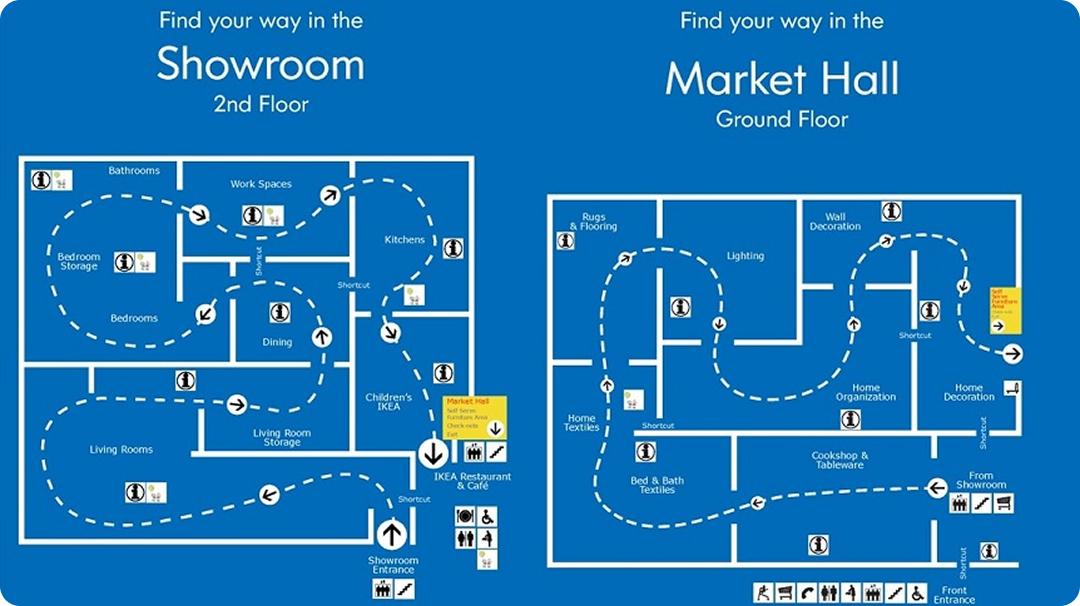
That last part is what separates IKEA from most retailers. The store layout isn’t accidental: the winding path gives you no choice but to walk through every department before you reach the exit, which is designed to extend the time you spend in the space and deepen familiarity with the product range before anything lands in your cart.
The self-assembly part isn’t just a cost-cutting measure; research has shown that people place higher value on things they build themselves, a phenomenon behavioral economists call the IKEA Effect. The meatballs, the FRAKTA bag, the catalog — all of it is engineered to build emotional familiarity and a sense of ownership over the brand long before you ever need a new bookshelf.
While most furniture brands draw a line between the product and marketing experience, IKEA collapsed that line long ago. Which is why, when you do see an IKEA campaign, it rarely feels like an ad. It feels more like an extension of something you already have a relationship with.
Who Is IKEA’s Target Market?
Walk into any IKEA on a Saturday and you’ll see every demographic imaginable. That’s the whole point. IKEA’s target market isn’t a demographic; it’s a life stage, and that’s the best decision they ever made.
But to understand who IKEA markets to, it helps to go back to where the brand started. Founder Ingvar Kamprad wrote what is now known as The Testament of a Furniture Dealer, an internal document outlining IKEA’s founding philosophy. He says, “far too many of the fine designs and new ideas are reserved for a small circle of the affluent.” IKEA was built as a direct response to that. The mission, word for word, was to offer well-designed, functional home furnishings “at prices so low that as many people as possible will be able to afford them.”
IKEA doesn’t market to a specific age group or income bracket. This structural choice is precisely why IKEA has consistently focused on a target audience where budget is a lived reality rather than a mere choice.
Whether it’s the college student furnishing their first apartment on a tight budget or the young couple moving in together for the first time, IKEA meets all of them at the same price point, with the same product range, without the design feeling like a compromise.
Instead of asking “who is our customer,” IKEA asks “when does our customer need us?” And the answer is almost always: at a moment of change.
Kamprad called this serving “the many people,” and he was deliberate about what that meant. The Testament is explicit on this: functionality and quality cannot be sacrificed for cost. The product has to work well and actually last. That distinction is what separates IKEA from cheap furniture and what keeps customers coming back across multiple life stages rather than outgrowing the brand.
It’s something I’ve experienced firsthand. From that childhood bedroom lamp to my first work desk to helping my parents with their wardrobe, IKEA has shown up at almost every transition point in my life without ever feeling like it was trying to. That’s 50 years of intentional positioning finally paying off.
Participation Over Promotion
Most brands treat experiential marketing as a campaign format (oftentimes in the form of a pop-up, which I feel is overrated and oversaturated). However, IKEA has been doing something fundamentally different for decades.
The IKEA store is experiential marketing in its purest form. The room vignettes aren’t just product displays; they’re fully staged living environments designed to make you envision your own life inside them. The Swedish food market at the exit gives you one more reason to linger and one more thing to bring home. Every element is doing a job, and that job is emotional investment before purchase.
IKEA was doing experiential marketing before the industry had a name for it. What’s evolved more recently is that they’ve taken that same participatory instinct entirely outside the store.
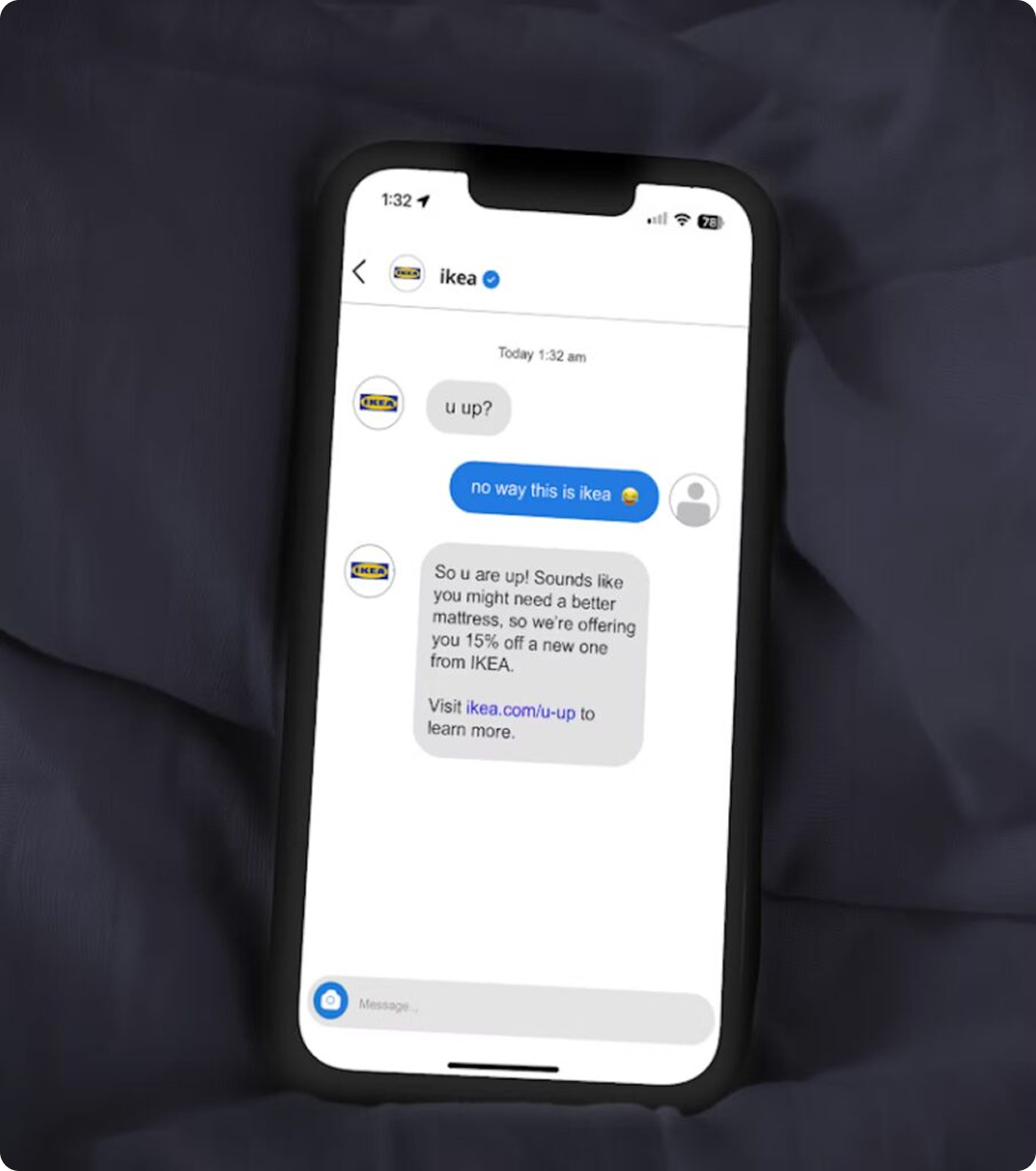
The DM campaign is the clearest example. IKEA Canada slid into the DMs of people who were awake when they “shouldn’t” have been, offering 15% off a new mattress. They showed up at the exact moment when a customer was experiencing a problem IKEA could solve, and made it personal. That’s participation.
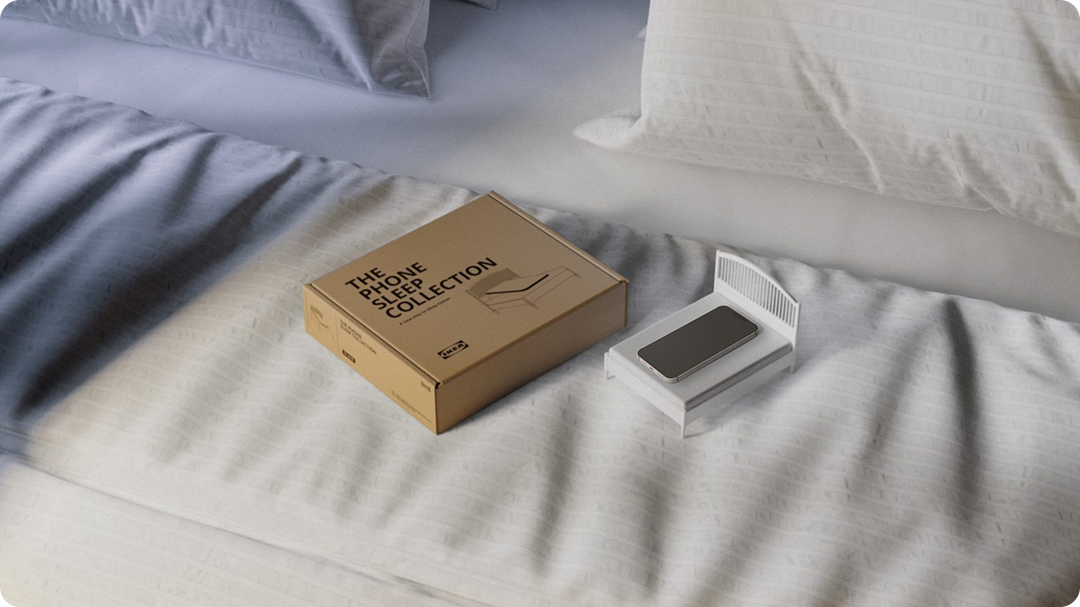
The Phone Sleep Collection pushed it further. IKEA built a miniature bed for your smartphone, complete with wood slats, bedding, and an embedded NFC chip that connected to the IKEA app. Leave your phone in the bed for seven screen-free nights and earn a voucher. The product itself was the campaign mechanic. You didn’t watch it; you used it, and using it changed your behavior.
While promotional marketing asks for your attention, experiential marketing asks for your participation. IKEA has understood that difference for a long time, and the brands that study them closely enough will notice it shows up everywhere.
Emotion First, Product Second
Participation gets people in the door. What keeps them coming back is something harder to manufacture: the feeling that a brand understands their lifestyle. That’s where IKEA’s emotional marketing strategy lives.
The Complete Sleep Initiative
Most brands that sell mattresses market mattresses. They lead with thread counts, firmness ratings, and temperature regulation technology. Now I’m not saying that’s all bad or wrong. I love myself a good, firm bed. However, IKEA looked at the same category and asked a different question: why do people sleep badly in the first place, and what would it mean for a brand to actually take that seriously?
The answer became the Complete Sleep Initiative, a multi-campaign content universe built entirely around a single behavioral insight: people universally want better sleep and almost universally do nothing about it. That gap between acknowledgment and action is exactly where IKEA decided to show up.
The DM campaign and Phone Sleep Collection, covered in the previous section, are two executions within that universe. But the campaign that completes the picture is Sleep Talk Reviews. IKEA Canada recruited real sleep talkers, had them spend two nights on IKEA mattresses while being recorded, and turned 90 hours of unscripted footage into a one-minute ad. And yes, these were REAL people, mid-dream, sleep-talking, while endorsing a mattress.

The strategic logic across all three is the same. IKEA positioned itself not around a product feature, but a human condition. Things like insomnia, screen addiction, and the gap between how much we value sleep and how little we invest in it. Each execution found a different entry point into that same emotional territory, and none of them led with a price tag.
IKEA identified something that people struggle with, built a content universe around it, and let the product show up as the solution rather than the subject. The result is a campaign that feels like a brand that was paying attention.
Operationalizing Cultural Relevance
Most brands that participate in cultural moments do it visibly. However, there are moments where they arrive a beat too late or try a little too hard, and the internet notices both. A strategic eye can tell the difference.
IKEA has figured out a different approach, and it starts with their social account structure. Rather than running one global account that has to please everyone, IKEA operates a decentralized network of regional accounts, one for the US, Canada, Japan, Chile, France, and beyond. On the surface, it’s a logistical choice. But as we unravel their practice, it functions as a cultural listening network.
Each regional account speaks to a specific cultural context, so when a moment hits, the market closest to it can move fast and precisely. The creative formula is deceptively simple: find the IKEA product that connects to the moment, make the price tag visible, and place it in a setting that mirrors the reference. The execution changes, but the system doesn’t.
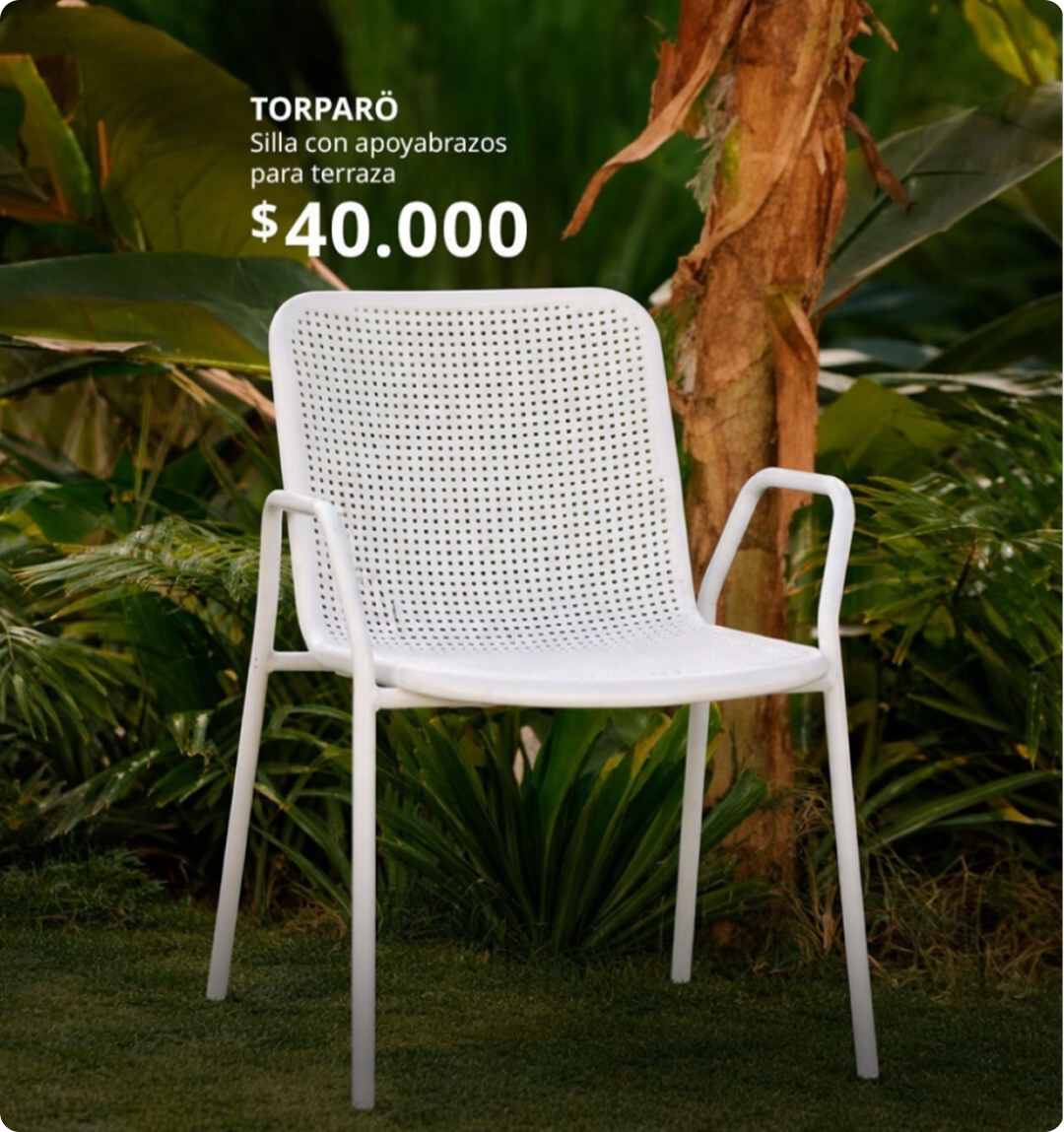
In February, my coworker DMed me an IKEA Chile post almost immediately: a white chair priced and staged to look like it came straight off Bad Bunny’s set. I’m a Bad Bunny fan, and as someone who watched the halftime show, I found that IKEA’s tap into the conversation felt more inviting than intrusive. Other IKEA channels also took advantage of this cultural moment.
Then there was the Backrooms film. I watched it the weekend it came out, and within days IKEA Canada and IKEA Mexico had posted a piece of furniture staged in a setting that looked as if it were pulled directly from the film’s unsettling, liminal aesthetic. Same formula, completely different cultural territory, same feeling of natural alignment rather than forced participation.
These posts don’t feel like a brand intruding on a cultural conversation. They feel like a brand that was already there. The decentralized structure is what makes that possible at speed, and the repeatable creative system is what keeps it on-brand regardless of who’s executing. The formula is simple enough to trust and specific enough to work. When brands start to see comments like “the marketing team deserves a raise,” that’s how you know you’re doing something impactful.
Whether it’s building a content universe around a universal human struggle or showing up in a cultural conversation the morning after a halftime show, the underlying instinct is consistent: IKEA understands what people are feeling before it decides what to put in front of them. And a posture like that comes from a brand that has spent decades paying close attention to the people it was built to serve.
IKEA’s Four Content Pillars
When you look at the recurring emotional job that a brand’s content consistently does, regardless of format, platform, or cultural moment, IKEA, those jobs are remarkably consistent. Whether it’s a 30-second social post or a multi-campaign content universe, the same four emotional functions recur. That consistency is what makes IKEA’s content feel cohesive across dozens of markets, languages, and cultural contexts.
Aspiration Without Alienation
Most aspirational marketing has an alienation problem. Often, furniture brands leave you feeling inspired yet vaguely inadequate, which is not a feeling that translates into a purchase. IKEA has solved this in a way most home and lifestyle brands haven’t: by making aspiration feel attainable rather than intimidating.
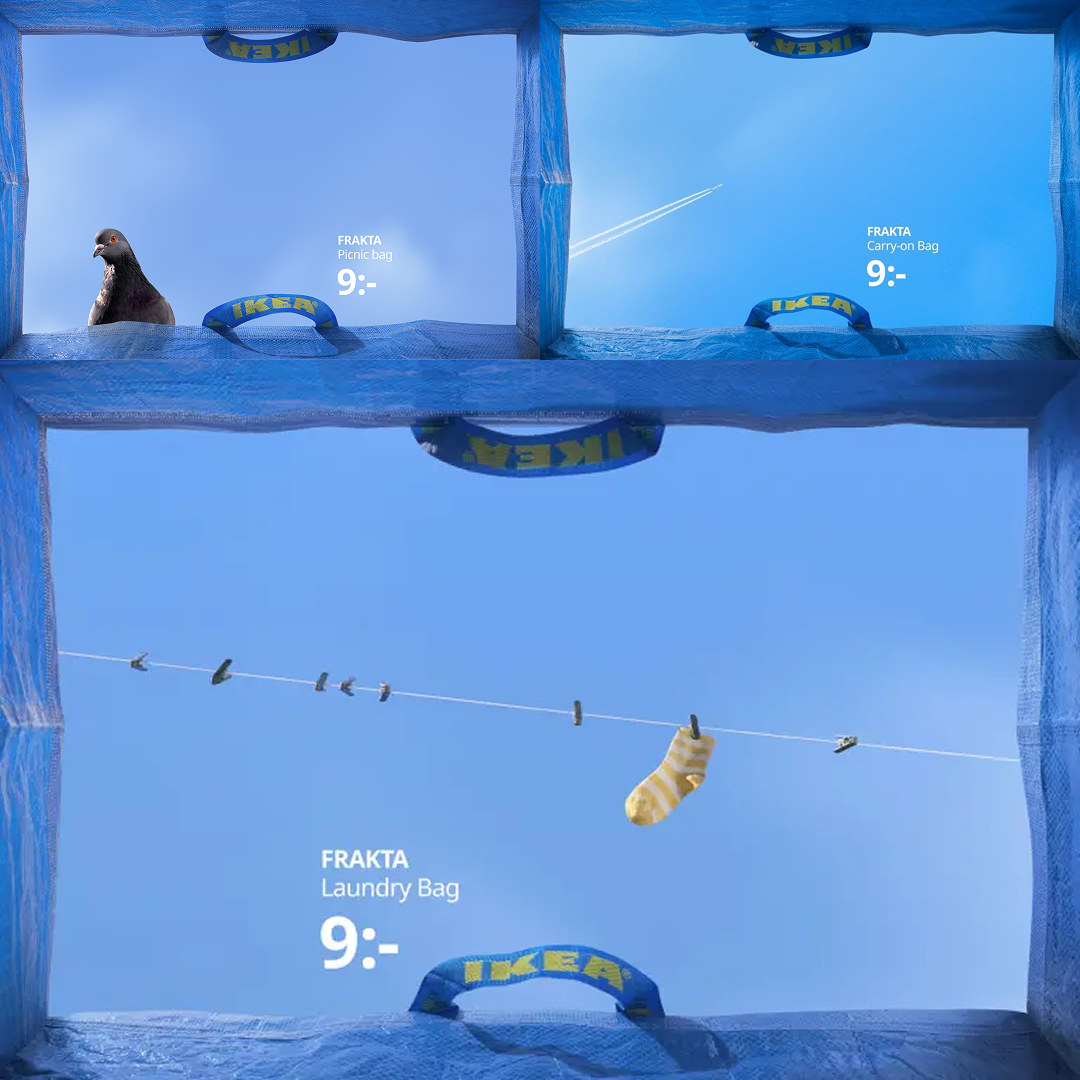
The FRAKTA Point-Of-You campaign is the cleanest recent example. It’s shot from inside IKEA’s iconic blue bag, looking up at the sky. The creative frame stays constant across every execution: the bag’s blue weave and yellow handles as the border, and whatever ordinary moment sits inside it. The campaign doesn’t make you feel like you need to earn the right to own it. That’s the move: IKEA presents a version of a well-designed life that feels like it already belongs to you, not one you’re aspiring to from a distance.
Problem-Solving as Entertainment
Most brands that identify a customer problem respond with a solution. “Here’s the problem, here’s the product, here’s why you should buy it.” The formula is logical and almost always forgettable. IKEA takes a different approach: it turns the problem itself into the content and lets the product emerge as the natural conclusion rather than the opening argument.
The Complete Sleep Initiative is the clearest proof of this. IKEA didn’t launch a campaign about better mattresses. That’s a format any other furniture store could do. Instead, they launched a content universe about the universal human failure to prioritize sleep. From recording sleep talkers to sending late-night DMs to insomniacs, each execution was built around the problem in a way that’s genuinely entertaining to engage with, and none of them feel like ads until you notice the product sitting quietly in the corner.
The craft is in the pudding. IKEA makes you laugh, or feel seen, or want to participate, and somewhere in that experience, you remember that they sell mattresses.
Cultural Relevance Done With Taste
Cultural relevance is one of the most chased and least understood goals in marketing. Most brands treat it as a checkbox: find the trending moment, insert product, post before the window closes. The result usually feels exactly like what it is. A brand trying to be part of a conversation it wasn’t invited to.
IKEA treats cultural relevance as a creative constraint rather than an opportunity to be seized. The regional account formula we covered earlier works because it’s disciplined. When IKEA Chile posted a white chair staged to mirror Bad Bunny’s halftime show set the morning after the performance, it didn’t feel like a brand capitalizing on a cultural moment. That’s the difference between relevance done with taste and relevance done with desperation, and it’s a harder line to walk than it looks.
Life-Stage Empathy
IKEA has always understood that the most powerful entry point into someone’s life is the transition they’re currently navigating, not their age or income bracket. Life-stage empathy shows up in the way IKEA frames its content across every platform and format. The product is always present, but the emotional context around it is what makes the content land.
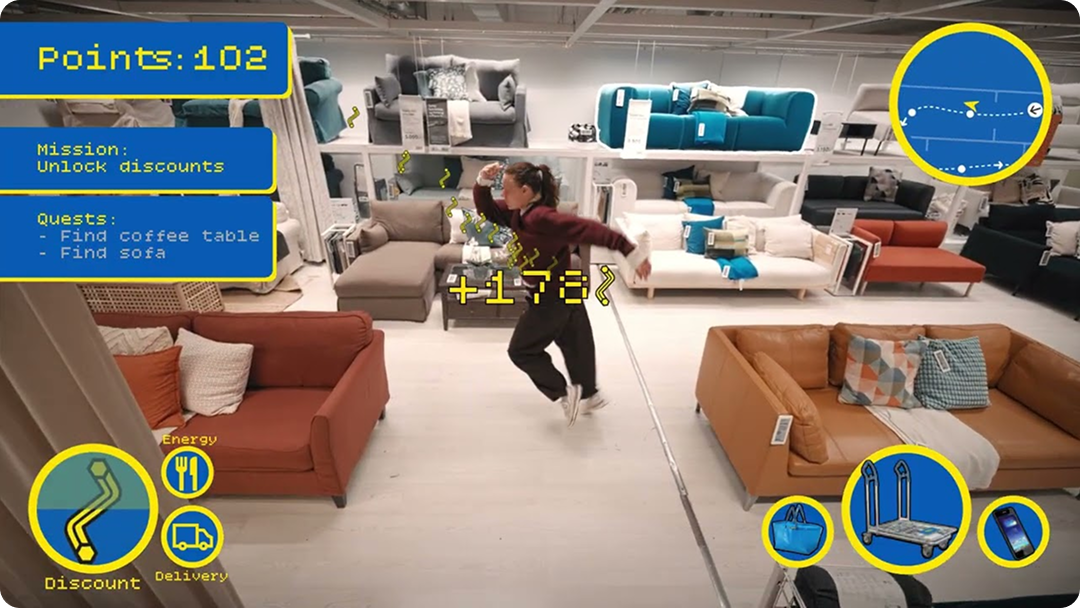
The IKEA Family gamified loyalty program is where that empathy becomes structural. Rather than a traditional points system built around transactions, IKEA Denmark reimagined it as a playable experience that rewards members for everyday interactions such as shopping, attending events, and logging in to their profiles. The underlying logic mirrors the broader life stage strategy: IKEA shows up at the moment of purchase and builds a relationship across every phase of domestic life.
That consistency is what keeps people coming back at every new transition point rather than aging out of the brand entirely.
The pillars look different on the surface, but they’re all solving the same problem: how do you make a furniture brand feel relevant to someone’s actual life? IKEA’s answer has always been the same. Start with the feeling, not the product.
The Lesson Underneath It All
The easiest conclusion to draw from everything I covered is that IKEA is good at marketing. That’s true, but it’s also not the useful takeaway. The more specific observation is that IKEA has spent decades collapsing the distance between the thing it sells and the story it tells, to the point where the two are almost indistinguishable.
Here’s what that looks like in practice:
- The store bridges the gap between you and the brand before you spend a single dollar, engineering emotional investment through time, environment, and experience.
- The self-assembly is IKEA’s most underrated brand touchpoint. Building something yourself creates a sense of ownership that goes beyond the product, and that distinction is what makes IKEA memorable in a way competitors can’t replicate by simply delivering furniture to your door.
- The campaigns build emotional familiarity before you ever need to make a purchase and deepen it long after you have.
- The regional social accounts function as a cultural listening network, moving at the speed of the moment without losing brand coherence.
- The content pillars stay consistent across every market, platform, and format because they’re built around feelings first and products second.
IKEA builds emotional resonance into the product experience first and lets the campaigns extend it. That sequencing is the thing worth studying, because it’s what makes IKEA’s marketing feel like a brand you’ve had a relationship with your whole life.
Which, if you grew up hunting down a pink flower wall lamp with your dad, you probably have.