


You’re only as good as the people you surround yourself with. In marketing, that couldn’t be more true; brands and agencies are constantly looking outward for their next move. Where those eyes often land is LinkedIn, which over the years has become a playground for industry leaders sharing cutting-edge knowledge and strategy.
Most influence online still runs on volume; post enough, tag enough, and the algorithm eventually rewards you with a bigger number next to your name. LinkedIn broke that system some time ago, and instead, placed a bet on a structure that rewards specificity over reach. This means the people who actually move markets here aren’t the loudest accounts.
With LinkedIn reporting 310 million active users every month, knowing where to look for real expertise has become its own kind of paralyzing. We track this list every year because who earns that trust keeps shifting. Here’s who’s actually shaping how marketers think in 2026, and why their specific corner of the internet matters more than their follower count does.
| Name | LinkedIn Followers | Expertise |
| Carmen Vicente | 22K+ | Social strategy, B2B content, platform-native voice |
| Ed Elson | 46K+ | Market analysis, business strategy, macro trends |
| Grace Andrews | 155K+ | Creator economy, brand building, editorial strategy |
| Ana Andjelic | 30K+ | Brand strategy, cultural strategy, luxury and consumer marketing |
| Lenny Rachitsky | 322K+ | Product strategy, growth frameworks, marketplace dynamics, growth strategy |
| Jordan Schwarzenberger | 84K+ | Talent management, creator economy, deal structure |
| Mostafa ElBermawy | 14K+ | Answer engine optimization, AI search strategy, growth marketing |
| Katelyn Bourgoin | 95K+ | Buyer psychology, customer research, conversion behavior |
| Eugene Healey | 30K+ | Brand strategy, desire mapping, cultural alignment |
| Ross Simmonds | 69K+ | Content marketing, distribution strategy, repurposing frameworks |
| NoGood | 78K+ | Growth and performance marketing, organic social, AI, AEO, SEO, SEM, paid social, content marketing, design |
What Is a LinkedIn Influencer?
A LinkedIn influencer in marketing is someone who’s turned a specific, defensible point of view into a body of work the platform’s audience and its algorithm both recognize as authoritative. That often shows up as data-driven strategies, high-value insights, niche trends within the industry, and frameworks for scaling and quantifying growth.
The people on this list got here by resisting the urge to cover marketing in broad strokes. Each one took the road less traveled instead, through the back alleys of buyer psychology, market analysis, the creator economy, and brand strategy. Above all else, it’s their dedication to craft and analysis, sustained over time, that separates a LinkedIn influencer from someone who just happens to post a lot about work.
The Top 11 LinkedIn Influencers Shaping Marketing in 2026
1. Carmen Vicente

Carmen Vicente treats social strategy the way a linguist treats dialect; she’s less interested in what a brand says than in how it sounds saying it. Her posts dissect the actual mechanics of B2B social, the kind most strategists talk around instead of through.
- Experience: Slate, Gorgias
- Expertise: Social strategy, B2B content, platform-native voice
- Followers: 22K+
Why You Should Follow: In her own words, “I’m a digital creative with strong writing chops, interested in the ways that language and storytelling build trust in brands.” Vicente treats social media as the discipline that determines whether a brand sounds like a person or a press release, and most B2B accounts still haven’t figured out the difference.
2. Ed Elson

Ed Elson built his following by explaining markets quickly and honestly with no filler and no fluff. His market analysis content translates macro shifts into what they actually mean for brands making budget decisions right now.
- Experience: Prof G Media
- Expertise: Market analysis, business strategy, macro trends
- Followers: 46K+
Why You Should Follow: Elson’s content works because he refuses to separate the economy from the marketing decisions it forces. When ad budgets tighten or loosen, he’s already explained why three weeks before the trade press catches up.
3. Grace Andrews

Grace Andrews has spent her career on the inside of brand-building at scale, and now she’s documenting what it looks like to build one from nothing. The gap between those two vantage points is exactly what makes her content valuable to the marketers that follow her.
- Experience: Flight Story (The Diary of a CEO), The Social Climber UK, LAUNCHPAD x My Brand Economy
- Expertise: Creator economy, brand building, editorial strategy
- Followers: 155K+
Why You Should Follow: Andrews writes about the unglamorous middle of building a brand; the stretch after the launch buzz fades and before the traction shows up, which almost nobody documents honestly.
4. Ana Andjelic

Ana Andjelic writes brand strategy like a sociologist, because she is one. Her background studying culture shows up in how she frames every brand decision as a question about status and belonging first, product second.
- Experience: Global Chief Brand Officer at Esprit and former Chief Brand Officer at Banana Republic
- Expertise: Brand strategy, cultural strategy, luxury and consumer marketing
- Followers: 30K+
Why You Should Follow: Andjelic’s unique sociological perspective of businesses and marketing compound to form an angle you’ve probably never thought of. Her linkedIn presence consistently name the cultural mechanism behind a brand’s success before the trade press has a term for it.
5. Lenny Rachitsky

Lenny Rachitsky runs what’s become the reference newsletter and podcast for product and growth, and his LinkedIn content operates on the same principle: pull the framework out of the person who actually used it.
- Experience: Author of Lenny’s Newsletter, host of Lenny’s Podcast, former Product Lead at Airbnb
- Expertise: Product strategy, growth frameworks, marketplace dynamics, growth strategy
- Followers: 322K+
Why You Should Follow: Rachitsky’s podcasts with operators consistently surface the mechanism behind a result. Paired with his in-depth, transferable advice on marketplaces, growth, and retention, that’s the difference between a case study and a case study you can actually use.
6. Jordan Schwarzenberger

Jordan Schwarzenberger manages creators for a living, which gives his content a vantage point most marketing commentary lacks. He’s negotiating the deals, analyzing them after the fact, and providing the insights to his followers.
- Experience: Co-Founder and CEO of Arcade Media, former Chief Creative Officer at YMU Group
- Expertise: Talent management, creator economy, deal structure
- Followers: 84K+
Why You Should Follow: Schwarzenberger writes about the business mechanics behind creator partnerships, the contracts and incentive structures that determine whether a brand deal actually works, instead of the surface-level “creators are the new media companies” take everyone else recycles.
7. Mostafa ElBermawy

Mostafa ElBermawy was writing about answer engine optimization (AEO) before the term meant anything to anyone else. He ran a panel on the future of search at SXSW in 2023, and has spent the years since giving the discipline rigor: teaching an early AEO course on Reforge, running the AEO Masterclass on Maven, and founding Goodie AI, one of the first platforms built end-to-end for AEO measurement.
- Experience: Founder & CEO of Goodie AI, Founder & CEO of NoGood, growth advisor to Microsoft, TikTok, P&G, Amex, Citi, and Intuit
- Expertise: Answer engine optimization, AI search strategy, growth and performance marketing
- Followers: 14K+
Why You Should Follow: ElBermawy’s posts read like research notes from someone measuring what actually gets cited, not guessing at it. He backs claims up with original research and data, like Goodie AI’s analysis of AI citation patterns across social platforms, and he’s one of the few voices connecting AEO theory to what shows up in client accounts. If you want to understand how AI search actually attributes and rewards content, his feed is closer to primary research than most marketing commentary on LinkedIn.
8. Katelyn Bourgoin

Katelyn Bourgoin has made a career out of the question every marketer pretends to already know the answer to: why do people actually buy? Her carousels break buyer psychology into mechanisms you can point to in your own funnel.
- Experience: Founder of Why We Buy and Unignorable, CEO & Founder of Vendeve
- Expertise: Buyer psychology, customer research, conversion behavior
- Followers: 95K+
Why You Should Follow: Bourgoin backs every claim with the customer interviews behind it, which is rarer than it should be in a category full of people repeating psychology terms they’ve never tested against a real buyer. This approach doesn’t just make her insights practical and digestible, but also makes them actionable.
9. Eugene Healey

Eugene Healey operates on a premise that brands themselves are boring, and it’s the human desire underneath them that’s worth studying. That reframe runs through everything he publishes.
- Experience: Co-Founder and Lecturer at The New Fundamentals of Brand, Founder and Keynote Speaker at Studio EH
- Expertise: rand strategy, desire mapping, cultural alignment
- Followers: 30K+
Why You Should Follow: Healey treats brand strategy as applied anthropology instead of applied advertising, which explains why his frameworks travel so well across categories that otherwise have nothing in common.
10. Ross Simmonds
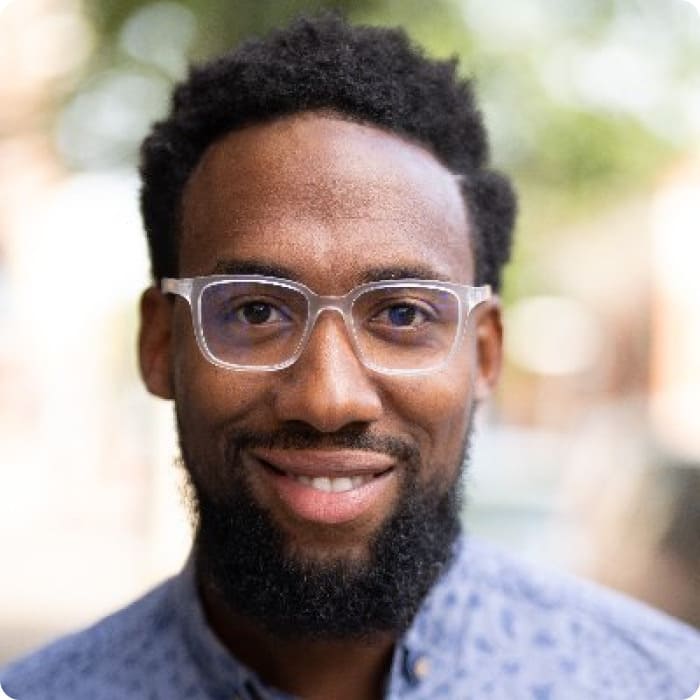
Ross Simmonds has built his authority on a single, repeated argument: most content teams are terrible at distribution and pretend the problem is production. His posts are a running argument for treating distribution as its own discipline.
- Experience: Founder and CEO of Foundation Marketing, founder of Distribution.ai
- Expertise: Content marketing, distribution strategy, repurposing frameworks
- Followers: 69K+
Why You Should Follow: Simmonds is one of the few voices who treats “we made great content and nobody saw it” as a strategy failure rather than an algorithm problem, and his frameworks for distribution back that argument up.
11. NoGood
NoGood is a growth marketing agency that runs structured experiments, builds out repeatable frameworks, and translates all of it into revenue and ROI for clients across SaaS, Healthcare, Fintech, B2B, and Consumer brands.
- Experience: Nike, TikTok, Intuit, MongoDB, Inflection, Oura, Amazon, AWS, Spring Health, P&G, Match Group, Goodie AI
- Expertise: Performance marketing, organic social, AI, AEO, SEO, SEM, paid social, content marketing, design
- Followers: 78K+
Why You Should Follow: NoGood’s LinkedIn content functions like a running commentary on the marketing industry as it happens, calling out which campaigns actually earned their results and which just got lucky before the takes pile on. The account has a habit of naming a cultural shift while it’s still forming instead of writing about it in hindsight.
Their POV on AI in particular skips both the hype cycle and the doom cycle. Instead of treating the shift as something to cheer or fear, NoGood’s content is built to hand marketers a framework they can actually use on the job.
What Is Thought Leadership on LinkedIn?
Thought leadership on LinkedIn is a track record built post by post, one narrow claim at a time. The names on this list share the same thing: a specific point of view they keep returning to. Bourgoin owns buyer psychology. Healey owns desire mapping. Andjelic owns cultural strategy. That narrowness is the mechanism.
That’s why specificity compounds. When a third of a feed reads like the same prompt, a real POV backed by real work stands out by default. The accounts on this list are winning because they’re still doing what the formula can’t fake: saying something only they could have said.
It matters more now because LinkedIn has a slop problem. Pangram Labs scanned over a million posts across social platforms and found LinkedIn came out worst, with AI tools producing close to half of everything posted there over 250 words. Call it thought leaderslop: the “10 lessons I learned” post generated by a tool with no actual point of view behind it.
How Is a LinkedIn Influencer Different From a Social Media Influencer?
Traditional influencing runs on aesthetic and parasocial closeness with the audience following because they want the lifestyle, the product, or the feeling of knowing the person. LinkedIn influence runs on the opposite mechanism. The audience follows because they need the framework, and the parasocial closeness, if it exists at all, is incidental to the actual value exchange.
That difference shows up in how each type of influencer monetizes. A traditional influencer sells access to their life through brand partnerships and product placements. A LinkedIn influencer sells access to their thinking, through consulting, speaking, courses, or the credibility that gets them in the room for a bigger deal. One is a media business built on attention. The other is an authority business built on being right often enough that people stop checking your work.
The follower counts on this list look modest next to a consumer creator with millions of followers, and that’s the point. A LinkedIn influencer’s value isn’t measured by reach, but measured by whether the right 20,000 people, the buyers, the decision-makers, and the next hire actually act on what they read.
What is an internal LinkedIn influencer (employee advocacy)?
An internal LinkedIn influencer is an employee, not a hired creator or an outside voice, whose personal posts do more to build a brand’s authority than the brand’s own company page ever could. Employee advocacy is the practice of pointing that authority somewhere on purpose: getting founders, executives, and subject-matter experts to publish consistently on the topics the business actually wants to own, instead of leaving it to chance.
This is a bigger conversation than it used to be, mostly because two very different companies just proved the same point. Starbucks formalized it with its Green Apron Creators program, now expanding into a dedicated Creator Network built with TikTok, which pays baristas through ad revenue sharing to post about the brand they already work for. Staples proved the opposite, unplanned version of the same mechanism: a single employee’s TikToks about the store’s overlooked print services turned into one of the year’s biggest brand moments, with zero corporate briefing behind it. Both worked because the audience trusted a person over a company handle.
The mechanism is simple. People trust people, not logos. A founder-led post about a product decision reads as insight; the same message from a company page reads as marketing. That’s why B2B brands increasingly treat their own team as a distribution network, with a CEO’s LinkedIn presence, a VP of Sales’s take on a deal, or an engineer’s post about a technical tradeoff all doing more to build trust with a buying committee than a paid campaign would.
Done well, internal influence isn’t a mandate to post; it’s a coordinated point of view. The strongest programs get leadership and subject-matter experts publishing on the same core themes, the same way an external LinkedIn influencer stays in one lane, so the pattern compounds instead of scattering across a dozen unrelated topics. Whether it’s engineered like Starbucks or accidental like Staples, the brands that win are the ones ready to lean in the moment it happens instead of staying quiet out of caution.
Frequently Asked Questions
How do brands work with LinkedIn influencers?
Brands typically work with LinkedIn influencers through sponsored content, LinkedIn’s Thought Leader Ads product, speaking engagements, or advisory arrangements where the influencer’s POV gets folded into the brand’s own content strategy. The most effective partnerships let the influencer keep their voice intact instead of forcing brand messaging into their format, since audience trust is the entire asset being purchased.
What types of content do LinkedIn influencers post?
The strongest LinkedIn influencers work primarily in text-based formats, long-form posts, carousels, and articles, because LinkedIn’s audience and its underlying algorithm both favor substantive written analysis over polished video. Video and imagery still appear, but almost always paired with a caption that can stand on its own as the actual argument.
How do you find LinkedIn influencers in your industry?
Start by identifying the specific subtopic you need authority on, not the broad category. Search LinkedIn directly using that narrow term, follow the trade publications and newsletters your buyers already read for who they cite, and pay attention to which names keep showing up in the comments of posts you already trust. Influence in this space tends to cluster; one credible name usually leads you to three or four adjacent ones.
How do you measure LinkedIn influencer marketing ROI?
Follower count is the weakest signal here. Track engagement from the right titles, referral traffic to owned pages, and whether sales or recruiting starts hearing an influencer’s language repeated back in calls. For paid partnerships, use cost per lead or cost per meeting, not impressions.
What are LinkedIn Thought Leader Ads?
Thought Leader Ads is LinkedIn’s product for sponsoring a post published under an individual’s profile instead of a brand page. It exists because people trust a person’s voice more than a company account, so brands pay to extend reach on content that already reads as authentic.
What tools help find and manage LinkedIn influencers?
Sales Navigator handles discovery by title and industry. Platforms like Modash, Grin, or Creator.co handle outreach, rates, and campaign tracking. For internal employee advocacy, purpose-built tools handle briefing and compliance better than external influencer platforms do.