

“That’s so on brand” is the best compliment you could give someone working in marketing in 2026. Recent memorable brand marketing campaigns include:
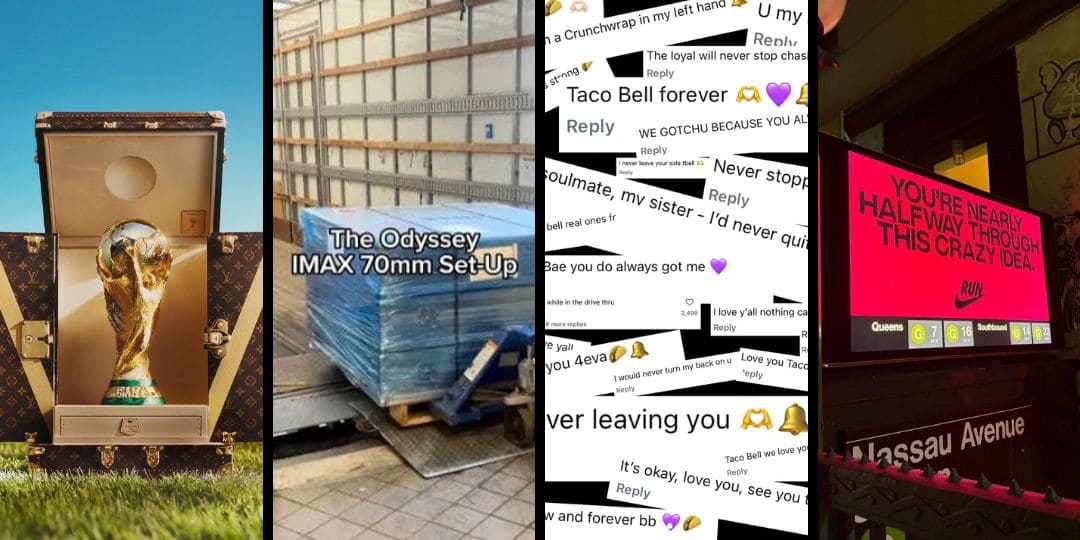
- Louis Vuitton’s World Cup trophy vase
- IMAX’s BTS moments from The Odyssey
- Taco Bell’s post-parasite apology
- Nike’s inventive OOH ads during the New York City Marathon
If you’ve been paying attention to the moments bringing people, cultures, conversations together you’ll notice what they have in common: brand.
And what is brand after all? Strategy.
A good strategy creates a positive ripple effect across your entire marketing ecosystem:
- Trends – which you show up for vs which you pass on
- Partnerships – who you collaborate with (celeb, creator, influencer, brand)
- Events – how, where, & when you meet customers in real life
- Socials – what stories you tell & what your tone of voice is
- Emotion – what feeling your brand leaves people with
When everything else gets more competitive, saturated, and noisy, your way out of the box is brand. If we consider why this is happening NOW, I challenge you to think about the main factors changing social behavior: AI and social media. With AI, brands can mimic anything. However, imitation is cheap and everyone knows that. What AI can’t replicate, is the feeling your brand gives people.
Social media on the other hand, means your brand has to compete with organic content, trends, and creators – not only your direct competitors. When’s the last time you said “that’s so on brand?”
How the definition of “brand” has evolved
In the most plain terms, “brand” is the personality of your company orchestrated by a carefully curated tone of voice, logo, visual identity, mission statement, purpose, and values. It can also be thought of as the immediate gut feeling or opinion you associate with a company or product when their name is mentioned. In short, a brand is your customer’s perception of you: the feeling you elicit as a result of your identity.
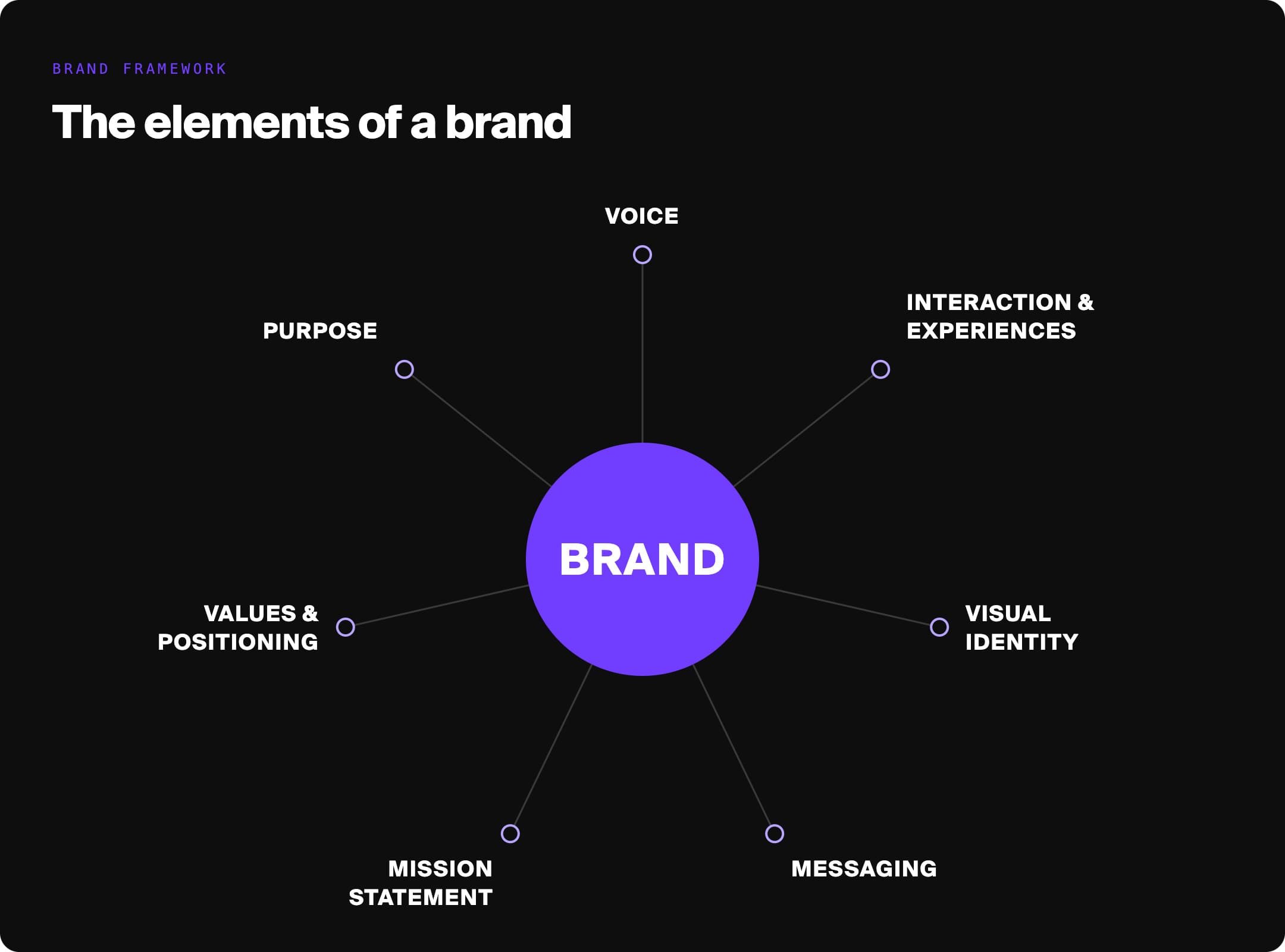
However, if we think about what a brand is, and what it’s job to be done (JTBD) is in 2026, the answer is not so cut and dry. While this definition of brand is still accurate, it doesn’t adequately convey the nuance of what good branding is, or how it serves a company’s bigger vision.
Marty Neumeier is famously quoted saying “a brand is not what you say it is. It’s what your customers say it is.” That sentiment couldn’t be more true, and I would even argue that it’s not only what your customers say, but what AI says too.
People use AI to plan travel itineraries, make their grocery lists, find dupes for viral goods, and compare/contrast brands based on specific criteria. In order to make a recommendation, AI models are trained to pull information from earned media (news, reviews, blogs etc.), competitor data, social media, and owned media (brand website). So, if you want your brand to show up in the right places at the right time, you have to first identify what sources are A) mentioning your name and B) triggering an AI model to spit out your name.
As a result, your brand has less control of its narrative. It used to be solely built on what your own company put out into the world. Now, it’s what you put out into the world, what your customers say, how your competitors compare, which influencers mention you, and how people interact with your brand in real life.
I want to be clear. I’m not making the argument that the definition of “brand” has to change, but the reason why it’s so important to nurture now is due to these societal and commercial evolutions.
What is brand marketing?
Brand marketing is the process of promoting your company’s identity as a whole, rather than selling individual products or services. If a brand is your company’s personality, think of brand marketing as communicating that personality to your customers.
A good brand marketing strategy aims to elicit a consistent emotional response from its target audience. Although each person might regard a brand with slightly different perceptions, the goal is to broadcast one story, message, idea, emotion. When you think about it, the most prominent brands are the ones that have a strong foundation; And a strong foundation can only come from a consistent strategy. I.e. Who your brand is and what you stand for.
In other words, brand marketing is relationship building. If you’re curious about what relationship you’re establishing between your company and your audience, consider performing an audit.
Instagram: Look at your own comment section and identify what patterns emerge. What are your customers saying about you, to your face?
TikTok: UGC – search for your company’s name and see what type of content shows up. Who are the creators mentioning your name?
Reddit: Explore threads where your community is discussing your products or industry. Can you understand deeper societal trends that might influence consumer perception of your brand?
LinkedIn: Determine if people are picking up on and discussing your brand’s marketing tactics. What elements of your strategy are they focusing on and why?
AEO: Understand how LLMs are citing and surfacing your brand to people who search for similar terms, products, or services. How can you tweak messaging, partners, and descriptions to ensure your brand shows up?
| Platform | Best Practice |
|---|---|
| Observe comments & identify patterns in brand sentiment | |
| TikTok | Search your brand’s name and see the frequency, creators, and conversations where you show up regularly. |
| Dive into threads where your brand is mentioned to unpack deeper societal trends and how they impact your industry. | |
| Determine if people are discussing your brand’s larger strategy and mission. | |
| AEO | Use tools like Goodie to understand whether AI models are citing your brand. |
6 Goals of Brand Marketing
- Brand Identity: Making your brand immediately recognizable through visual identity such as logo, colors, texture, shape, packaging, font, photography style, etc.
- Brand Awareness: Ensuring your customers can easily identify and recall your brand and products.
- Brand Loyalty: Nurturing a relationship with your customers that grows stronger over time, outlasting trends and virality.
- Brand Ambassadors: Building your army of customers who can both buy into your brand and recommend your products to their communities, through social or in real life.
- Brand Engagement: Driving authentic and emotional connections between your brand and your customers by encouraging participation and interaction.
- Brand Equity: Turning customer trust and perception into measurable financial growth.
What successful brand marketing looks like in practice
There’s no one size fits all approach to brand marketing, and that’s kind of the whole point. Every brand has its own voice, look, mission, and style, so what works wonders for one brand can fall completely flat for another.
A strong brand lives and dies by its unique selling points. It’s a circular feedback loop. The more a brand doubles down on what makes it different, the more that difference becomes the thing people recognize. Your positioning shapes your expression, and your expression reinforces your positioning. And the pattern repeats.
The brands below prove this in action. Each one takes a completely different approach to marketing, but they all nail the same outcome: say their name and you instantly picture their product, feel a specific vibe, and know exactly what they stand for. And I’d bet the general consensus is in alignment with how the brands want to be perceived as well.
Heinz
Heinz keeps ketchup interesting, which honestly should not be possible for a 150 year old condiment. Product drops, perfectly timed stunts, clever partnerships. Even people who couldn’t care less about ketchup know Heinz owns the category.

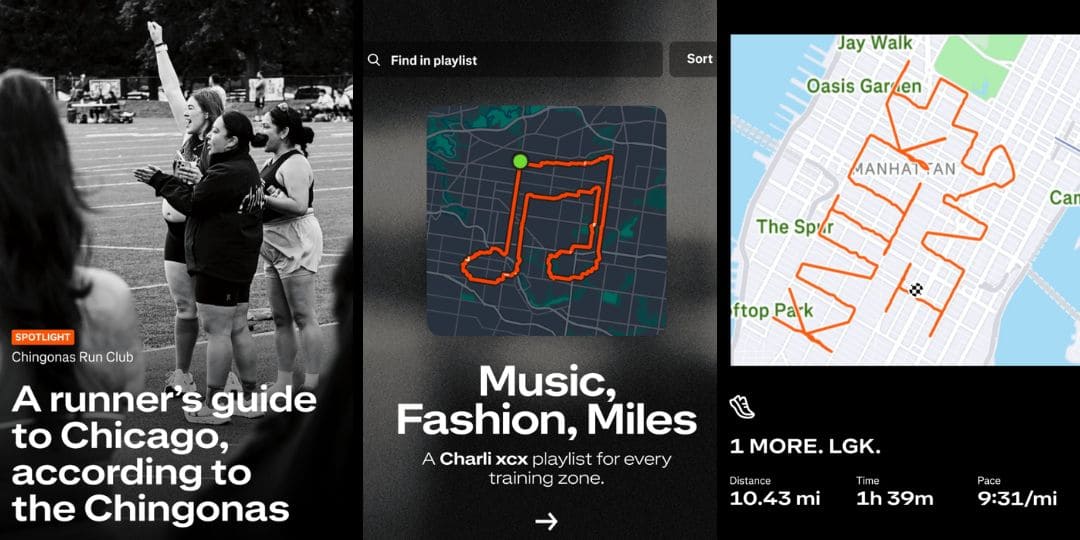
Strava
Strava leans hard into community because their whole brand promise is being the world’s largest team. Member spotlights, local run club partnerships, and memes that land exactly when they should. It all adds up to a sense of camaraderie that’s hard to fake.
Ikea
Ikea brings playful energy to everything, no exceptions. An earned media stunt tied to their Swedish roots, a cultural meme that actually makes sense for the brand, a new collection built for their exact target audience. Their tone of voice shows up everywhere, every time.

How to build a brand marketing strategy
One thing to know before you build your brand marketing strategy, is that it’s a living breathing guide. It’s not a document you write once and file away. The goal is that you’ll revisit your strategy constantly as culture shifts, platforms change their rules, and your product grows into something new. Treat your brand marketing strategy like a compass. With that in mind, here are the steps to building your own strategy. Beware that as you refine, you’ll have to tweak all of these slightly – and not always in this order. Being a brand marketer is a lot like being a cobbler or a blacksmith; we’re always tinkering until we get it right.
- Research Start with a thorough audit — your industry, your competitors, your audience, how people talk about your category on social. You need a clear read on how your product or service is currently perceived before you can decide what to do about it. Are you trying to shift a perception? Introduce a new way of thinking entirely? You can’t answer that until you know where you’re starting from.
- Audience Get specific about who you’re actually talking to and separate your core audience from your target audience. Your core audience is who shows up for you today. Your target audience is who you’re trying to reach as you grow. Both matter, and your messaging will likely change depending on which group you’re trying to reach.
- Goals Nail down your KPIs alongside your broader business and marketing goals. What are you actually trying to achieve? A new company might be chasing awareness and lead gen. A Fortune 500 brand might be optimizing for engagement and loyalty instead. There’s no right answer, but think about what each metric signals before committing to chasing it.
- Brand identity (visual) This is where you bring in your design and creative team to build a real set of guidelines: logo, color palette, typography, packaging, website design, the whole visual orchestration. Every other decision downstream gets filtered through this, and it’s how people literally see your brand before they read a single word of your copy. I advise you to take your time here. You can iterate later, but a rushed identity is expensive to walk back, and it looks messy (pun intended).
- Messaging Define your internal and external positioning. This can look like your brand values, mission statement, manifesto, internal naming conventions and more. These are the core elements of your brand story, and they directly shape how you communicate (and how you’re understood) by customers.
- Measurement Tie this back to your goals from step three. This is how you gauge success, short and long-term. Examples include CTR, engagement, foot traffic, brand sentiment, whatever metrics actually map to what you said you were trying to achieve.