

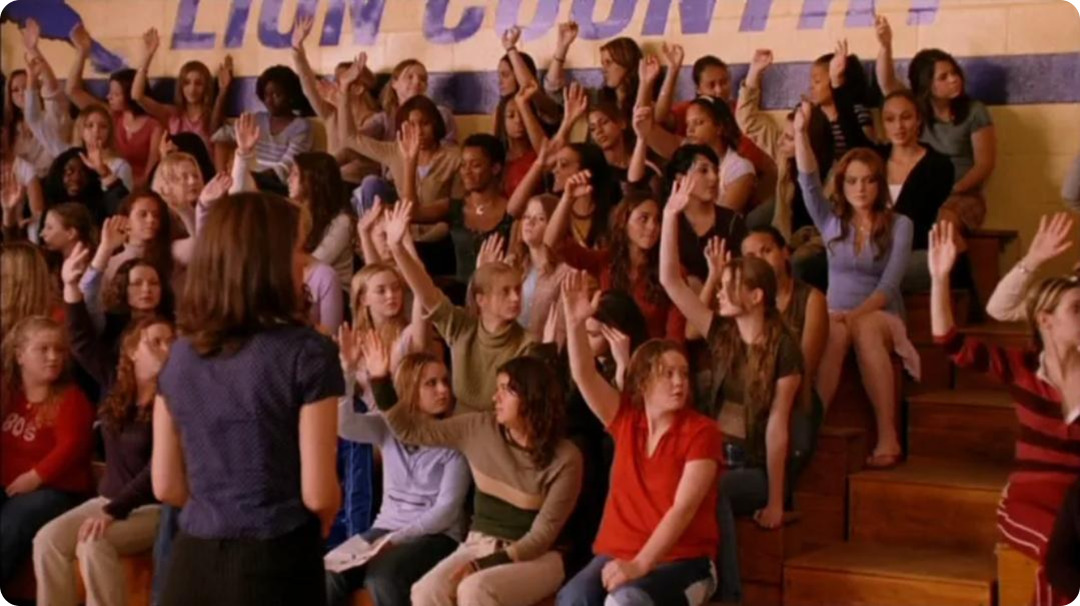
Raise your hand if you have ever felt personally victimized by unhinged marketing.
Perhaps you’ve been offended by Nutter Butter’s bizarre TikToks, felt called out by the TSA’s sassy tweets, or were equal parts confused and afraid of Liquid Death’s gory Instagram posts.
Within the past few years, we’ve seen brands adopt an unhinged personality as the basis for their entire social media strategy. This comes to life in the form of content that feels outlandish, bizarre, irreverent and oftentimes completely unrelated to what their product/service is.
At its best, this content can feel witty, risque, and smart; at its worst, cringeworthy and fake.
Is attention worth your brand reputation? Let’s get into it.
What Is Unhinged Marketing?
If you’re not sure what unhinged marketing is, think about the last time you saw a brand post and thought to yourself “how did that get approved.” Some of the best brand posts feel like they skipped legal review.
By definition, unhinged marketing is “a social-first content style that uses absurdity, blunt humor, self-awareness, popular memes, internet language, and unexpected creative choices to earn attention.”
Where traditional strategy is more buttoned up and professional, unhinged marketing embraces absurd, unpredictable content. If you’re familiar with guerilla marketing, unhinged marketing is its Gen Z (borderline Gen Alpha) cousin. Where Guerilla marketing often involves agile and low budget unconventional advertising tactics centered on the element of surprise, unhinged marketing is the modern equivalent, rooted in social virality. Both aim to achieve the same thing; Attention.
In practice, a brand being “unhinged” can look like:
- Using a mascot to prank people
- Treating the comment section as a free-for-all with sassy or off-the-cuff replies

- A brand only posting memes, AI slop, and brainrot content
- Posts that appear intentionally nonsensical, manic, or off-putting
Clearly, there’s no one right way to be unhinged on social media, but more than an outcome, it delivers a feeling. Traditional advertising and marketing strategies are created and measured by KPIs, ROI, CTR, Engagements, Impressions, and word of mouth. Unhinged marketing takes the path less traveled and relies on something much more nonchalant to measure success; the elusive word of mouth and brand awareness.
Word of mouth used to be limited to the “real world” a.k.a. Anything that happened offline, but now has expanded to the social world. For example, you can’t track who screenshots your post, if someone shows their friend your profile on their phone, or if multiple people are watching a piece of content from the same screen.
Brand awareness, on the other hand, is a general understanding of how people perceive your brand, and is generally measured in the very descriptive terms: positive, neutral, and/or negative. You can use dashboards like Brand Watch, X, and Y, to perform rigorous brand listening audits, which always pair well with doing your own social listening.
Unhinged marketing started with a change in tone of voice and “vibes” so it makes sense why the measurement and reporting strategy would follow suit.
Why Brands are Going Crazy
To be unhinged is characterized as “highly disturbed, unstable, or distraught.” If we take the definition at face value, no one would dream of being described as such, especially not a billion dollar company. So, why do so many brands, celebrities and influencers love to market themselves as “‘unhinged?”
The truth is, marketing operates in an attention economy. This used to be especially true for highly commodified industries like food & beverage, toys, and retail, but has since expanded into tech, finance, B2B and beyond.
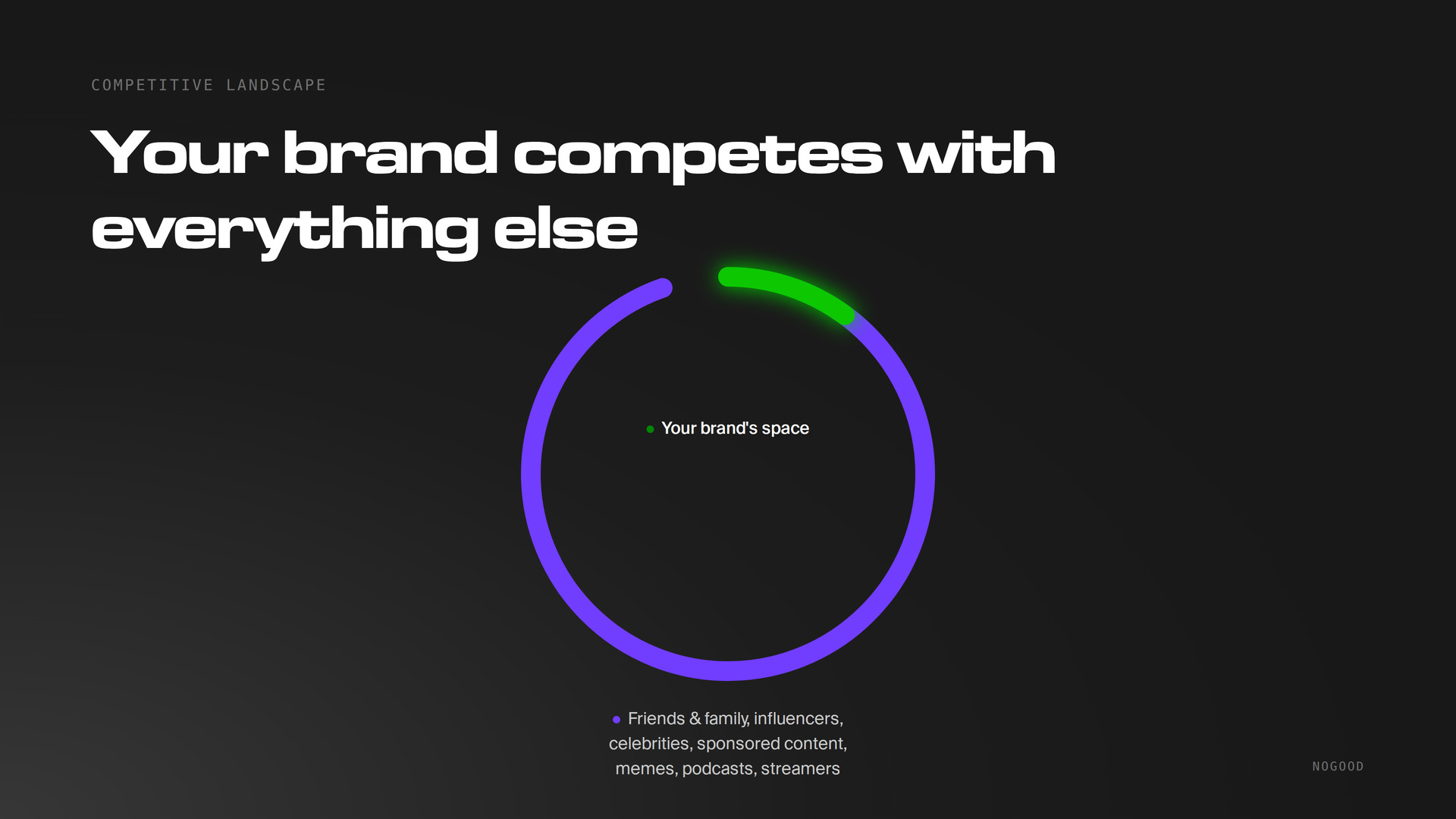
In the past, a brand only needed to compete with their direct competitors, but now they’re competing with their audience’s actual friends & family, influencers, celebrities, memes, podcasts, streamers, and sponsored content. If we think about it in fractions, that only leaves a very small sliver of pie for a brand to A) show up in your feed B) make an impression and C) prompt you to do something.
You’d probably scroll past a stock image of a pack of Scrub Daddy sponges, but would you scroll past a video of a sponge on top of a grill stuffed with hot dogs being doused in ketchup and mustard? Would you scroll past an elephant mascot dancing during a WNBA halftime game? I could go on, but my guess is probably not. Naturally, going to the extreme was one of the few ways for brands to get noticed, and alas unhinged marketing was born.
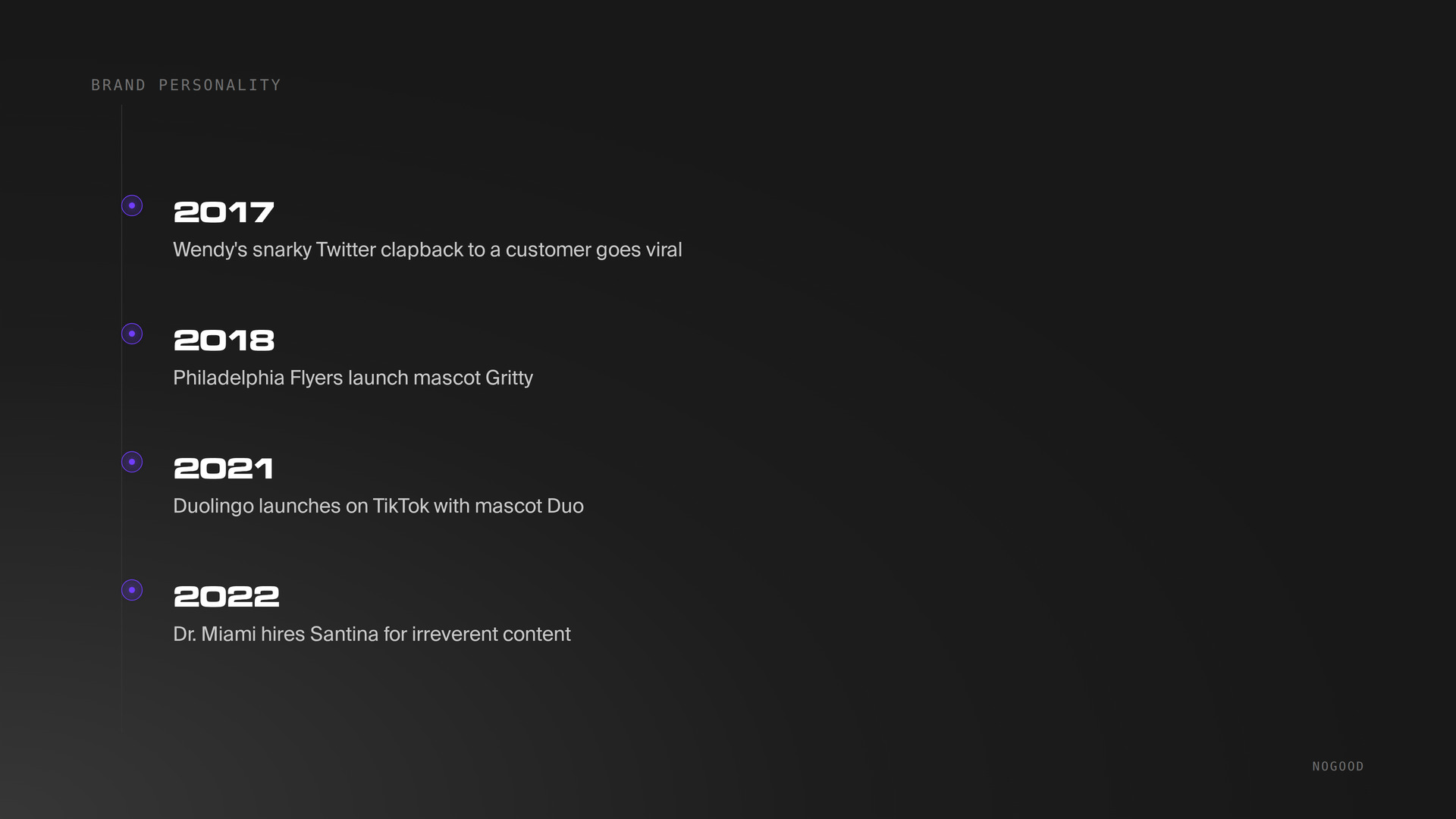
Though the start of unhinged marketing can’t be labeled with a clear ‘before and after’ like some other social trends. Instead, I like to view the rise of unhinged marketing as a rolling evolution of brands developing a social media personality. A few important milestones throughout the golden age of unhinged marketing:
During this time, the benefits far outweighed a slap on the wrist from legal, or a few salty Karen’s in the comment section. For brands, unhinged marketing could help them kill multiple birds with one stone.
Virality: the root of all marketing is to amplify brand awareness and manufacture virality. At the end of the day, extreme content gets shared, engaged with, and remembered. In this case, the unhinged trend is extreme in comparison to a century of hyper polished, formal, and perfect content.
Reaching a younger crowd: Gen Alpha and Gen Z grew up at the same time as Instagram, Snapchat, Vine, and Tumblr were just picking up. By nature, these platforms favored less polished content which carries on to our collective love of the photo dump, brainrot, and content that feels casual.
Counter culture is cool: what was once labeled unorthodox or inappropriate is now cool. For so long, we watched the same stuffy ads with the same celebrities playing the same tropes, and it got boring. As a result, people are allergic to anything that feels too professional, too formal, too capitalist (indulge us in the irony of it all). For brands to show up as cultural disruptors, embracing a “highly disturbed, unstable, or distraught” online presence was a natural evolution.
Unhinged Marketing: Why it Was Never Enough
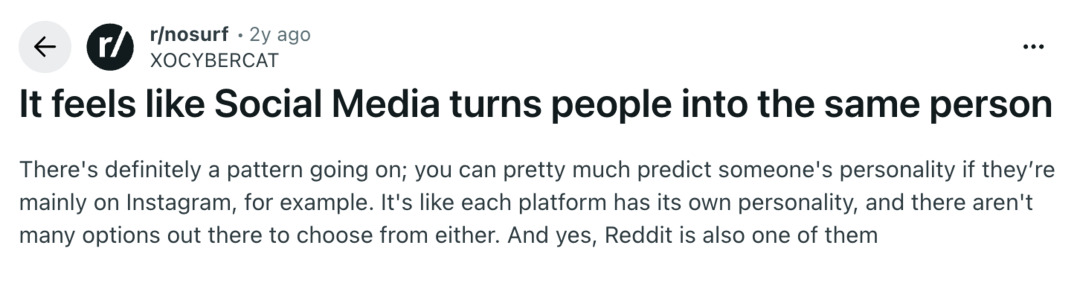
The problem with unhinged marketing is similar to the epidemic of brainrot slang and how it’s impacting us on a cultural level. With brainrot slang, entire generations are adopting the same language, idioms, and inside jokes which are not inherently bad – however, we’ve brought Orwell’s greatest fear to life in a post-modern form of ‘groupthink.’ Similarly, unhinged marketing’s fatal flaw is that being unhinged alone isn’t an actual strategic pivot. If ten brands can all be unhinged in the same exact way on social, is that a unique strategy? Or, is it a template they’re following? I think we all know the answer to that.

The reason why so many brands lost their minds trying to out-do each other on being unhinged is because it’s a natural response to uncertainty. As mentioned in the timeline, unhinged formats began in 2017, ramping up in 2018 and becoming mainstream by 2019. Covid-19 forever altered the way we relate to and consume social content. On top of that, growing anxiety, fear, and uncertainty influence consumers in their day to day lives. In response, unhinged humor seems like the only viable option.
But what happens when everyone else puts the same puzzle together? You get the same picture. For example brands like DuoLingo, Nutter Butter, Scrub Daddy, RyanAir, and Wendy’s (to name a few) have all built their entire consumer ecosystem around the same unhinged persona. On the surface level it drives engagements, likes, shares but the real question is, are they building brand equity that can stand the test of time?
The Aftermath and What Comes Next
When everything else gets more competitive, saturated, and noisy, your way out of the box, is brand. If we consider why this is happening NOW, I challenge you to think about the main factors changing social behavior: AI and social media. With AI, brands can mimic anything. However, imitation is cheap and everyone knows that. What AI can’t replicate is the feeling your brand gives people. Social media on the other hand, means your brand has to compete with organic content, trends, and creators – not only your direct competitors. So, what’s left to differentiate your brand is strategy, and when we all follow the same strategy, nothing stands apart.
I appreciate and agree with the conclusion you came to. While reading the different case studies, my thoughts kept going to the fact that if this keeps working well, at some point there will be so many copycats that it will ruin the uniqueness and the effectiveness of the strategy would expectedly suffer.