
Every brand on the internet wants to be funny now, and most of them are borrowing someone else’s joke to do it. Meme marketing used to be a novelty line item; a social manager would slip a Distracted Boyfriend template into the content calendar and hope nobody upstairs asked questions. That era is over. The accounts that get it right now build audiences that rival media companies, and the ones that get it wrong become screenshots in someone else’s thread about cringe.
What Is Meme Marketing?
Meme marketing is the use of internet memes, GIFs, and emojis in brand content to speak the native language of social feeds. Brands join existing meme formats, remix trending cultural moments, or build original characters and templates that audiences share on their own. Done well, it earns reach and brand recall at a fraction of traditional production costs.
The word itself is older than the internet. Evolutionary biologist Richard Dawkins coined “meme” in his 1976 book The Selfish Gene to describe an idea that spreads from person to person the way a gene spreads through a population. Fifty years later, that definition still holds; the only thing that changed is the speed. A meme now moves from a group chat to a brand’s X account to a Fortune 500 boardroom deck in about a week.
This guide covers why meme marketing works, the brands doing it well right now, how to build a meme marketing strategy your legal team won’t panic over, and where GIFs and emojis fit in. It also covers the part most guides skip: the operational and legal plumbing that decides whether a meme lands or lands you in court.
Memes vs. GIFs vs. Emojis
All three borrow from internet culture, but they do different jobs. Memes carry an argument, GIFs carry motion, and emojis carry tone.
| Format | Best channels | Best use | Effort | Risk |
|---|---|---|---|---|
| Memes | TikTok, Instagram, X, LinkedIn | Reacting to culture, building brand voice and characters | Medium to high (speed + approvals) | High (copyright, tone-deafness) |
| GIFs | Email, Instagram Stories, Slack/Giphy stickers | Showing a product in motion, drawing the eye to a CTA | Low to medium | Low (rights on third-party clips) |
| Emojis | Email subject lines, push notifications, captions, DMs | Setting tone, saving characters, signaling the topic fast | Low | Low to medium (overuse, mixed results) |
Why Meme Marketing Works
Meme marketing works because it looks like everything else in the feed, which is the one thing a traditional ad can never do. People scroll past content that announces itself as advertising. They stop for content that looks like it came from a friend.
- Low production cost. A meme needs a writer with timing and a designer with a template. That makes it one of the cheapest formats a brand can test at volume.
- Native to the feed. Memes use the same visual grammar as the posts around them, so they skip the reflex that makes people swipe past polished creative.
- Built for sharing. A meme is a joke the viewer gets to pass along. When someone sends your post to a group chat, they’re vouching for it, and that reach never shows up on a media plan.
- Brand voice at speed. A brand’s personality is easier to show than to describe. One well-timed post tells an audience more about who you are than a brand book ever will.
The catch is that every one of these advantages depends on being early and being funny. A meme is a perishable good; the shelf life is measured in days, and a brand that shows up after the joke has peaked becomes part of the reason it died.
Meme Marketing Examples
The brands winning at meme marketing right now share one trait; they stopped borrowing jokes and started building characters. Here are three examples worth studying, one classic and two current.
Duolingo (TikTok, 2025)
In February 2025, Duolingo announced that Duo, its green owl mascot, was dead. The stunt started with nothing more than an app icon with X’s over Duo’s eyes and escalated from there, according to The Drum. On the day of the announcement, Duolingo’s social mentions spiked more than 25,000% and #ripduo was used over 45,000 times, per Meltwater data reported by Technical.ly. Campaign Asia put the campaign’s total at 1.7 billion impressions.

The funeral only worked because there was someone to mourn. Under former social lead Zaria Parvez, Duolingo’s TikTok grew from roughly 50,000 followers to more than 16 million in a little over four years, and The Drum notes the team ran with significant autonomy. Years of character-building came before a single tear was shed. (More on Duolingo’s social strategy)
Ryanair (TikTok, ongoing)
Ryanair turned every complaint customers have about budget air travel into content. Its TikTok uses a plane with a face to mock cramped seats, bag fees, and its own reputation before commenters can. In a 2025 interview with Skift, CMO Dara Brady described the voice as “cheeky, charming, and not afraid to be self-deprecating,” and noted it has stayed consistent for over 35 years. Skift reports the airline embraces viral moments like the meme about its windowless seat 11A, while the team keeps guidelines to stay clear of offensive territory.
Ryanair’s TikTok runs on the same voice the airline has used for decades, now parked on a platform that finally rewards it. A brand can only joke about the thing everyone already says about it.
Popeyes (X, 2019)
Popeyes is the classic case of the audience starting the meme and the brand riding it. When the chicken sandwich launched in August 2019, a reply war with Chick-fil-A on X (then Twitter) turned into a nationwide meme cycle, and the sandwich sold out across the country within about two weeks. Apex Marketing Group estimated the buzz was worth roughly $65 million in free media exposure.
Popeyes stayed in the conversation afterward. When Maurizio Cattelan’s $120,000 banana duct-taped to a wall became a meme at Art Basel that December, Popeyes posted a chicken sandwich taped to a wall. The brand understood its role; it was a guest at the party the internet was already throwing.

How to Build a Meme Marketing Strategy
A meme marketing strategy is mostly operations. The joke is the easy part; the system that lets a team post the joke while it’s still funny is what most brands never build.
- Define brand voice guardrails. Write down what your brand will joke about, what it won’t, and who can make that call. A one-page doc beats a 40-slide brand book. List the off-limits topics (tragedies, politics, competitors’ customers), the tone range you’re comfortable with, and three posts you’d never approve. Guardrails give a social team permission to move fast inside them.
- Pick formats you can own. Build original templates, mascots, or recurring characters instead of renting someone else’s meme. Duolingo has Duo. Ryanair has a plane with a face. Owned formats compound over time, carry zero licensing risk, and turn your brand into the template other people remix.
- Build a fast approval workflow. Cap meme approvals at one or two decision-makers and a same-day turnaround. A meme that clears five layers of review on Thursday is a fossil by Monday. Pre-approve the guardrails so individual posts don’t each need a committee.
- Run a rights check. Confirm who owns every image, clip, and template before it posts under your logo. Original art and your own footage are safe. Third-party photos, TV stills, and creator-made formats need a second look (more on that below).
- Test and measure what matters. Track shares, saves, comments, follower growth, and branded search lift over likes. Likes tell you people noticed. Shares and sends tell you people vouched for you, which is the whole point of the format. Branded search shows whether the joke moved anyone closer to buying.
For paid applications of the format, see our breakdown of meme ads.
Is It Legal for Brands to Use Memes?
Sometimes, and the line is thinner than most social teams assume. Most memes are built on copyrighted photos, illustrations, or film stills, and many feature real people with publicity rights. A meme going viral doesn’t put it in the public domain, and using one in brand content is commercial use, which weakens a fair use defense considerably.
The internet treats memes like a public good; the law treats them like property. A few cases show where that gap gets expensive.
Dude With Sign. FJerry, the company behind the Dude With Sign account starring Seth Phillips, had filed at least seven lawsuits by 2023 against brands that edited the photo so Phillips appeared to hold a sign about their product, per BuzzFeed News. The claims go beyond copyright to include false endorsement and right of publicity, since the edits implied Phillips vouched for brands he never worked with. The suits have kept coming; a complaint filed in August 2025 in the Southern District of New York makes the same three claims.

Running Away Balloon. On July 1, 2026, Filipino artist Elmer Saflor sued Memes Apps, the company behind Memes.ai, alleging it sold his 2017 “Running Away Balloon” comic as a searchable ad template to paying subscribers, as Decrypt reported. Saflor registered the comic with the US Copyright Office in 2024, per Dexerto. The case is a warning for brands too; a meme template sold to you by a tool doesn’t come with a license just because you paid for the tool. (We covered this in NoGood News.)

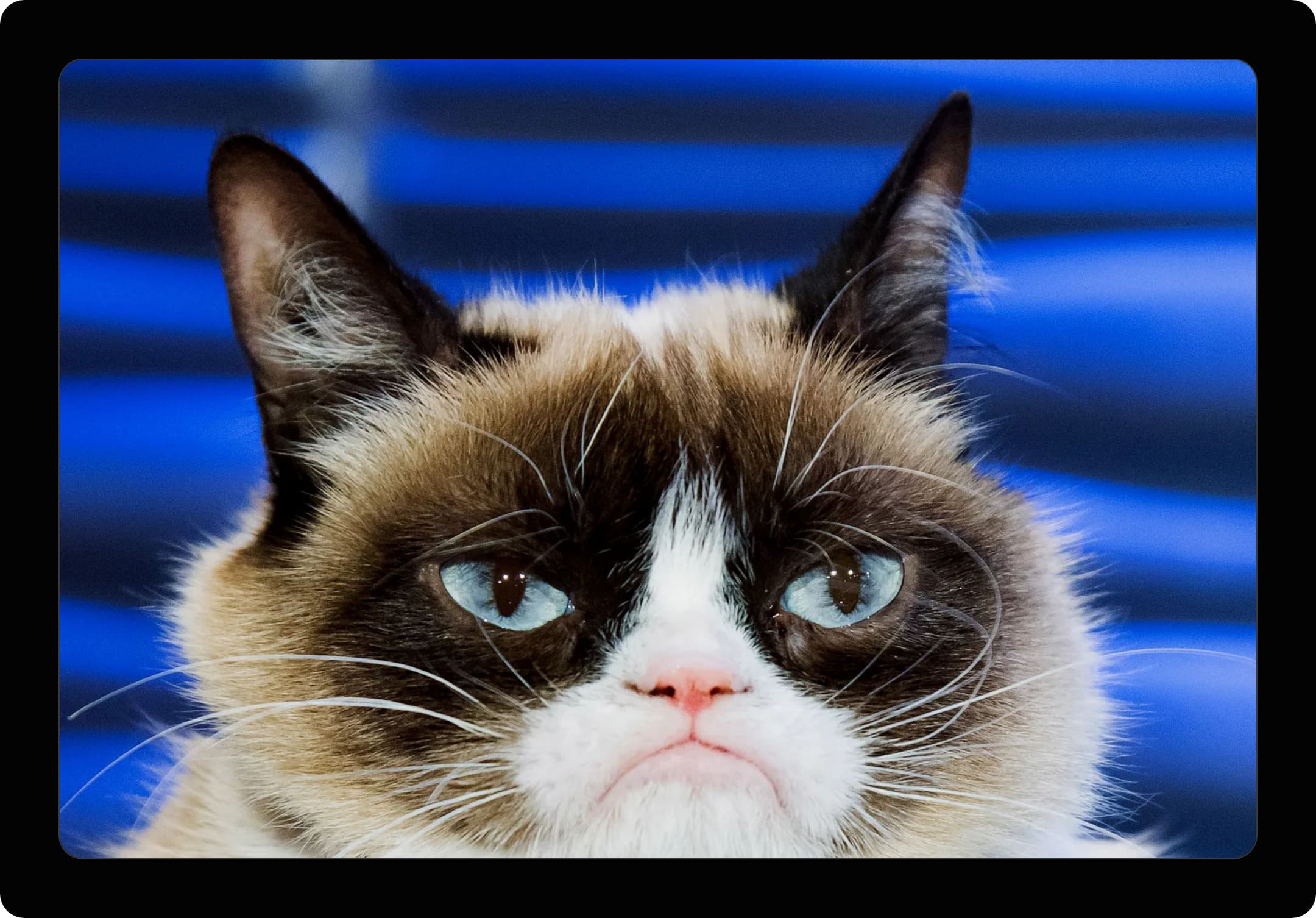
Grumpy Cat. The precedent everyone forgets. In 2018, a federal jury awarded Grumpy Cat Limited $710,001 against a beverage company that kept using the cat’s image beyond the terms of their licensing deal.
The safest approach is the one the strongest brands already take: build original formats, use your own footage, and treat any third-party image or recognizable person as something to clear before posting.
Where Meme Marketing Goes Wrong
Meme marketing fails in predictable ways. The joke arrives late, the brand buys a voice it doesn’t have, or the format gets so clever that nobody can read it.
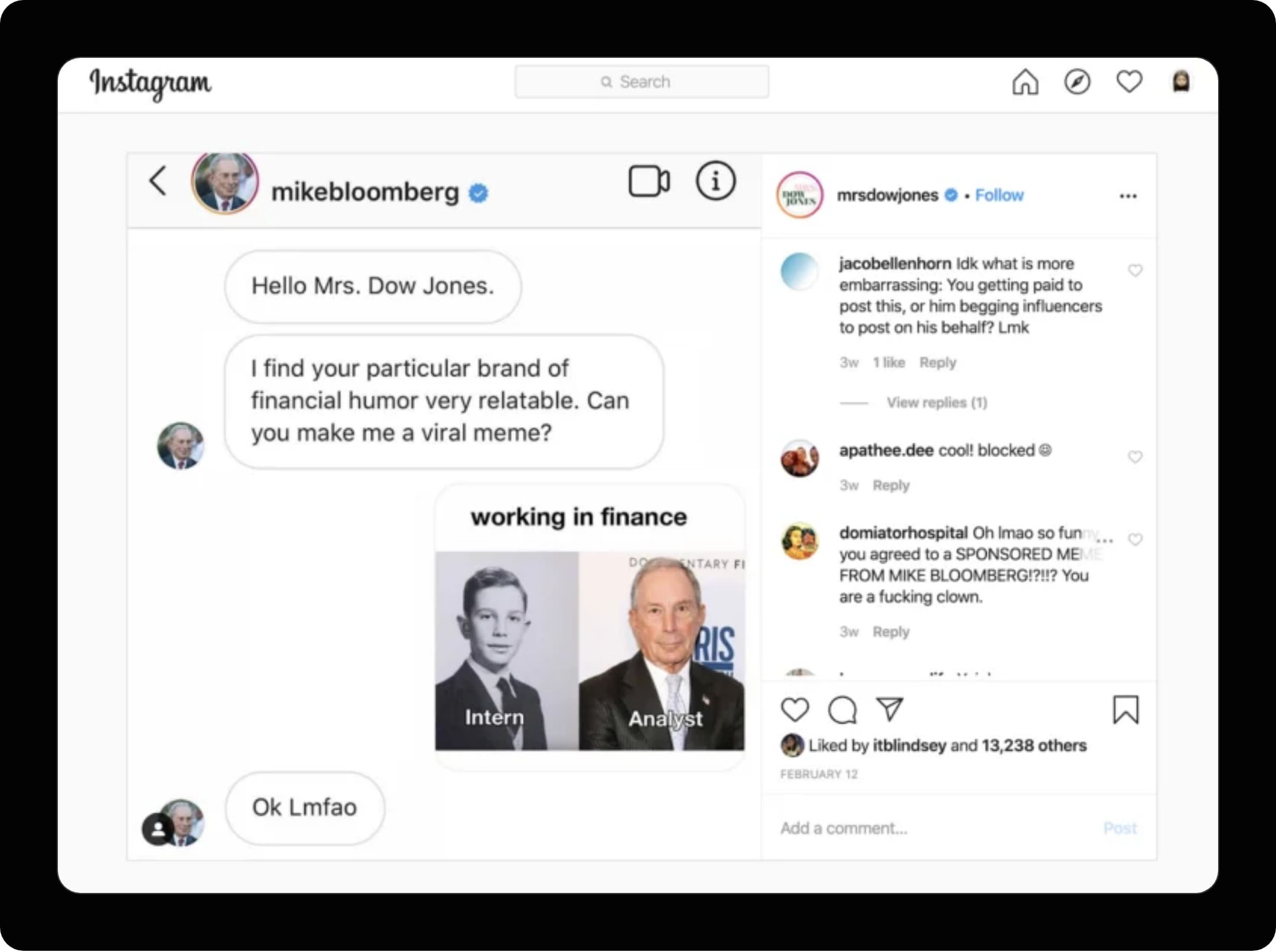
Buying the voice instead of building it. During his 2020 presidential run, Michael Bloomberg’s campaign paid major Instagram meme accounts to post sponsored memes about him. The comment sections turned on the posts almost immediately, and within hours Instagram changed its rules to require political campaigns to run influencer posts through its Branded Content tool with a “Paid Partnership” label. Audiences can smell a rented sense of humor, and they tend to say so in public.
Making the audience do homework. In 2015, Chevrolet released a press release for the Cruze written almost entirely in emojis and framed it as a decoding challenge. The idea was playful; the execution asked people who skim for a living to stop and translate. Most didn’t. A meme that needs a key has already lost the room.

Showing up after the party. A meme format peaks fast, and brands typically arrive when the original audience has moved on. By the time a template reaches a corporate approval chain, the internet usually reads the brand version as the sign the joke is over. For more on brands that keep pace, see our roundup of brands killing it on TikTok and our take on brand narrative control on social.
Beyond Memes: GIF Marketing
GIF marketing uses short, looping animations to show motion where a static image would fall flat. A GIF (Graphics Interchange Format) is an image file that supports animation, so a product demo, a reaction, or a moving CTA can play on a loop inside an email or a story without a video player.
GIFs work because the eye follows movement. That makes them strongest in two places.
A GIF can show a product doing its job in three seconds, which replaces a paragraph of feature copy nobody was going to read. Kate Spade’s emails used a looping GIF to cycle through each product’s features one at a time, letting the product explain itself. The tradeoff is file weight; heavy GIFs slow load times, and some versions of Outlook only display the first frame, so put the key message in that frame.
Instagram Stories and Giphy Stickers
Animated stickers and arrows draw attention to link stickers and polls, which replaced the old “swipe up” feature in 2021. Brands can also publish their own branded GIF stickers through Giphy, so users can drop a product or slogan into their own Stories. Ritual did this with a moving vitamin capsule and “Take your vitamins” lettering, turning its followers’ content into free product placement.
A few rules keep GIFs useful:
- Keep the motion simple and isolated so the eye knows where to go.
- Go light on text; a GIF that needs to be read twice is a GIF that gets skipped.
- Stay on brand with your color palette and logo placement.
Emoji Marketing
Emoji marketing is the use of emojis in subject lines, push notifications, captions, and replies to set tone and grab attention in a crowded feed or inbox. An emoji does in one character what a phrase does in five words, which matters on surfaces where text gets cut off.
The data on whether emojis help is genuinely mixed, so treat every claim as a hypothesis to test.
- The case for: Experian found that 56% of brands using emojis in subject lines saw higher unique open rates. The figure counts how many brands saw a lift, and many roundups misquote it as a 56% jump in open rates.
- The case against: In a controlled A/B test by Lebesgue, the no-emoji subject line had a 1.5% higher open rate and a 25% higher click-through rate. A Search Engine Journal test across 3.9 million emails found the no-emoji version won on opens in about 53% of campaigns, while the emoji version won on click-through rate in about 65%.
- The context: A 2018 study in Social Psychological and Personality Science found that smiley emoticons in formal work messages lowered perceptions of competence. Tone that reads as friendly in a DM can read as unserious in a B2B inbox.
Three principles hold up regardless of the data.
- Cater to your audience. A law firm and a snack brand shouldn’t use emojis the same way. Look at how your audience writes to you, then match it.
- Match the subject and sentiment. The best emoji tells the reader what the message is about before they read a word. Pottery Barn used a watch emoji to signal a sale running out of time, and Tynker used a school bus for a back-to-school promo.
- Practice moderation and check rendering. One emoji per subject line is plenty. Emojis render differently across iOS, Android, Gmail, and Outlook, and a newer emoji can show up as an empty box on older devices, so preview your send across clients before it goes out.
Our Take: Should Your Brand Try Meme Marketing?
Memes are a brand voice decision first and a content tactic second. The industry still treats them like a cheap engagement hack, something to drop into the calendar when a template trends. That version of meme marketing is the riskiest one available. It’s late by design, it borrows equity the brand doesn’t own, and it increasingly comes with a legal bill attached.
The brands that win play a different game entirely. Duolingo built an owl worth mourning. Ryanair built a plane that roasts itself. Both gave their social teams the autonomy to move at internet speed, and both turned their own character into the format other people copy. A borrowed coat keeps you warm until the owner wants it back.
So should your brand try it? Yes, if three things are true. You have a voice with enough personality to sustain a running joke, a team you trust to post without a committee, and a measurement plan built on shares and branded search over likes. If any of those are missing, fix the system before you post the meme (this is the work our social team does).
The paradox of meme marketing is that the brands best at joining the internet’s conversation are the ones that stopped waiting for the internet to start it.
FAQs About Meme Marketing
What is meme marketing?
Meme marketing is the use of internet memes, GIFs, and emojis in brand content to communicate in the native language of social media. Brands join trending formats, remix cultural moments, or create original characters and templates that audiences share on their own.
How do brands use memes in marketing?
Brands use memes to react to culture in real time, show brand personality, and earn organic shares on platforms like TikTok, Instagram, X, and LinkedIn. The strongest brands build recurring characters or formats they own, like Duolingo’s Duo, so their content compounds instead of chasing each new trend.
What are some examples of meme marketing?
Duolingo’s February 2025 “death of Duo” campaign, Ryanair’s self-deprecating TikTok account, and Popeyes riding the 2019 chicken sandwich meme cycle are three of the best-known examples. Each worked because the brand had a clear voice before it posted the joke.
Is it legal for brands to use memes?
It depends on who owns the image and who appears in it. Many memes use copyrighted photos or real people with publicity rights, and brands have been sued for editing memes like Dude With Sign into their own posts. Original formats and your own footage are the safest route; talk to counsel about anything else.
Does meme marketing work for B2B brands?
Yes, when the humor comes from the audience’s actual work life. B2B memes that poke fun at shared pain points (endless meetings, tool sprawl, reporting season) tend to land on LinkedIn and X, as long as the brand keeps the joke specific to its buyers.
How do you measure the ROI of meme marketing?
Measure meme marketing on shares, sends, saves, comments, follower growth, and lift in branded search. Likes show attention; shares and branded search show that the content moved people to vouch for the brand or look it up.
Do emojis improve email open rates?
Sometimes. Results vary by audience; Experian found 56% of brands using emoji subject lines saw higher open rates, while other A/B tests found no-emoji subject lines performed better. A/B test emojis with your own list before rolling them out.