

If you’ve ever pulled a number from your CRM, then pulled the “same” number from your ad platform, and ended up with two completely different figures… welcome to the club. It’s a frustrating place to be, especially when you’re trying to explain to a CMO why your paid social results look different depending on which dashboard you’re looking at.
The problem isn’t that your data is broken. The problem is that it lives in too many places, and nobody ever decided which one was the official version.
That’s where the concept of a single source of truth (SSOT) comes in, and it’s more achievable than most marketing teams realize, even if you don’t have a data engineer on staff.
What Does “Single Source of Truth” Actually Mean?
A single source of truth is exactly what it sounds like: one central place where your marketing data lives, and where everyone on your team goes when they need to report on something or make a decision.
It doesn’t mean every tool you use gets shut down. HubSpot still tracks your leads. Meta still tracks your ad clicks. Google Analytics still measures your traffic. The difference is that all of that data flows into one place; and that place is what you use for reporting, not the native dashboards inside each tool.
The goal is to eliminate the “well, that depends on which report you’re looking at” conversation. For good.
Why Marketing Teams Struggle With This (It’s Not Just a Tech Problem)
Here’s the thing most articles about SSOT won’t tell you: the hard part isn’t the technology. It’s the organizational habits that formed before anyone put a system in place.
Your performance team reports out of Google Ads. Your email team swears by HubSpot. Your social team pulls from Sprout Social. And somewhere in a spreadsheet that lives in someone’s personal Drive folder, there’s a weekly KPI tracker that a past employee built in 2021 and nobody fully understands anymore.
Each of those sources was set up with good intentions. But over time, they became silos, and silos make it really hard to answer basic questions like “how much did we spend to acquire a customer last quarter?”
The fix isn’t to throw out all your tools. It’s to create one layer that sits above them all.
The Single Source of Truth Building Blocks You Actually Need
You don’t need a full data engineering team to pull this off. But you do need a few things working together.
1. A Data Warehouse or Reporting Layer
This is your central hub. Tools like BigQuery, Snowflake, or even something lighter like Looker Studio (with the right connectors) can serve as the place where data from all your marketing tools lands and gets unified.
If the word “warehouse” feels intimidating, start smaller: even a well-structured Google Sheet with clean data pipelines is better than 12 separate dashboards that don’t talk to each other.
2. ETL or Data Integration Tools
ETL stands for Extract, Transform, Load, and it just means pulling data from where it lives, cleaning it up, and moving it somewhere useful. Tools like Fivetran, Stitch, or Airbyte connect to your marketing platforms and automate that process.
The “without a data engineering team” version of this is usually a no-code or low-code connector tool. They’re not perfect, but they get you 80% of the way there without writing a single line of SQL.
3. Clear Ownership & Naming Conventions
This is the part that gets skipped most often, and it’s also the part that tends to blow everything up six months later.
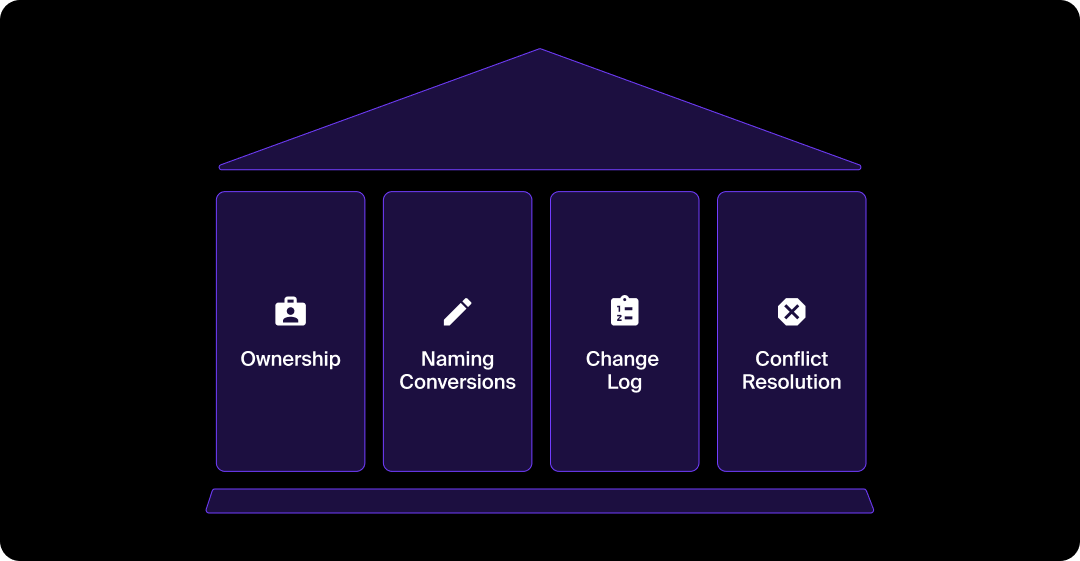
Someone on your team needs to own the data layer. Not “everyone is responsible for data quality” (which kind of means that nobody is). One person, or one small group, decides what the official definition of a “lead” is, what counts as a conversion, and which number wins when two sources disagree.
Get that documented. Even a simple Notion page counts.
How to Set Up a Single Source of Truth Without Losing Your Mind
You don’t have to do this all at once. In fact, you probably shouldn’t.
Start with the metrics that matter most to your business right now. If you’re reporting on pipeline weekly, start there. Connect your CRM and your paid channels first. Get those numbers clean and consistent before you try to pull in every data source you have.
A few practical steps to get started:
- Audit what you’re currently reporting. List every dashboard, every report, every spreadsheet. Note where the data comes from and who uses it. You’ll probably find three or four places that are reporting on the same thing slightly differently.
- Pick your destination first. Decide where your single source of truth will live before you start connecting anything. This is often a BI tool (Looker, Tableau, Metabase) or a data warehouse. It’s a lot easier to build pipelines toward a clear destination than to figure it out halfway through.
- Connect your highest-priority sources. Start with two or three platforms (the ones driving the most decisions). Get those working cleanly before adding more.
- Define your metrics explicitly. What is a “session” in your world? What’s a “qualified lead”? Write it down. When everyone uses the same definitions, the numbers start to match.
- Build trust slowly. Honestly, the hardest part of this process is getting your team to actually use the new system instead of falling back to the old ones. Share the wins early. Show that the numbers are reliable. Give people a reason to trust it.

Do You Actually Need a Customer Data Platform (CDP)?
This question comes up a lot, so it’s worth addressing directly: a CDP is not the same thing as a single source of truth (even though vendors love to position it that way).
A customer data platform (CDP) is primarily about unifying customer-level data: stitching together a user’s behavior across touchpoints to build a complete profile. That’s valuable, especially for personalization. But it’s not the same as having clean, unified marketing performance data.
For most growth-stage teams, a CDP is honestly overkill. You don’t need to know that user 4892 clicked an email before visiting your pricing page three times before converting… at least not before you’ve solved the simpler problem of knowing your total CAC without opening four separate tabs.
Start with the basics. CDP can come later.
What About Data Governance? (Yeah, You Need to Think About This)
“Data governance” sounds like an enterprise IT problem. But it’s not. It’s just the practice of deciding who can change what, and making sure the rules are clear.
When you have one source of truth, the stakes around data quality go up. If someone reclassifies a campaign in HubSpot without telling anyone, it can break a month of reporting downstream. If a new UTM convention gets introduced halfway through a quarter, attribution data gets messy fast.
You don’t need a formal governance program. You need:
- A shared naming convention (for UTMs, campaigns, audiences, whatever you track)
- A change log or communication channel where updates get announced
- Someone with final say when there’s a conflict
That’s it. Basic? Yep, but it makes a huge difference.
The Payoff Is There, But It Takes Time
Here’s an honest take: building a single source of truth for your marketing data is not a one-week project. It’s also not a “someday when we have more resources” project. If you wait until you have a full data team to solve this, all you’ll be doing in the meantime is making worse decisions for however long it actually takes for you to get those resources.
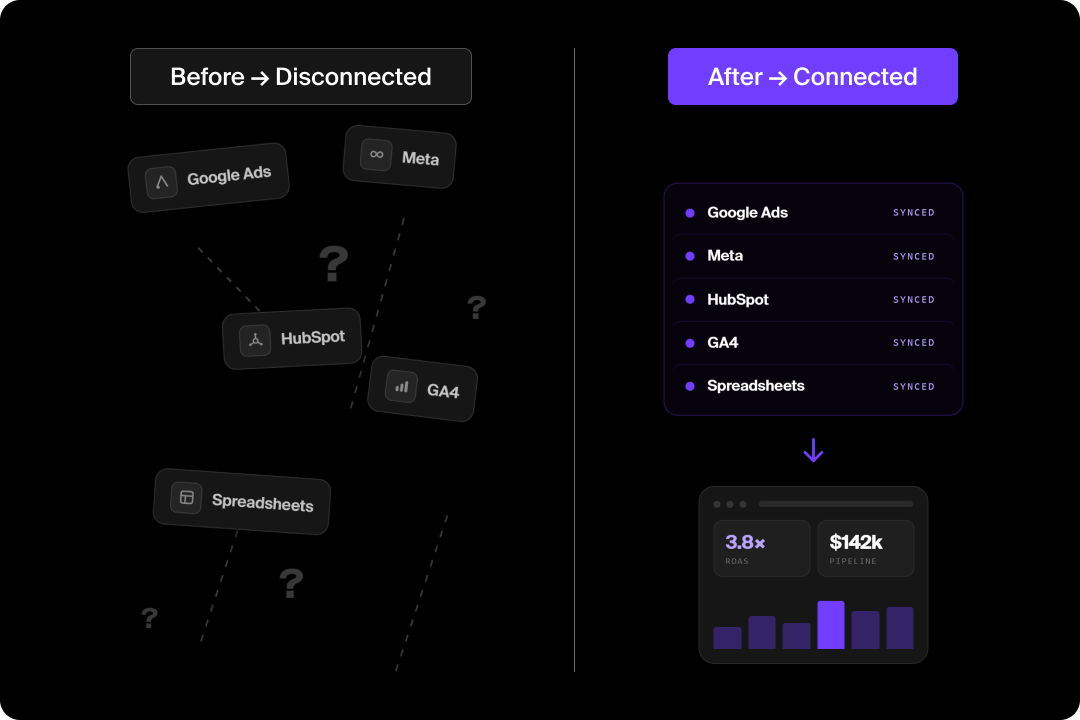
The right approach is to start small, stay practical, and build toward it incrementally. Even getting two or three of your core reporting sources aligned can meaningfully reduce the time you spend in every performance review reconciling numbers that shouldn’t be different in the first place.
When it works, it’s genuinely freeing. You stop arguing about which number is right and start spending that energy on what to do about it.
Marketing Data Single Source of Truth FAQs
What is a single source of truth in marketing?
A single source of truth in marketing is a central system or data layer where all of your marketing performance data is unified and stored. Instead of pulling metrics from individual platform dashboards that often conflict with each other, your team reports from one place, with agreed-upon definitions and consistent data.
Do I need a data engineer to build a marketing SSOT?
Not necessarily. Modern no-code ETL tools like Fivetran, Stitch, or Airbyte can connect your marketing platforms to a data warehouse or BI tool without custom engineering. You’ll need some technical comfort and a clear owner, but a full data engineering hire isn’t a prerequisite for getting started.
What’s the difference between a single source of truth and a customer data platform?
A customer data platform (CDP) focuses on unifying individual customer profiles across touchpoints for personalization purposes. A marketing SSOT is more about unified performance reporting: having consistent, trustworthy numbers across channels for decision-making. Most growth-stage teams should solve the SSOT problem before investing in a CDP.
How long does it take to build a marketing single source of truth?
It depends on the complexity of your stack and how many data sources you’re working with. A focused team can get a minimal version (two to three channels connected to a central reporting layer) running in a few weeks. Full implementation across all sources, with governance and documentation in place, typically takes one to three months.