

Today every major ads platform is telling you the same thing: let go.
Platforms are pushing broad targeting with Advantage+, AI-driven distribution, and ultimately a hands off the wheel strategy. Creative is your brand’s opportunity to go niche.
In recent years, Meta’s Andromeda engine took over delivery. Advantage+ has been a default campaign structure for most advertisers. Google PMax decides where your budget goes across every surface it owns. TikTok’s Smart Performance Campaigns optimize themselves.
The platforms have made it quite clear: manually building audiences, hand picking interest and placements is over. One would say, the end of an era.
And of course, our natural response is to go broad, with everything. Wide targeting means wide messaging and the algorithm should figure out the rest. To be fair, the algorithms are only getting stronger. They are processing billions of audience signals and behaviors and finding your ideal audience.
But here’s the problem most brands are missing: broad distribution does not mean broad creative should follow.
When you hand an ad platform generic messaging, stock imagery, basic CTA’s, and impersonal ad copy, the control we once had is loosened even further. Creative with a real POV, one that tells a story, speaks to a specific person, and has something to actually say will push performance and signal algorithms. The more specific and substantive the creative, the better the system understands who it is for. With all other levers automated, ad creative carries the weight.
The brands outperforming on paid right now aren’t fighting the algorithm. They’re feeding it something specific to work with. This includes niche hooks, persona-driven copy and even localized creator content. Creative that was built for someone, not everyone. And because of that, the algorithms know exactly who to show it to.
The Algorithm Rewards Specificity
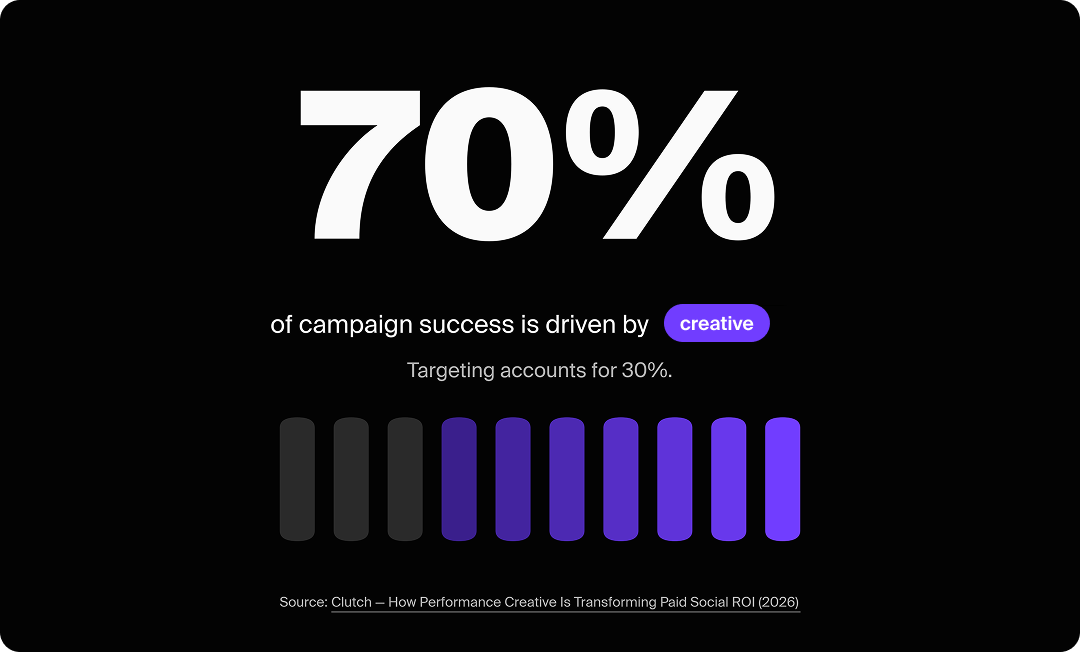
Algorithms like Meta’s Andromeda are not just randomly deciding who will see your ad; it analyzes what is in your ad to figure out who to show it to. Hook structure, narrative arc, visual composition, the list goes on. The system is reading all of it and pattern matching against user signals to find the person that is most likely to convert to your objective’s distinct goal.
When targeting was manual, your creative had to convert the audience that you hand-picked. But now that the algorithm is handling most if not all distribution, you are handling the messaging. Generic creative gives the algorithm little to no signal, as you shift to specific and substantive creative, the system will spend your budget finding someone who will convert, not just click.
Picture a video hook for a skincare brand. The generic version opens on a model with glowing skin, soft music, logo appears: “Healthy skin starts here.” It’s fine, but it’s forgettable. The algorithm has almost no behavioral signal to work with. Who is this ad really for?
Now picture the niche version, a creator in the space holding up the skincare product, looking directly at the camera and says “if you’ve tried every moisturizer on the market and you still have dry skin, this is why.” Your ideal customer will stop scrolling with this hook and this perspective filled hook provides greater data for the algorithm to do its job.
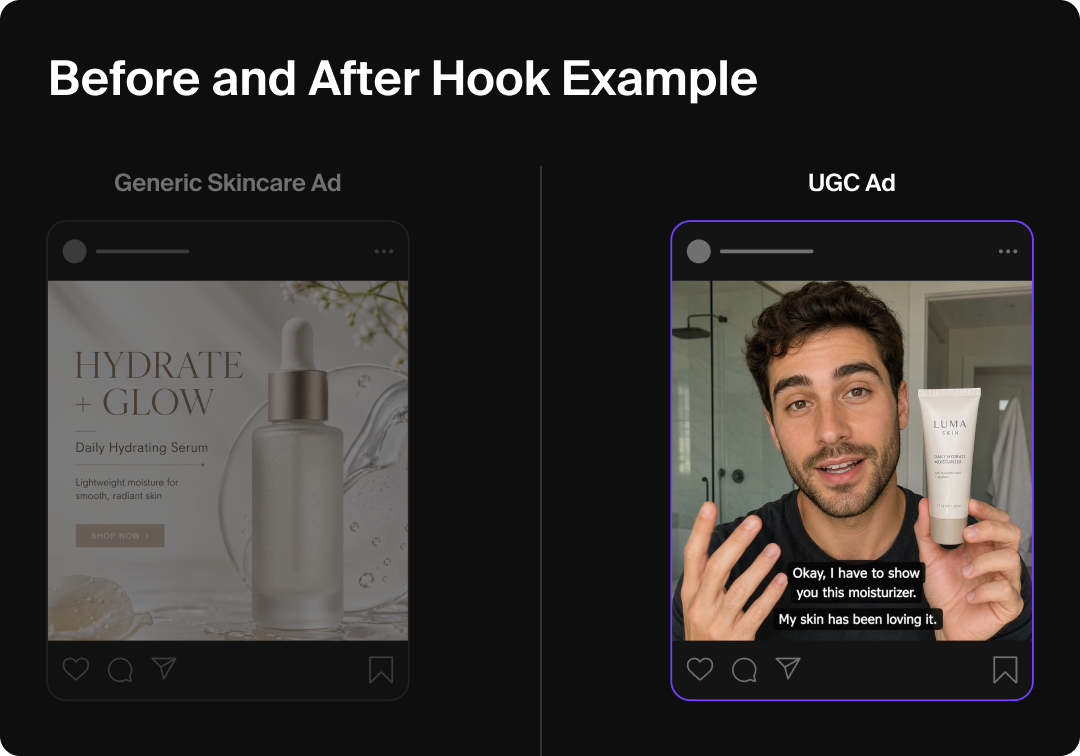
This is what “creative is the new targeting” actually means in practice. The more point-of-view your creative has, the more useful it is to the algorithm trying to place it.
What Niche Performance Creative Actually Looks Like

Niche creative is about making your message more specific so the right audience finds you faster. In practice, it shows up in three ways.
1. Persona-Driven Hooks
The fastest way to signal specificity is your opening line. This does not mean flashing your brand or product name and calling that a hook. One needs to address the specific problem, moment, or identity of the person you’re talking to in their hook.
For example, “For anyone who’s sent a sympathy card and immediately regretted the generic message inside.” The person that the hook is written for feels seen immediately, they can relate and therefore they “buy in” to your product or service.
The mistake most brands make is writing hooks that try to include everyone. Not only is that inefficient for performance, but it also gives the algorithms little to work with.
2. POV-Driven Storytelling
Beyond the hook, niche creative has an actual perspective running through it. It takes a position on something. With this, you may have to assume some context about the viewer’s life, their frustrations, what they’ve already tried. This POV is not about explaining what your product does or is, but it starts with the why before the what. Similar to Simon Sinek’s Golden Circle model, this communicates from the inside-out to differentiate your brand which in turn makes for more effective paid content.
This is the difference between a D2C brand saying “our supplements support gut health” versus “you’ve probably tried cutting out dairy, drinking more water, and taking probiotics, but your stomach still isn’t right. Here’s what you are missing.” The second version is written for someone mid-frustration, not someone casually browsing wellness content. That specificity is a signal.
3. Localized Creator Content
This is where niche creative gets much more tangible, and truthfully an underused practice. A local creator filming in a recognizable neighborhood, referencing something culturally specific to their city, and speaking in the cadence of their community isn’t just aesthetically differentiated. It earns a different higher intent quality of attention from the right viewer.
And attention is exactly what the algorithm learns from.
When someone in LA sees a creator they recognize, in a part of the city they know, talking about something that feels native to their experience, they don’t just watch, they engage. Those engagement signals are what algorithms optimize against. By earning the attention of the right people with your creative, ad platforms can follow that signal to success.
How to Build It Without Re-Inventing the Wheel Every Time
The biggest pushback on niche creative is volume. If you’re making specific content for specific people, doesn’t that mean more work? Not if you build it right.
The key is thinking in angles, not individual assets. Start with one core message and ask: who are the three or four distinct people this product is for? What problem does each of them have? What have they already tried? Each answer is an angle and each angle becomes a creative direction, not a single ad. From one angle you can pull a static, a video hook, a UGC-style clip, a creator brief. The creative is different but the production lift is shared.
Niche creative at scale isn’t about making more things. It’s about making specific things more efficiently.
How to Know If Your Creative Is Doing the Targeting Work
If your niche creative is working, the metrics will tell you. Not the typical ROAS or Campaign Level CTRs; for early signals you need to look at a set of different metrics.
Video watch time and video completion rate tell you if the POV is landing. Generic creative gets scrolled past fast. Creative with a genuine perspective holds attention because the right viewer feels like it was made for them.
CTR at the ad level, not the campaign level. If one creative is pulling significantly higher CTR than another inside the same broad campaign, that’s the algorithm telling you it found a better signal. That creative is doing more targeting work than the other. Double down on the angle, not just the format of the ad.
What you’re looking for overall is a pattern. The niche creative should show stronger engagement from a smaller, more qualified pool of viewers and that should eventually show up in lower CPA and stronger ROAS downstream. If you’re seeing high reach but weak engagement, your creative is too broad. The algorithm is serving users that are not in your ideal customer personas, that is not the goal.
For a deeper look at how to structure your testing around these signals, NoGood’s guide to creative testing for paid social is worth a read.
Conclusion
The platforms have changed the game. Broad targeting isn’t a trend or a beta feature, it’s the new infrastructure. And fighting it by trying to manually out-target an algorithm processing billions of signals in real time isn’t a strategy, it’s a losing battle.
But here’s what hasn’t changed. Having the right creative, built for the right person, will always outperform generic content built for everyone. The algorithm didn’t take that away, it made it more important.
When your targeting is wide open, your creative is the only thing doing the precision work. A specific hook, a genuine POV, a local creator speaking to their community are not just aesthetic choices, they’re elements of targeting.
Stop building creative for the algorithm to figure out, instead build creative so specific that the algorithm has no choice but to get it right.