

Brand collaborations have shifted from rare partnerships to a tactical marketing staple, allowing businesses to tap into new audiences, increase engagement, and create high-quality third-party content that resonates with potential customers, and now AI models.
But how do brand collaborations work, and what makes them successful? Let’s dive into the world of brand partnerships, explore successful examples, and uncover the best strategies for executing a winning collaboration in 2026.
What Are Brand Collaborations?
Brand collaborations, also known as brand partnerships, occur when two or more brands come together to create a joint marketing campaign, product offering, or exclusive content. These collaborations can take many forms, including product co-creations, limited edition releases, celebrity collaborations, influencer marketing initiatives, and cross-promotions on social media platforms. Successful brand collaborations leverage the strengths of each participating company to create an offering that’s greater than the sum of its parts.
Whether it’s a luxury brand like Louis Vuitton partnering with a streetwear label, or an energy drink collaborating with a music festival, brand collaborations help businesses reach a wider target market and foster audience engagement through limited-time offers.

Are Brand Collaborations Successful?
When executed strategically, brand collaborations can be highly successful. Here’s why:
Expanded Audience Reach: Collaborations between brands expose businesses to each other’s customer base, increasing visibility and brand awareness.
Enhanced Credibility: Partnering with a like-minded brand can boost credibility and trust among potential customers.
Increased Engagement: Joint marketing campaigns often generate excitement, leading to higher engagement rates on promotional content like social media posts.
Innovative Product Offerings: Collaborations inspire creativity, resulting in unique and exciting products that appeal to customers.
Cost-Effective Marketing: Shared marketing efforts can reduce costs while maximizing impact.
AI Visibility Lever: Brand mentions and reviews from credible third-party voices strategically increase your visibility across LLMs; social content drives 2.31 to 4.17x more AI citations than owned content.
How Much Do Brand Collaborations Cost?
The cost of a brand collaboration varies based on several factors:
Brand Size & Reputation: Collaborations with major luxury brands like Louis Vuitton or leading influencers come with a higher price tag.
Campaign Scope: A simple social media giveaway costs significantly less than a co-branded product launch.
Production Costs: Creating high-quality content, packaging, and promotional materials adds to the overall investment.
Influencer Partnerships: Collaborations with micro-influencers tend to be more affordable, while celebrity endorsements require a larger budget.
Marketing Efforts: Paid advertising campaigns, social media ads, affiliate marketing, and event sponsorships contribute to expenses.
A well-planned brand partnership can yield substantial ROI, making it a worthwhile investment for many businesses.
How to Collab With Brands
To ensure a successful collaboration, follow these steps:
1. Identify the Right Partner
Before you seek out a collaboration opportunity, evaluate your own place in the market. Who is your audience? What segment of your audience is not yet engaged? What would they like to see?
Look for brands that align with your target audience, values, and marketing strategy. Collaborating with like-minded brands makes the work of connecting your two offerings simpler, and makes the collaboration itself feel more real.
Tip: collaborating with a brand outside of your category that still shares a core value, audience segment, or purpose can be unexpected and in turn generate more buzz while opening the doors to a completely new following.
2. Define Your Goals
Determine what you aim to achieve, whether it’s increasing brand awareness, launching an exciting product, boosting sales, or increasing your earned media presence to grow LLM citations. Keep in mind that there are two parties involved here—be sure that both you and your partner brand are in alignment with each other’s goals, too.
Tip: Relevance over reach. Consumers are fatigued by constant promotion and distrusting of impersonal marketing and partnerships. As a result, they often reject generic celebrity endorsements, in favor of niche creators whose specialized expertise and community alignment make product recommendations feel authentic.
3. Develop a Creative Concept
Brainstorm unique ideas for the collaboration, ensuring it provides value to both brands’ customer bases. Some common concepts for brand collaborations include:
- Limited edition product launches
- Joint marketing campaigns
- Industry events, brand activations, and pop-ups
- Social media content series
Tip: During this phase of the process, keep in mind what we covered earlier—brand collaborations are your opportunity to step outside of the box of typical marketing and spin up something truly creative.
4. Leverage Social Media Platforms
Maximize audience exposure to your brand collaboration by using platforms like LinkedIn, X, Instagram, TikTok, and YouTube and creating engaging social media posts, influencer marketing partnerships, and interactive campaigns.
Tip: To make AI visibility a secondary goal in your brand collaboration efforts, optimize your social content formats and surfaces to those cited most frequently by LLMs. For example, research shows that the most cited social platforms in Google AI Overviews are: YouTube (45.6% of all social citations), LinkedIn (22.4%), and Reddit (17.7%).
5. Execute & Promote the Collaboration
Once the collaboration is live, actively and consistently promote it through marketing initiatives, affiliate marketing programs, and targeted ads to reach both your potential customers and those of your partner brand.
Tip: This is the most time intensive and analytical part of creating a successful brand collaboration campaign. Partnering with a growth agency like NoGood helps focus amplification efforts and gain access to specialized copywriters and content creators.
6. Measure Success
Track key performance indicators (KPIs) such as engagement rates and sales, and collect customer feedback to determine the effectiveness of the collaboration.
Tip: In 2026, engagement metrics have shifted away from likes and impressions. The real test of audience alignment and engagement is: AI share of voice, LLM citations & visibility, saves, shares, comment quality, and watch & video completion.
2-Dimensional Framework for Evaluating Brand Collaborations: Reach x Relevance
In step 2, we explained that relevance can outperform reach. But to better understand in which case to prioritize one over the other we will break it down further here.
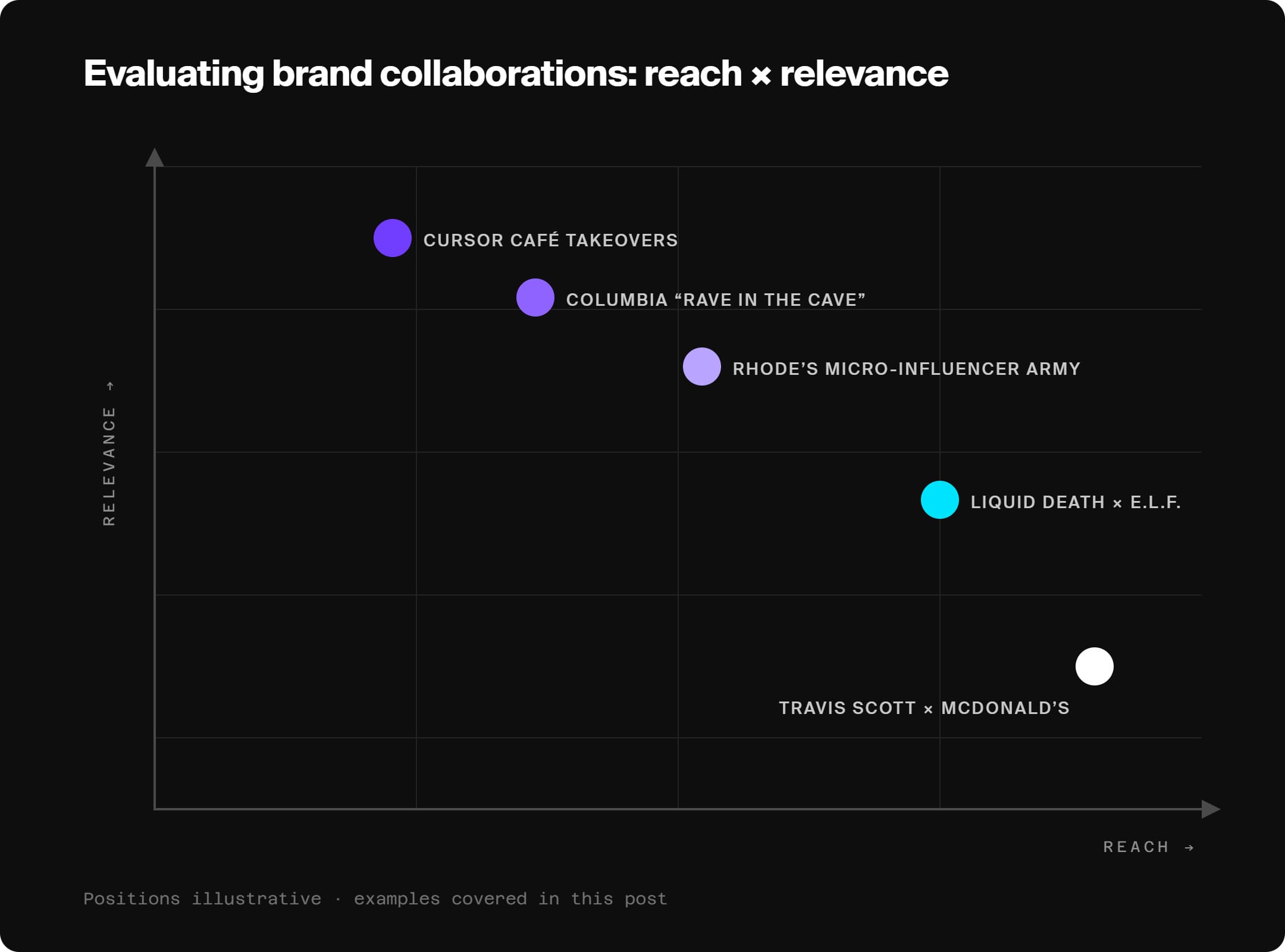
Horizontal Dimension: Reach
When you partner with a company in a completely different space (that still aligns on a shared value or purpose) you can actually punch above the reach of a typical brand collaboration. The main risk in this strategy is choosing a partner that feels misaligned, which can harm your brand’s reputation.
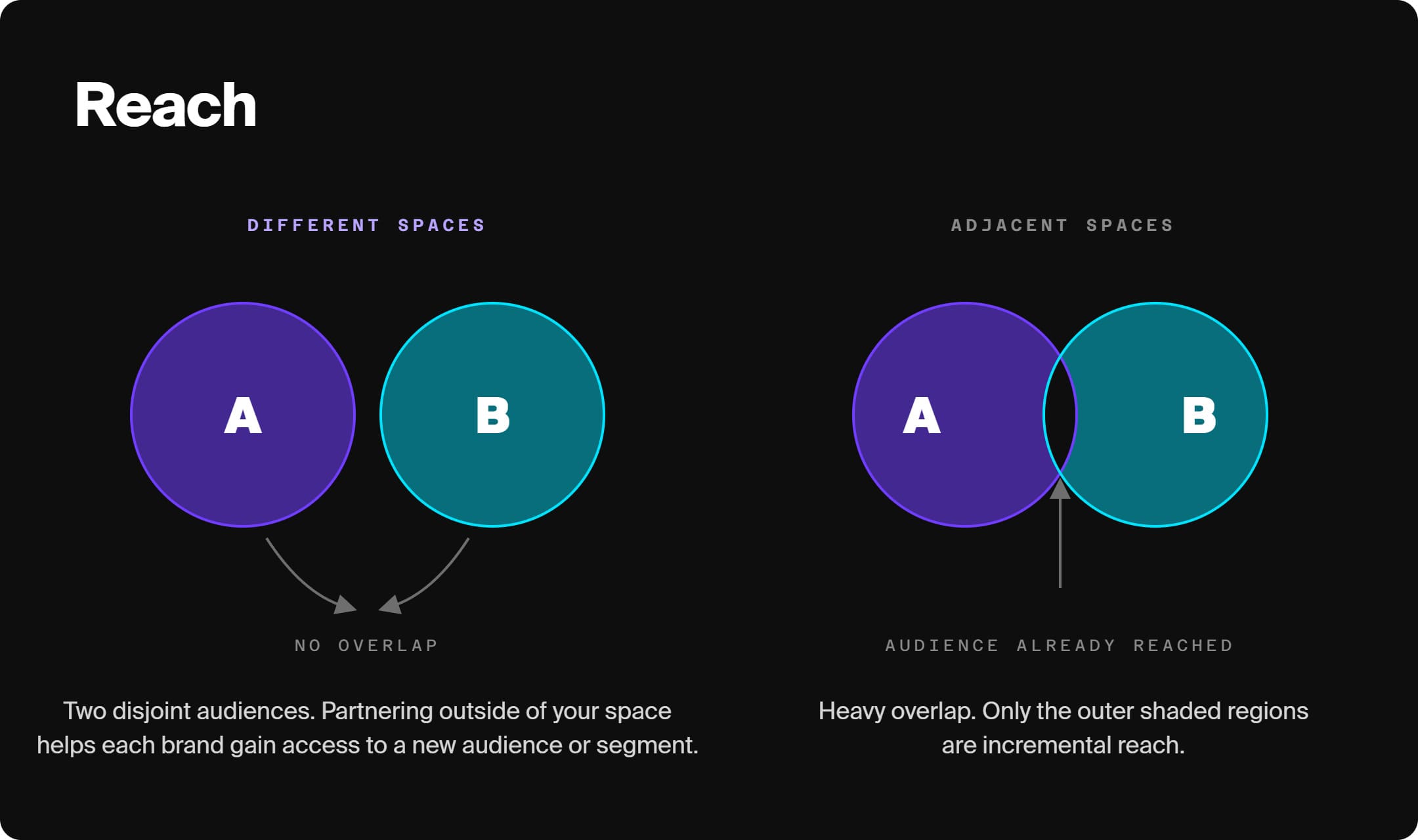
Vertical Dimension: Relevance
Many brands are opting for niche micro-influencers over mainstream ones with wider followings because smaller creators understand their audience deeply and can help brands tailor messaging and product launches to their given niche. Optimizing for relevance can help with localization, alignment, engagement, trust, and ultimately, conversion.

5 Brand Collaborations Worth Studying in 2026
Here are five brand collaborations spanning different industry verticals to illustrate how great partnerships achieve distinct goals.
1. Liquid Death and e.l.f. (Consumer)
The play: cross-category reach, held together by a shared value.
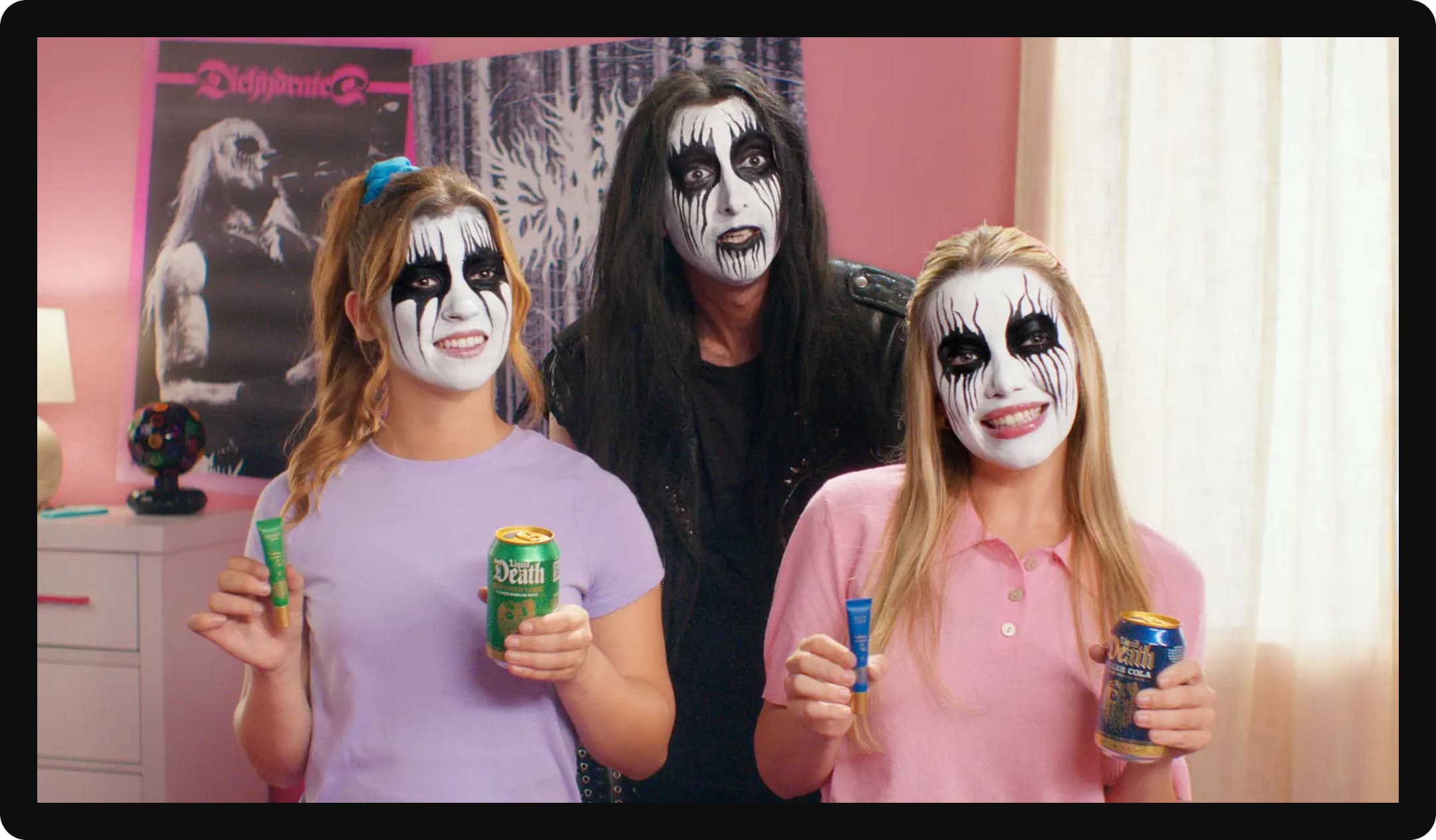
A goth canned water brand and beauty brand may seem like strange bedfellows. However, the collab line sold out in just 45 minutes and within 2 weeks of the ad’s release date, it had accumulated over 6.8 billion earned media impressions.
On paper, Liquid Death and e.l.f. Beauty have nothing in common. Their audiences don’t overlap and their categories don’t touch. But their values are uniquely aligned. Neither brand takes itself seriously, and both built their identity by mocking the polished, premium version of their category.
That shared irreverence is what made the black-metal frontman selling lip balm feel native and not forced. It’s the horizontal dimension in action. Partner outside your category on a value you both already own, and you access an entirely new audience you could never access on your own.
2. Columbia’s “Rave in the Cave” (Retail)
The play: relevance through an unexpected cultural context.
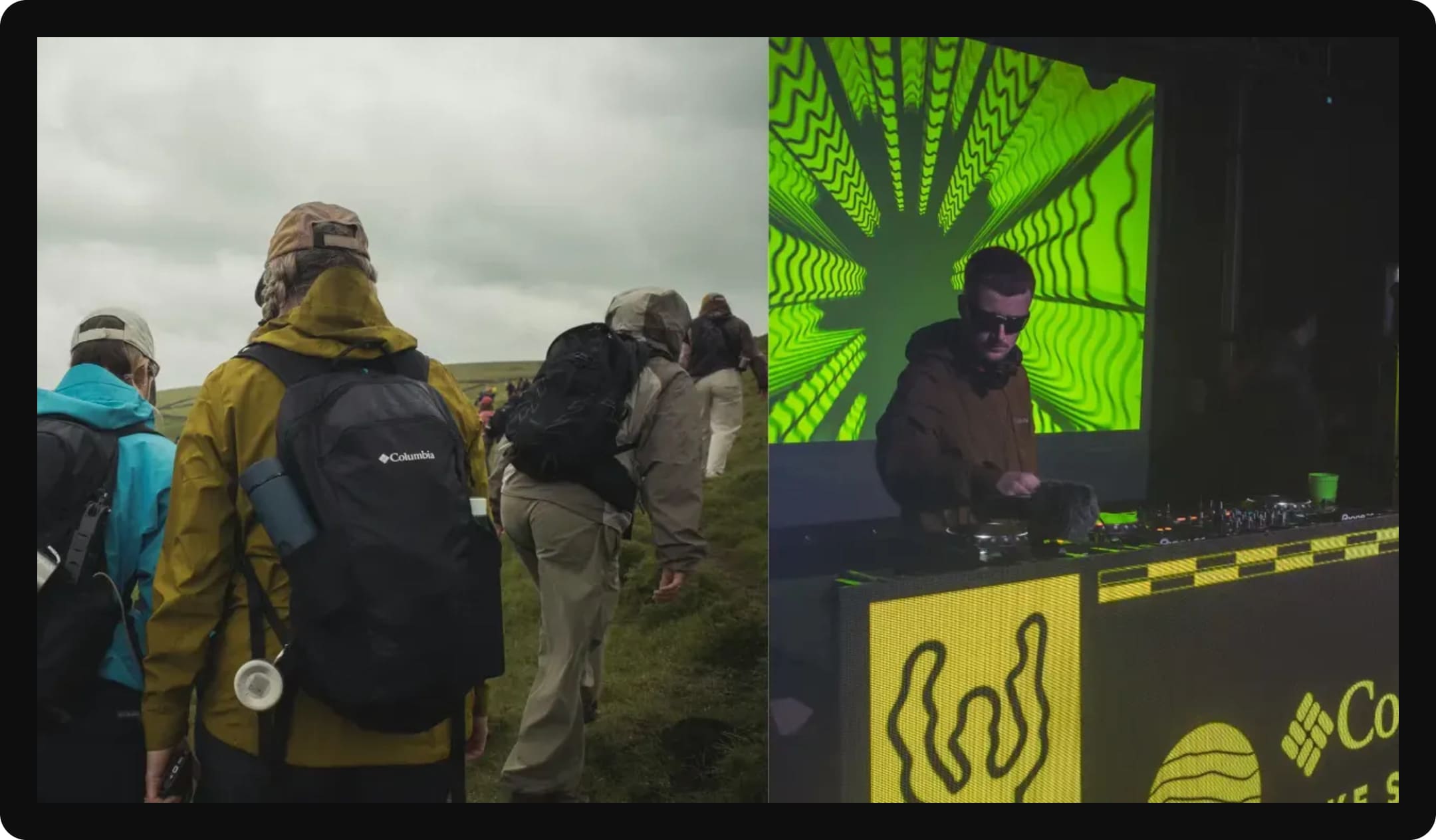
Real-world activations are having a moment as AI slop floods the internet.
One brand capitalizing on this well, is Columbia. HikeFest is an annual DJ event hosted by the Columbia Hike Society (primarily active in the UK and France). In May, 2026, hundreds hiked up to a cave in the Peak District, repping the brand’s technical outerwear to get there. Outerwear was already showing up inside rave culture and fashion circles, more formally known as “Gorpcore.” DJ sets and hiking summits share more than a demographic. Both draw younger, affluent, urban audiences chasing the same thing: a peak sensory experience that pulls them out of their heads and into their bodies. A similar trend is evident in major US cities like San Francisco, which has seen a rise in smaller DJ sets popping up around top hiking summits. Columbia tapped into the alternative functionality of their clothing to signal their cultural relevance and audience alignment.
3. Cursor’s Cafe Takeovers (Tech)
The play: community and trust, built in person.
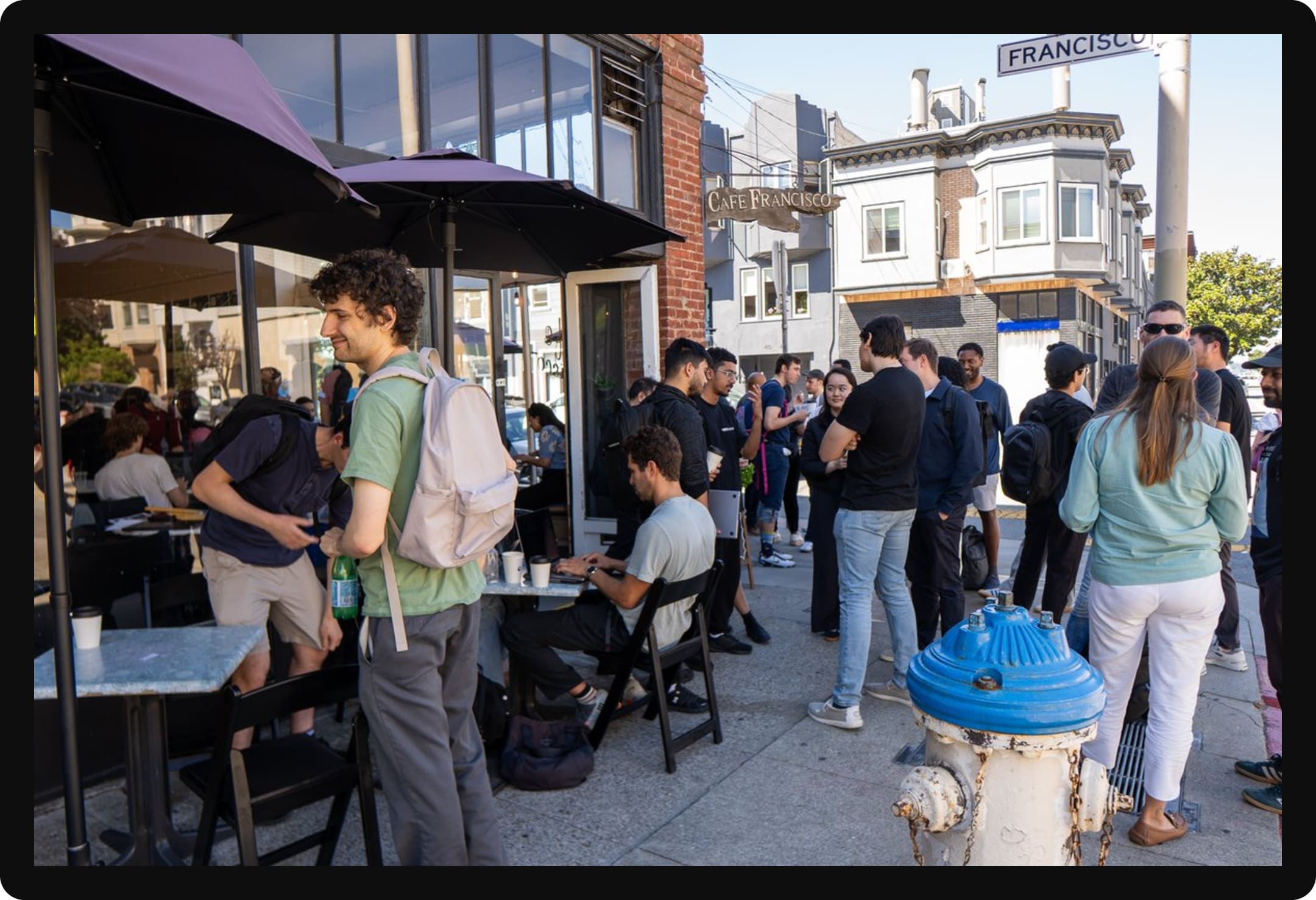
One of the more interesting trends in B2B tech right now is the rise of branded co-working cafes.
Cafe Cursor turns local coffee shops in SoHo and Brooklyn into one-day pop-ups where users work alongside Cursor’s actual engineering team. While this isn’t a visible brand-to-brand partnership, the collaboration is between the brand and a physical space. This allows their target audience to literally engage with the brand via unscripted interactions between users and the developers who build the product.
Other examples of this are Claude Cafe and Notion’s partnership with La Cabra. Major AI companies are using these in-person events to build trust and cut through the noise of AI slop and an oversaturated B2B AI market. Any veteran B2B marketer knows the old recipe: signal clear value, establish trust, let the product do the talking. But the effort these companies are putting into physical spaces suggests something more is going on. As these tools converge on similar capabilities, differentiation is shifting from features to relationships, and the brands that build cult followings will beat out the market.
4. Rhode’s Micro-Influencer Army (Beauty)
The play: relevance over reach, at scale.
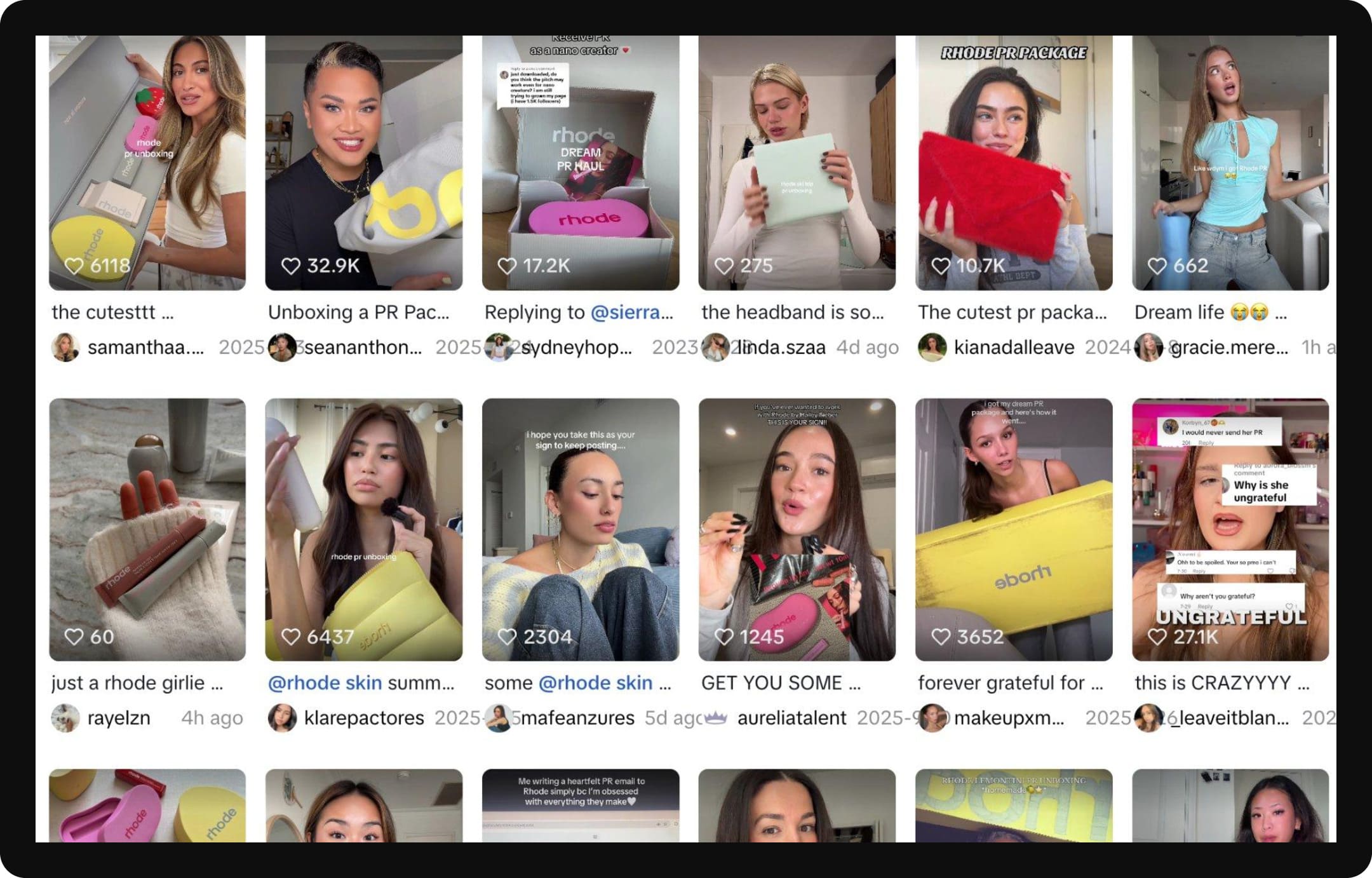
Rhode has the perfect DNA for celebrity endorsements, think Haliey Bieber and Justin Bieber’s viral “Caramelized Banana” lip collaboration. But the unsung heroes of their billion-dollar skincare brand are hundreds of micro and mid-tier creators.
Rather than anchoring the brand to one famous face, Rhode built its growth through a wide pool of smaller creators who already had credibility with tightly defined audiences. This is the high relevance, low reach approach, executed masterfully around key product launches. Over time these small, aligned partnerships compound into outsized brand awareness. Without these smaller voices, there is no telling if the collaboration would have amassed the same success that it did.
5. Travis Scott x McDonald’s (F&B)
The play: reach through an iconic celebrity endorsement.
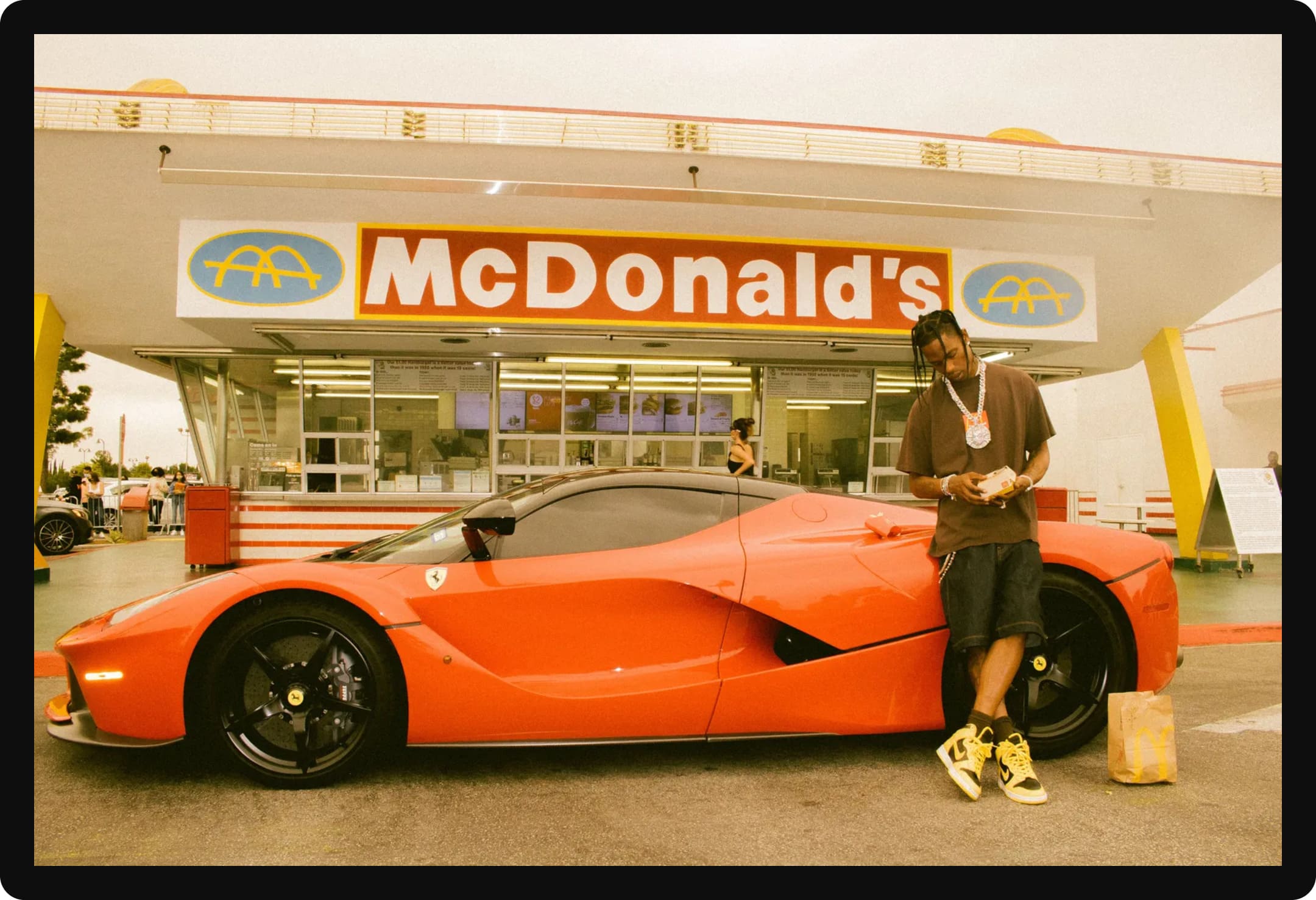
To round out our top picks, we include the Travis Scott x McDonald’s partnership because it is proof that the celebrity play is not dead. However, a partnership like this relies heavily on brand legacy and a large budget.
Forbes reported Scott made roughly $20 million off the McDonald’s partnership, split between a traditional endorsement fee and merchandise sales tied to the “Travis Scott Meal.” The deal moved enough volume to cause ingredient shortages at restaurants nationwide, and McDonald’s has repeated the format with J. Balvin, BTS, and Saweetie since. Each of these celebrities have already proven they can move culture at scale, so these types of partnerships are ideal for a brand that needs to build credibility when they’ve lost the limelight.
Final Thoughts
Brand collaborations are not a nice-to-have. They are a tactical marketing strategy that allows businesses to reach new audiences, boost engagement, subvert expectations, and create buzzworthy moments. Whether partnering with a luxury brand, leveraging micro-influencers, or launching a joint product, collaborations can be a game-changer when executed correctly.
If you’re looking to explore brand collaborations for your business, NoGood can help develop a strategic partnership tailored to your goals. Let’s create something extraordinary together!