

Every so often, an ad stops you dead in your tracks. Not because it’s brilliant (or maybe it is, in a way), but because you just can’t believe that it made it to air. Controversial advertising has existed as long as advertising itself, but in a world of real-time reactions on social media and cancel culture, the stakes have never been higher. For marketers, the question goes far beyond “will this get attention?”… it’s more like “what kind of attention, and at what cost?”
This guide breaks down what controversial marketing actually is, who has mastered (and botched) it, and how to calculate whether the risk is worth the reward for your brand.
What Is Controversial Marketing?
Controversial marketing is any advertising strategy that intentionally (or, sometimes, accidentally) provokes strong public reaction, debate, or offense. Why would a company intentionally release a controversial ad or campaign? Usually, the goal is to cut through the noise, generate earned media, and drive brand awareness far beyond what a conventional campaign budget could buy.
The mechanism is simple: outrage, like delight, travels. People share, screenshot, and argue about ads that push buttons. That organic amplification can translate into millions of impressions for a fraction of the paid media cost. As The Drum noted in its breakdown of 25 landmark controversial ads, these campaigns have a way of “changing how we talk about creativity, accountability, and the price of getting noticed.”
But not all controversy is created equal. There’s a meaningful difference between provocative, which challenges assumptions and sparks conversation, and tone-deaf, which offends without purpose and damages brand equity. The best controversial campaigns walk that line deliberately; the worst stumble into it by accident.
The Designer Who Made Controversy a Craft: Calvin Klein
When asking which American designer is known for controversial advertising, one name rises above the rest: Calvin Klein.
Klein essentially industrialized the art of provocative fashion advertising, beginning in 1980, when a 15-year-old Brooke Shields appeared in a campaign for his jeans with the now-iconic line, “You want to know what comes between me and my Calvins? Nothing.”
Filmed in stark black-and-white by photographer Richard Avedon, the ad caused immediate outrage (CBS refused to air one version during prime time) yet it transformed Calvin Klein into a global phenomenon virtually overnight. Critics called it exploitative; sales told a different story.
Klein continued this pattern throughout the ’80s and ’90s, running campaigns that tested the limits of what mainstream advertising would permit. His playbook was deliberate: use taboo subjects, striking imagery, and barely-there styling to make the brand impossible to ignore. The controversy was the strategy. It positioned Calvin Klein as the brand for people who didn’t play by the rules, a positioning that proved enormously commercially durable.
Klein’s legacy is that he taught the industry a lesson still being debated today: controversy, deployed with intent and tied to a coherent brand identity, can be a sustainable competitive advantage.
Provocative vs. Tone-Deaf Advertising: Recap
|
Provocative |
Tone-Deaf |
|---|---|
|
Rooted in brand values |
Disconnected from brand identity |
|
Sparks meaningful conversation |
Offends without purpose |
|
Risks are calculated |
Damage exceeds reward |
|
Audience feels seen |
Audience feels targeted |
Controversial Ads That Crossed the Line Into Unethical
There’s controversial, and then there’s unethical. The distinction matters. An ad can be controversial, even offensive to some, while still operating within ethical boundaries. But when advertising misleads, demeans, or exploits, it crosses over from bold to harmful.
Dove’s “Before & After” Campaign (2017)
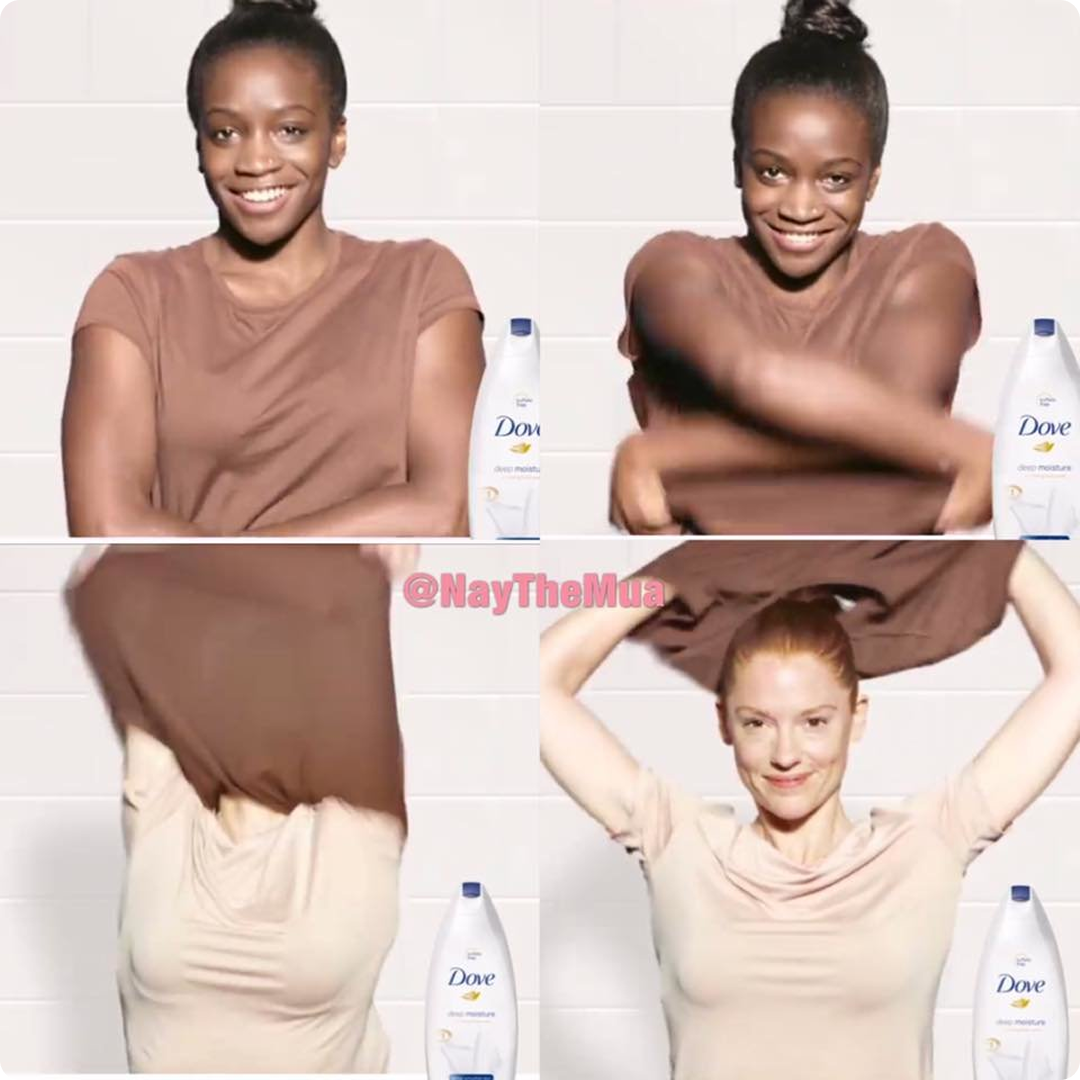
Dove’s “Before & After” campaign (2017) is one of the most cited examples of unethical advertising in recent memory. The brand, long celebrated for its “Real Beauty” positioning, released a Facebook ad that appeared to show a Black woman removing her shirt to reveal a white woman underneath. The racial implication was damning, and the backlash was global. Critics argued that a brand built on celebrating diverse beauty had produced something that carried centuries of racist undertones. Dove pulled the ad and issued an apology, but the reputational damage to a carefully constructed brand identity was significant.
Pepsi’s “Live for Now” Campaign (2017)
Pepsi’s “Live for Now” campaign (2017) offers another notable case study. The ad depicted Kendall Jenner stepping out of a photo shoot to join a protest, handing a Pepsi to a police officer as a symbol of unity. Released against the backdrop of Black Lives Matter demonstrations, it was widely condemned for trivializing a serious civil rights movement to sell soda. Pepsi pulled the ad within 24 hours of launch.
H&M’s “Coolest Monkey in the Jungle” Campaign (2018)

H&M’s “Coolest Monkey in the Jungle” (2018) involved a Black child modeling a hoodie with the aforementioned phrase, creating a racial controversy that led to boycotts and store vandalism globally. The brand was forced into extensive damage control.
What these examples share: a failure of cultural competency at the creative and approval stage. In each case, someone in the process should have caught the problem and didn’t. This is why controversial advertising, even when intentional, requires rigorous stress-testing across diverse perspectives before launch.
Which Advertising Types Most Often Create Controversy?
Some categories of advertising generate controversy far more reliably than others. Understanding which formats carry the highest risk (and why) is the starting point for any brand calculating whether to lean in.
Political & Social Issue Ads
Political and social issue ads sit at the top of the controversy spectrum. Any brand wading into race, gender, immigration, climate, or religion is operating in contested territory by definition. Nike’s “Dream Crazy” campaign featuring Colin Kaepernick is the textbook example of this done right: deliberate, brand-consistent, and commercially successful (despite significant backlash from some customers). For every Nike, though, there’s a Pepsi: brands that attempt social commentary without the earned credibility or authentic connection to the cause.
Sex & Body Image Advertising
Sex and body image advertising are another perennial flashpoint. Protein World’s 2015 London Underground poster, “Are you beach body ready?” (shown alongside an image of a slim model in a bikini) generated protests, vandalism, and a formal investigation by the UK’s Advertising Standards Authority. Paradoxically, it also reportedly turned a profit of £1 million on a £250,000 spend, further fueling the debate about whether any press is good press.
AI-Generated Advertising
AI-generated advertising has emerged as a new and rapidly growing source of controversy.
- Coca-Cola’s 2024 AI-generated holiday campaign, a reimagining of its beloved Christmas ads, was widely described as “soulless”; a sharp departure from the warm emotional connection audiences had come to expect.
- McDonald’s similarly faced backlash for an AI-generated Christmas ad in the Netherlands that was pulled after audiences found it deeply off-putting.
According to a Pew Research Center study, approximately 53% of US adults believe AI will hurt creative thinking, making the optics of AI ad production particularly sensitive right now.
Comparative & Competitive Advertising
Comparative and competitive advertising can also tip into controversy when it ventures from product claims into personal attacks or misleading data. And humor-based advertising, particularly attempts at edgy or ironic comedy, frequently misfires across cultural and demographic lines. Reebok discovered this when its 2012 “Cheat on your girlfriend, not on your workout” billboard in Germany drew immediate condemnation.

The Risk-Reward Equation: How to Calculate Whether Controversy Is Worth It
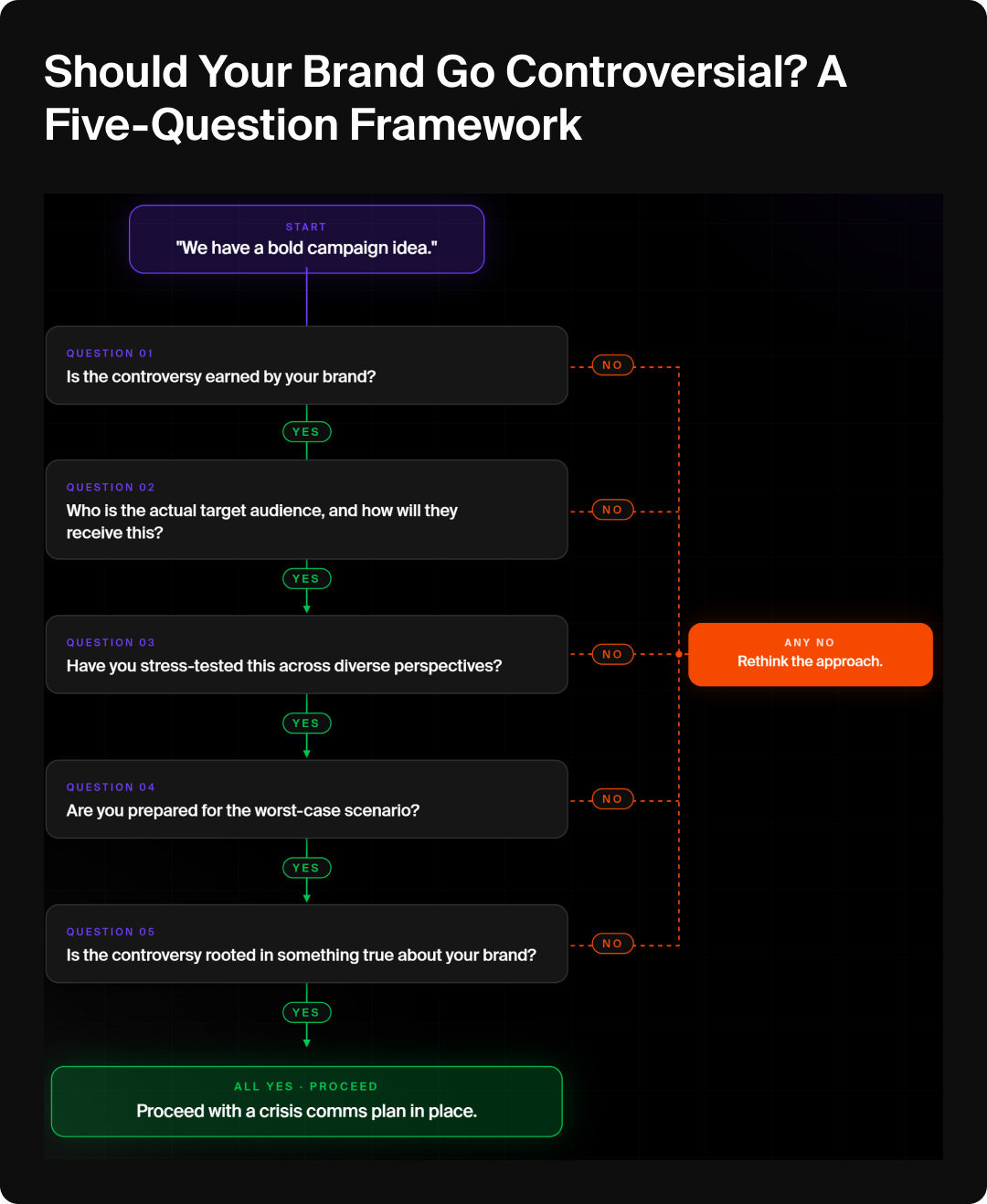
Controversial advertising isn’t inherently good or bad. It’s a strategic lever that rewards rigorous analysis and punishes laziness. Before a brand commits to a potentially controversial campaign, five questions are worth answering honestly:
- Is the controversy earned by your brand? Nike could credibly take a stance on athletic courage and individual sacrifice because it had spent decades building that identity. Pepsi couldn’t credibly speak to social justice because it had no established foothold in that conversation. Authenticity isn’t optional.
- Who is the actual target audience, and how will they receive this? Controversy that alienates your core customer while failing to attract new ones is simply bad math. Work backwards from audience data, not forwards from a clever creative concept.
- Have you stress-tested this across diverse perspectives? Many of the most costly controversial campaigns failed at this step. H&M’s “Coolest Monkey” hoodie, Dove’s racial misstep, and NIVEA’s “White Is Purity” deodorant campaign (2017) all shared a common flaw: nobody in the review process represented the communities who would be most affected.
- Are you prepared for the worst-case scenario? A controversial campaign needs a crisis communications plan before it launches, not after. Speed of response when things go wrong is often the difference between a news cycle and a reputation-altering event.
- Is the controversy rooted in something true about your brand? Campaigns that generate positive controversy (Patagonia’s “Don’t Buy This Jacket,” Burger King’s activist campaigns, Benetton’s UNHATE ads) all had a clear thread back to something the brand genuinely stood for. Without that thread, controversy is just noise.
The Conclusion on Controversial Advertising
Controversial advertising is not a shortcut to relevance; it’s a high-stakes strategy that demands the same rigor as any other major brand decision. When it works, it can generate enormous attention, deepen audience loyalty, and position a brand as culturally courageous. When it fails, it can undo years of brand equity in a single news cycle.
The brands that navigate it successfully share a common trait: they start from a genuine place relevant to their audience. The controversy is a byproduct of something true, not the goal itself. For marketers considering this path, that’s the north star worth keeping in focus.