

When was the last time you were in a time crunch and needed to get some social content up ASAP? Coming from someone who works in social media, if this scenario sounds familiar, you’re far from alone.
Welcome to the art of repurposing content. And no, repurposing content isn’t the same as reposting content (but we’ll get to that in a second).
Repurposing content means strategically extending the lifespan of one piece across multiple channels. The key here is to do this not sporadically, but with intention. It’s different from reposting, which is basically throwing the same video across platforms at the same time without any changes.
But what people often forget is that not all social platforms function the same way. For example:
- Instagram prefers more polished, aesthetic visuals
- LinkedIn rewards thought leadership
- TikTok thrives on raw, authentic moments
When you repurpose content the right way, you’re not only getting more mileage out of every piece, but also maximizing visibility and engagement per platform.
So let’s break down how to make every idea count.
Repurposing vs. Reposting: What’s the Difference?
|
Reposting |
Repurposing |
|---|---|
|
Same content, all platforms |
Adapted content per platform |
|
Posted simultaneously |
Posted at optimal times |
|
Generic captions |
Platform-specific hooks |
|
One-and-done |
Strategic lifespan extension |
Yes, both words sound similar, but one maximizes every content piece while the other is “strategically lazy.” Let me explain.
Reposting = The Shortcut
Reposting typically means hitting publish across all platforms at the same time with zero adjustments. Sounds efficient, right? It’s really not.
- Red Flag #1: Ignoring platform-specific timing. Your audience isn’t active at the same time across every platform. Maybe 3pm is peak performance for YouTube Shorts, but your Instagram engagement tanks at that hour. When you post everywhere simultaneously to “save time,” you’re actually losing visibility where it matters most.
- Red Flag #2: One size fits all, really fits no one. You’re treating TikTok like Instagram, but your audience doesn’t consume content the same way across platforms. What works as a quick, minute-long TikTok video may not work as an Instagram Reel post without adaptation.
Repurposing = Strategic Optimization
Repurposing means adapting your content to speak each platform’s language. Social search plays a crucial role in repurposing content, as search behavior varies significantly across different platforms. Let’s say you’re covering a viral marketing trend. On Instagram, users might search “sensory marketing trend,” but on TikTok, “food marketing trend” gets more traction. A repurposing strategy means tweaking your captions, hashtags, and hooks to match how people actually search and discover content on each platform. Someone who instead reposts content would miss this completely.
When you’re repurposing content, you’re not just copying and pasting content in hopes of it “going viral” on one platform the same way it might have on another. Translating your message into each platform’s native format and language is what takes content utilization to a whole new level.
Strategic repurposing takes more thought upfront, but it pays off in visibility, engagement, and reach. It requires understanding:
- When your audience is active on each platform
- How users search and discover content differently
- What content formats perform best where
- How to maintain your brand voice while adapting delivery
It takes a sharp eye (and, in my experience, being slightly chronically online) to spot these opportunities. But once you nail it, you’re getting more value from every piece of content you create.
Why Repurpose Content in the First Place?
Now that you know the difference between repurposing and reposting, let’s talk about why repurposing matters for your marketing strategy.
Spoiler: It’s not about cutting corners, it’s about working smarter.
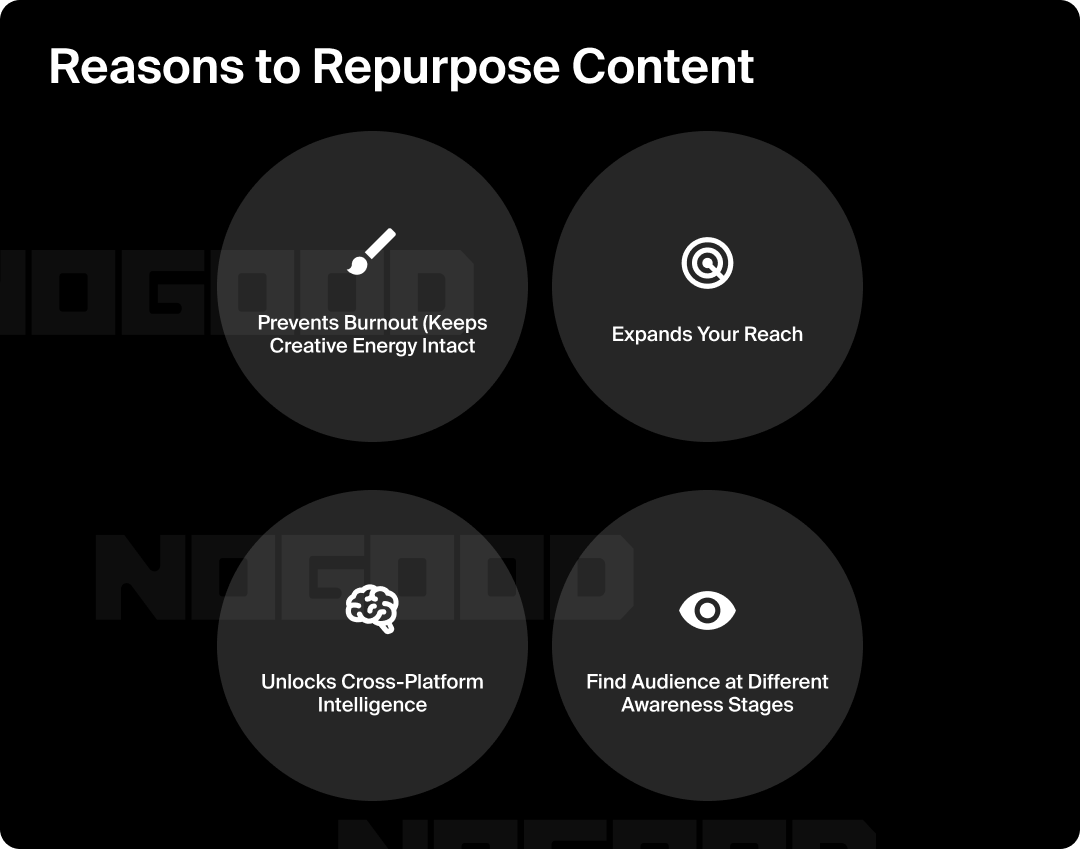
1. Prevents Burnout (& Keeps Your Creative Energy Intact)
I hope I’m not the first to break it to you: fresh ideas don’t magically appear every single day. Some mornings, you’re staring at a blank screen with zero inspiration and three posts due by EOD. Trust me, I can relate.
This is where repurposing saves you. One solid content piece can have multiple use cases: a blog post becomes a LinkedIn carousel, an Instagram Reel, an X thread, and a newsletter piece. The core idea is already there; you’re just translating it for different audiences.
This way, you spend less time brainstorming from scratch and more time executing. And when you’re not drowning in content creation, you actually have bandwidth to think strategically and let your creative juices flow when it counts.
2. Expands Your Reach
If an idea crushes it on one platform, chances are it’ll resonate elsewhere too. Your LinkedIn audience might love a data-driven post about Q4 marketing trends, but your Instagram and TikTok community could benefit from that same insight. Only, maybe just packaged differently.
Repurposing lets you meet your audience where they already are. Some people live on LinkedIn. Others scroll TikTok religiously. By adapting one strong idea across platforms, you’re not just increasing visibility, but creating more opportunities for:
- Appearing on dark social (like people’s DMs) through shares and saves
- Quality comments and engagement
- Traffic back to your site
3. Unlocks Cross-Platform Intelligence
Repurposing not only becomes a lever to your current marketing strategy, but also a learning tool. When you adapt the same content across platforms, you start to see patterns.The more you repurpose content, the sharper your instincts become. You’ll start to understand:
- Platform-specific preferences
- Optimal posting times per platform
- Content format sweet spots
Testing will eventually pay off, and you’ll make fewer mistakes, witness better performance, and develop a refined repurposing playbook that tells you exactly when and where to deploy each idea.
4. Captures Your Audience at Different Stages of Awareness
Not every single person discovers your brand the same way, and not everyone is ready for the same depth of content on Day One of knowing about your brand. Take my social media activity for example: there are days where I set aside time for educational doomscrolling while there are other days I click DND on my phone and read through different blogs that peak my interest.
Repurposing creates a content ecosystem where the same core idea exists in multiple formats, giving people multiple ways to engage based on where they are in their journey with your brand. And the discovery path works both ways.
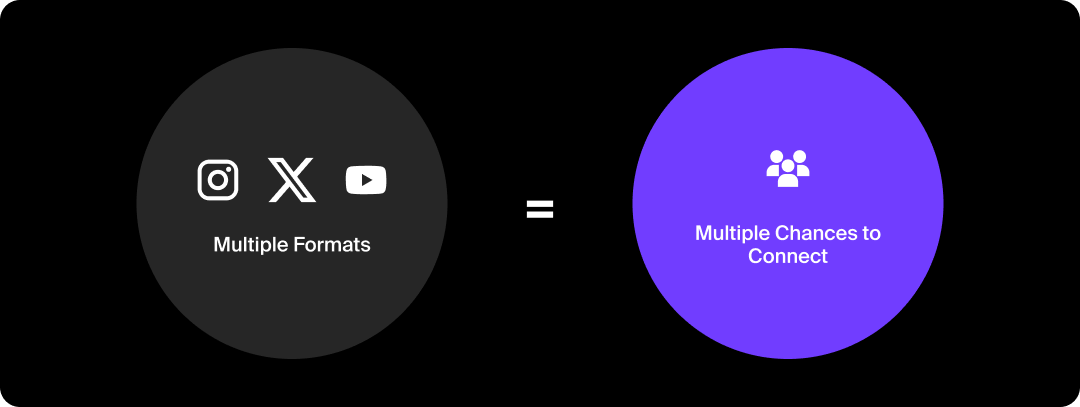
By strategically repurposing content across different platforms, you create multiple entry points to the same idea, meeting people wherever they are whether that’s doomscrolling TikTok, actively engaging on LinkedIn, or in a Google search rabbit hole.
Some people need a short-form video like a Reel to understand why they should care about something, while others are ready to dive straight into a 2,000-word analysis. When you repurpose content across formats and platforms, you build a presence that reinforces itself.
Every time someone encounters your brand talking about the same topic in a new way, it signals expertise. It shows you’re not just chasing trends in hopes to “make it pop” with one-off posts. That consistency across formats, paired with adaptation for each platform, is how you turn scrollers into engaged followers and (hopefully) into customers.
6 Ways to Repurpose Content for Social Media
Here’s how to extract maximum value from every piece of content you create without burning out or losing your brand voice in the process.
1. Blog Posts → Substack Article
Substack readers aren’t looking for quick hits and surface-level thoughts. People who treat Substack like Instagram or TikTok are there for thoughtful, in-depth analysis. This is your chance to take a section from your blog and expand on it with deeper commentary, personal takes, or industry context that didn’t make the original cut.
How to repurpose:
- Pull a specific angle or argument from your blog that you believe has room for more exploration
- Add your personal perspective, contrarian takes, or “here’s what I didn’t say publicly” insights
- Include case studies, behind-the-scenes thinking, or lessons learned that add layers to the original piece
- Link back to your full blog post in a natural CTA to guide interested readers back to the original piece
Pro Tip: Substack audiences value vulnerability and honesty. Use this format to share what you really think, while maintaining brand voice and values.
2. Blog Posts → LinkedIn Posts
Think Zoom meeting conversations over a cup of coffee. LinkedIn thrives on these types of conversations: professional, insightful, and thought-provoking. When repurposing blogs into LinkedIn posts, your job isn’t to share everything from your blog; it’s to pull out the one section that’ll get people talking in the comments.
How to repurpose:
- Identify controversial takes, surprising data points, or provocative questions from your blog
- Reframe it as a discussion starter
- Adjust your tone to fit LinkedIn’s professional vibe while keeping your authentic voice
- Keep it digestible with line breaks for readability
Pro Tip: End with an open-ended question to drive engagement
3. Podcasts or Webinars → Short-Form Clips
Long-form video content is gold for AI search visibility, but most people won’t commit to watching a 30-45 minute video right away. That’s where repurposing into TikToks, Reels, and Shorts comes in. Essentially, you’re giving people a teaser that hooks them into the full conversation. But the key to doing that matters on the quality of the conversation (and what you choose to cut).
How to repurpose:
- Identify 30-60 second clips with strong hooks: hot takes, controversial opinions, or actionable advice
- Add captions (85% of people watch videos without sound)
- Use clips that work as standalone value but also tease the full episode
- Link full videos in channel bios to drive traffic back to the full content piece
Pro Tip: Engage in the comments for community-building.
4. Blog Posts → X Threads
Threads work best when they’re timely, actionable, or part of a trending conversation. If your blog covers a topic that’s currently buzzing, break it down into bite-sized tweets that people can consume fast.
How to repurpose:
- Pull listicles, how-to sections, or step-by-step frameworks from your blog
- Turn each main point into its own tweet
- Add context, examples, or quick tips in each tweet to make the thread valuable on its own
- Drop the link to your full blog in the final tweet with a CTA
Pro Tip: Threads perform best when they ride cultural or industry moments. If something’s trending and your blog relates, post it ASAP.
5. Viral Short-Form Videos → LinkedIn Posts or X Threads
When a TikTok or Instagram Reel goes viral and sparks debate in the comments, consider this: what if that’s not the end of the conversation, but maybe just the beginning of a deeper one?
Short-form video is great for the “what,” like explaining a trend. But the comments section often reveals the real content: questions, disagreements, nuanced perspectives, and the desire to understand the “why” and “how” behind your original point. This is your cue to repurpose that viral moment into long-form thought leadership.
How to repurpose:
- Read through the comments and identify 3-5 key themes, recurring questions, debates, or interesting perspectives
- Write a LinkedIn post or Twitter thread that directly addresses those questions
- Add your deeper analysis: cultural context, strategic implications, or “here’s what this really means” angle
- Include a CTA inviting people to share their industry-specific examples or perspectives
Pro Tip: Track which repurposed pieces perform best. Not every viral video needs a thorough piece. Over time, you’ll notice patterns; maybe your brand strategy breakdown videos translate well to long-form, but your trend explained videos don’t.
6. Blog Posts, Reports, or Case Studies → Carousels
Instagram is a visual platform, so your repurposed content needs to look good while delivering value. Carousels are perfect for educational content that’s bite-sized and aesthetically pleasing. Think “visual hooks,” easy-to-read infographics, and quick bullet points or short sentences.
TikTok also supports carousels now, and they function differently than Instagram’s:
- TikTok: trending topic, entertaining
- Instagram: aesthetic-forward, lifestyle or professional
Understanding what kind of content performs best on both platforms versus choosing one is key to getting maximum reach without wasting effort.
How to repurpose:
- Turn listicles, how-tos, or data-heavy sections into 6-10 slide digestible carousels
- Keep text minimal per slide (one main idea, one supporting stat or example)
- Use clean design, consistent fonts, and on-brand colors (aesthetics matter)
- Add trending audio to push content to the Reels Tab and boost reach
Pro Tip: Carousels get saved more than static posts. When people save your content, Instagram’s algorithm treats it as a signal of value meaning more reach for you.
How to Identify Content Worth Repurposing
No matter how good your content is as a whole, not every piece of content deserves to be repurposed. Strategic repurposing means being selective about what you amplify because your time, energy, and brand reputation are on the line.
Step 1: Ask Yourself: What Are Your Goals?
If your goal is driving traffic to your site:
- Repurpose content that teases valuable resources, frameworks, or tools available on your website
- Focus on formats that naturally lead to click-throughs like “link in bio”
- Look for educational, how-to, or data-driven content to drive clicks
If your goal is brand visibility and reach:
- Repurpose content with broad appeal that introduces your brand to new audiences
- Prioritize short-form video, viral moments, and highly shareable formats
- Focus on platforms where discovery happens (TikTok FYP, Instagram Reels Tab, LinkedIn feed)
If your goal is establishing authority and thought leadership:
- Repurpose in-depth analysis, cultural commentary, and contrarian perspectives
- Lean into long-form platforms: Substack, LinkedIn
- Choose content that demonstrates expert-level knowledge
Identifying your goals helps you define your content repurposing strategy.
Step 2: Evaluate the Quality of Virality
Just because something went viral doesn’t mean it needs to be repurposed across multiple platforms. There are different factors that come into play when selecting what content gets repurposed where. Let’s say you posted a hot take about a cultural moment. It goes viral, but half the comments are negative and the tone is getting heated. Do you repurpose this to LinkedIn where your professional network and try to reframe it with more nuance or drop the idea completely?
You have to ask yourself:
- Did it go viral for the right reasons?
- Does it align with brand values?
If a video sparked backlash or controversy that you didn’t intend for it to, amplifying it to more platforms could amplify the damage. Keep in mind your audience, too; sometimes content goes viral in the wrong circles (which is entertaining for some, but not strategic for your brand).
Virality without brand alignment is noise, but the kind that reinforces your expertise is what prompts quality engagement.
Step 3: Look Beyond Impressions
Does a high view count mean my content is worth repurposing? Not all the time. Let’s do the math: a post with 20,000 views and 30 generic comments is less valuable than a post with 2,000 views and 100 thoughtful comments debating your points and asking questions.
Some metrics to look out for that signal repurposing potential include the quality of comments, high save and share ratio to likes, and click-through rates.
Step 4: Capitalize on Cultural Moments & Timeliness
Timeliness isn’t always necessary, but it is a great lever to gain brand awareness and traffic to your website. The biggest balance to learn is knowing when to strike while a cultural moment is hot, and when to let it sit and develop into something deeper.
I like to call this the 24-48 hour rule for trending moments. When something breaks (brand controversy, viral campaign, or major industry announcement, you have a narrow window to be part of the conversation. This is when you want to repurpose fast.
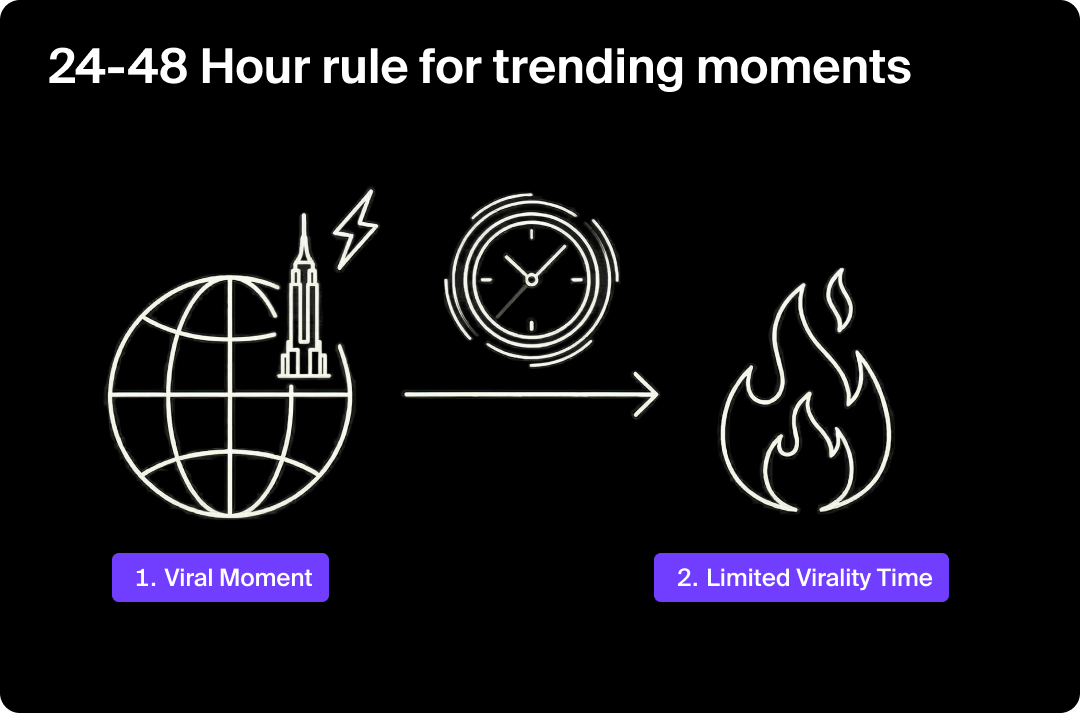
What could this look like? Suppose you put out a reactive video as an Instagram Reel, then a discussion thread on X, and then later a more fleshed out LinkedIn analysis post.
Pro Tip: Some topics don’t always require a “speed fire take.” After the buzz for a topic goes down, there’s an opportunity for you to be the person who goes a layer deeper and repurpose content at a later date.
Measuring the Success of Repurposed Content
If you’ve made it this far, then I’m sure I’ve done my part in helping you understand the importance of repurposing content. Great! But success only comes when you not only put it into practice, but also apply your learnings and adapt your strategy.
What do I mean exactly? The more you test and play around with what content performs on which platforms, the less errors you’ll make.
Reach & Engagement Metrics
Let’s talk about reach for a second.
Reach is a great metric to track, but engagement tells you if people actually cared. When you repurpose the same idea across formats, you’re essentially running a controlled experiment: same message, but slightly different packaging. Here, you can compare engagement rates per platform and analyze which platform engaged the most deeply with your idea in the comments section. If you’re seeing a common theme between platforms and the type of content that performs or underperforms, to your best judgement you should re-think what’s worth repurposing to each platform.

Conversion & Traffic Metrics
If one of your business goals is conversion and traffic, then tracking which formats and platforms drove the actions you care about matter most here. Think CTR’s: which platform drove the most traffic to your site? (You should double check here that all social platforms have a clear link to your website in your bio).
Let’s say, for example, your Instagram carousel gets 10,000 impressions but drives 50 site visits, while your LinkedIn post gets 3,000 impressions but drives 200 site visits. We can see that your LinkedIn audience is more intent-driven for your content. From this learning, you can safely assume that you need to adjust your repurposing strategy to prioritize LinkedIn content for conversation goals and Instagram for brand awareness.
Relevance & Shelf Life
Relevance doesn’t always mean timeliness. With repurposing content, there’s an opportunity for your ideas to have a longer shelf life. This is where capitalizing on timely and cultural moments becomes important.
Some ideas are worth repurposing on some platforms within a certain time frame, but not all. This is where having the advantage of being someone who’s tapped into the speed of culture comes in: waiting for a culturally relevant moment that aligns with one of your content pieces makes your “evergreen” idea relevant, too.
Just be sure to adjust your SEO (overlay text, captions) to fit the relevant search.
Next Steps for Repurposing Content
Repurposing content isn’t rocket science, but it’s also not as simple as hitting “share” across every platform and calling it a day. It’s about making every idea count, recognizing that if something resonates once, it can resonate again; just in a different format and on a different platform. But strategic repurposing means knowing:
- What to repurpose
- Where to repurpose it
- When to repurpose it
- How to measure it
With practice, data, and refinement over time, you’ll start to see patterns and know which topics translate best to carousels, reels, or a LinkedIn follow-up. That’s when repurposing stops feeling like extra work and starts feeling like an important step to your current content strategy.