


If you’re hearing this for the first time, you must be new here: search has moved from finding links to getting answers. This didn’t start with LLMs, though; the SERP has been priming for this shift for years with features like Knowledge Panels, which turn 14 years old this year.
For over a decade, Google has displayed Knowledge Panels on the SERP for select entities (people, companies, etc.), containing key information that’s related to that query. For example, if you Google “New York City,” this pops up:
Want Better Visibility in AI Search?
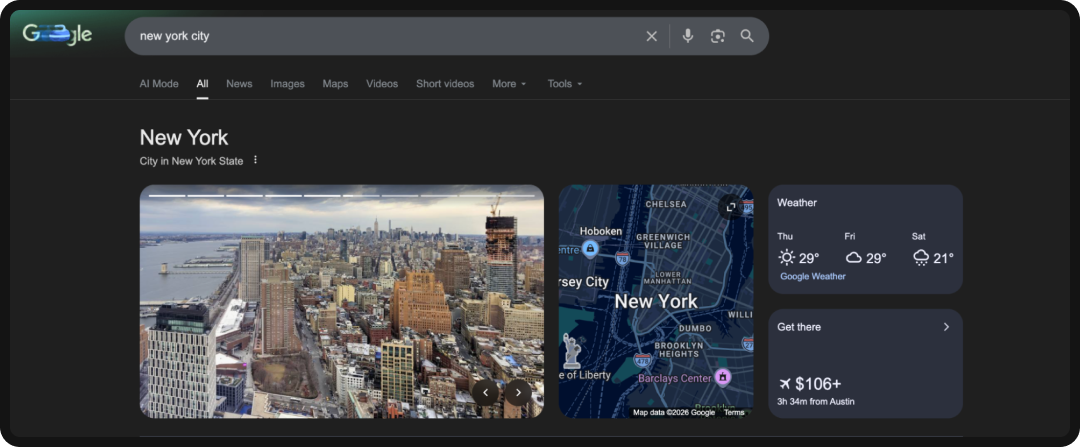
Knowledge Panels take up a huge amount of space on the SERP; either the entire top space (which, lately, has been primarily occupied by AI Overviews) or the entire right-hand side, making it prime digital real estate. As is the case with AI Overviews, when an entity is searched for, that Knowledge Panel result is the first thing that users see.
New York City’s, for example, is never-ending, including the following information (beyond what you see in the screenshot): About, Zip Codes, Area Codes, Population, Highest Elevation, Settled, Things to do, Places to stay, and so much more.
The thing is, Knowledge Panels weren’t just a precursor to the shift in finding links to getting answers (particularly zero-click search); they’re a major part of the shift.
According to Search Engine Land, since the data contained in Knowledge Panels has already been validated and connected to Google AI (Gemini) via the Knowledge Graph (which we will explore further in just a second), it has a higher chance of being featured in AI responses.
So, listen up, because if you want to dominate the SERP and AI search, you’re gonna need to pay attention to your Knowledge Panel.
What Is Google’s Knowledge Graph?
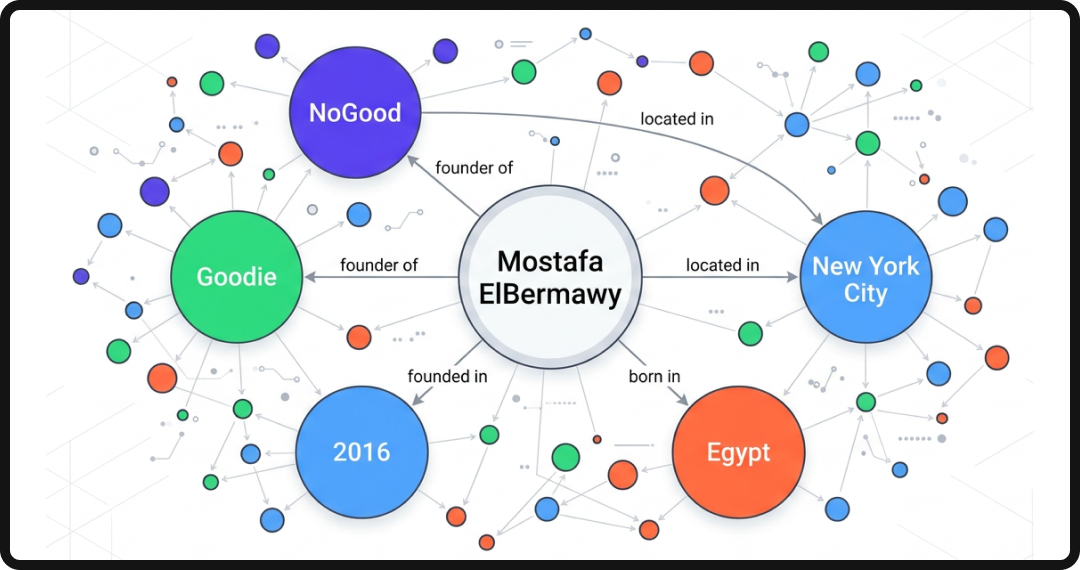
Google’s Knowledge Graph is its database that contains data about people, places, things, and how they’re interconnected; data that they refer to as “entities.” Put simply, Google uses this information to understand where to rank, feature, and align your business’s content with queries, which manifests in SERP features like the People Also Ask box and Knowledge Panels.
Knowledge Graph vs. Knowledge Panel: What’s the Difference?
I’ve already given you some information about the Knowledge Panel thus far, and only mentioned the Knowledge Graph. I get that it’s a little bit confusing, talking about Knowledge Graphs and Knowledge Panels in the same breath without knowing the differences. Let’s explain what exactly each of them is.
Knowledge Graph
You can’t see Google’s Knowledge Graph. The Google Knowledge Graph is a far-reaching database that’s being continuously updated with new information; information that then populates in Knowledge Panels when a user performs a search.
Knowledge Panel
You can see Knowledge Panels, though. Google’s Knowledge Panels are the infographic panels that you see on the right-hand side (or entire top) of the SERP for entity-related queries (take our New York City example from above). They serve users with concise information lifted from Google’s Knowledge Graph.
What Is a Knowledge Graph in SEO? (& AEO, Too)
Let’s recap:
- Knowledge Panels are pulled from Google’s Knowledge Graph
- Knowledge Panels are prime SEO real estate because they’re the first piece of information that users see on the SERP
- Knowledge Graph is prime AEO real estate because that data is used to pull information into AI answers (such as those from Gemini or AI Mode)
Therefore, optimizing your Knowledge Graph gets you closer to both ranking on the SERP and being cited in AI.
Gemini and other LLMs use the Knowledge Graph as a “fact-checking” layer to prevent hallucinations, so having a validated entity profile ensures your brand is served as an answer. If you want to know if your business is being recognized as an entity by Google, a quick way to do so is by checking if a Knowledge Panel shows up.
Just look at what happens when you Google “NoGood” versus “Ogilvy.”

While NoGood has our fair share of relevant results (including a Local Listing result and some competitors running Google Ads against our name; we’re flattered!), it does not have a Knowledge Panel result in the same way that Ogilvy does.
From this, we can infer that Ogilvy is an entity that is recognized by the Knowledge Graph, because the SERP provides a Knowledge Panel that includes key information about them, like their address, social profiles, reviews, and more.
What does it mean for NoGood, though? We’re not quite there yet.
Whether it be because our company is too new (happy 10-year anniversary to us, by the way) or because we simply don’t have enough authoritative sources citing us (as you can imagine Ogilvy does), we’re going to need to work a little harder (and smarter) to make sure we’re favorably placed on both SERPs and in AI engines.
The lesson to learn here is this: optimizing for the Knowledge Graph isn’t just great for being at the top of the SERP, but securing your spot in key search surfaces will drive 75% of revenue by 2028.
How To Optimize a Knowledge Graph: 4 Crucial Steps
Now that you know why you should be optimizing for the Knowledge Graph, it’s time to start doing it. This also means pivoting your mindset from “SERP-first” to “AI-first.” Don’t get us wrong, the SERP (and SEO) are still important, but the main edge of Knowledge Graph optimization is that it increases your potential for both traditional and AI visibility.
This means you can’t get away with just tweaking your copy and calling it a day. Now, you’re gonna need to create a technical bridge between your brand and LLMs, so that their crawlers know exactly who you are, what you do, and why you matter.
1. Architect Your Semantic Foundation
It would be irresponsible of me to start off a list about any sort of search optimization without first establishing that you need to have a strong website foundation.
What exactly does a “strong foundation” mean in 2026, though? It means you have to move beyond fast load times and clean code (which isn’t meant to knock its importance) to create a site architecture that LLMs can parse, understand, and trust.
Since Google and AI prioritize accuracy and information density, you can’t just keyword stuff your way into becoming a source AI cites (and that isn’t something you should be doing anyway).
As mentioned, Google uses the Knowledge Graph to ground its answers in verified fact. What we mean by accuracy and information density is that every sentence has to provide a data point or relationship with semantic structure; otherwise, AI will mention and cite another source.
- Build topical authority with content clusters. AI models like Gemini don’t look at pages in isolation; they look at how your content is structured in relation to the rest of your site. By creating content clusters (a central pillar page supported by related sub-articles), you create a structure that helps Google and users understand the relationship between content on your site.
- This doesn’t just help user engagement, but it also provides the authority signals AI needs to cite and mention you.
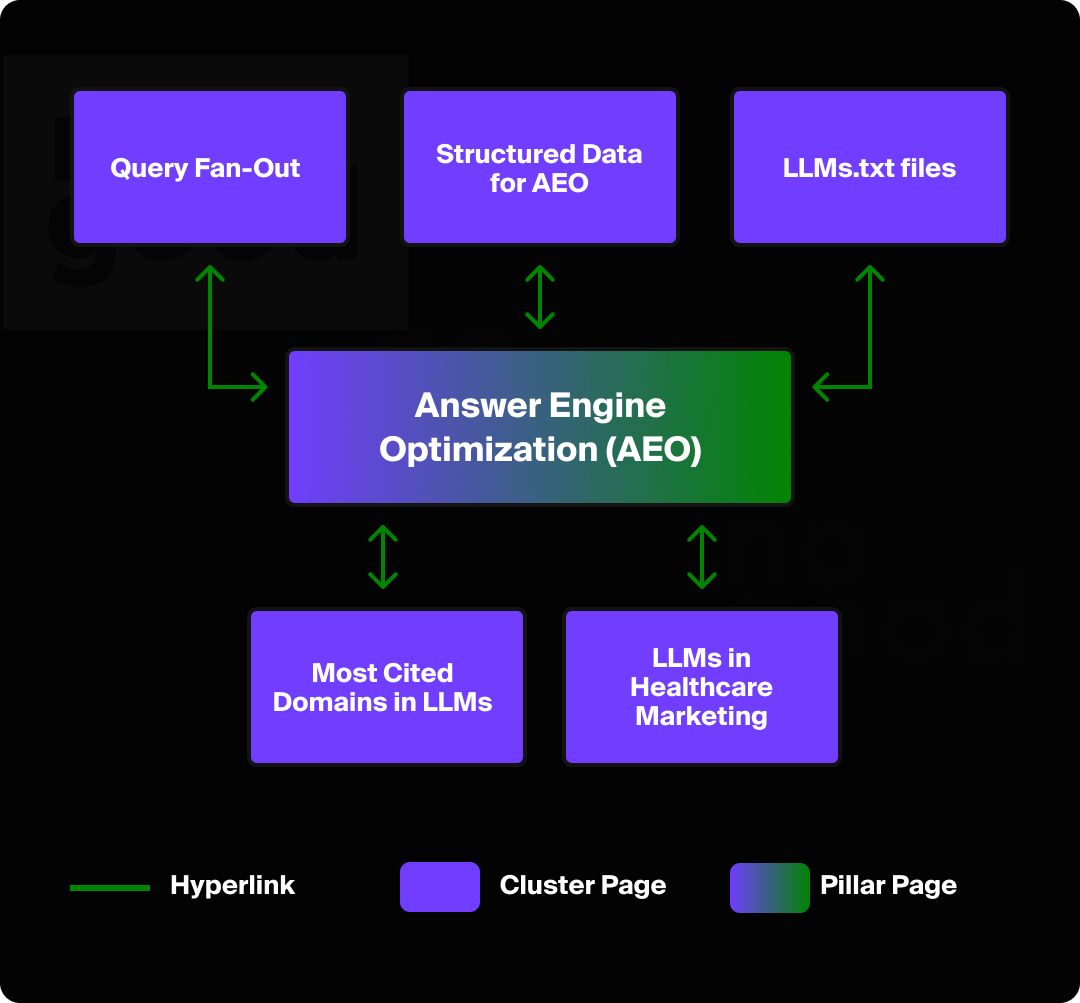
- Leverage contextual proximity. Similar to concept content clustering but on a more granular level, LLMs use the proximity of related entities and terms to determine the intent and niche of your content. For example, a page about LLMs.txt files has contextual proximity to Technical AEO.
- Strategically execute internal linking. A hierarchical linking structure helps Google lift and synthesize your brand information in its generative features. The easier it is for AI and search engine crawlers to follow the logic of your site, the higher the chance your key data will be used to ground its answers.
- Keep your content fresh. With over 400M terabytes of data created each day on the internet, “freshness” is more than an updated publication date; it’s whether your content reflects the current reality of your industry.
- Remember hierarchical scannability. AI reads as humans do: skimming for structure. Using clear H2s, H3s, and even H4s isn’t just for UX. If a human can skim your page and understand the key points in 45 seconds, AI can synthesize it into an answer just as fast (if not faster).
2. Deploying Advanced Schema & Linked Data
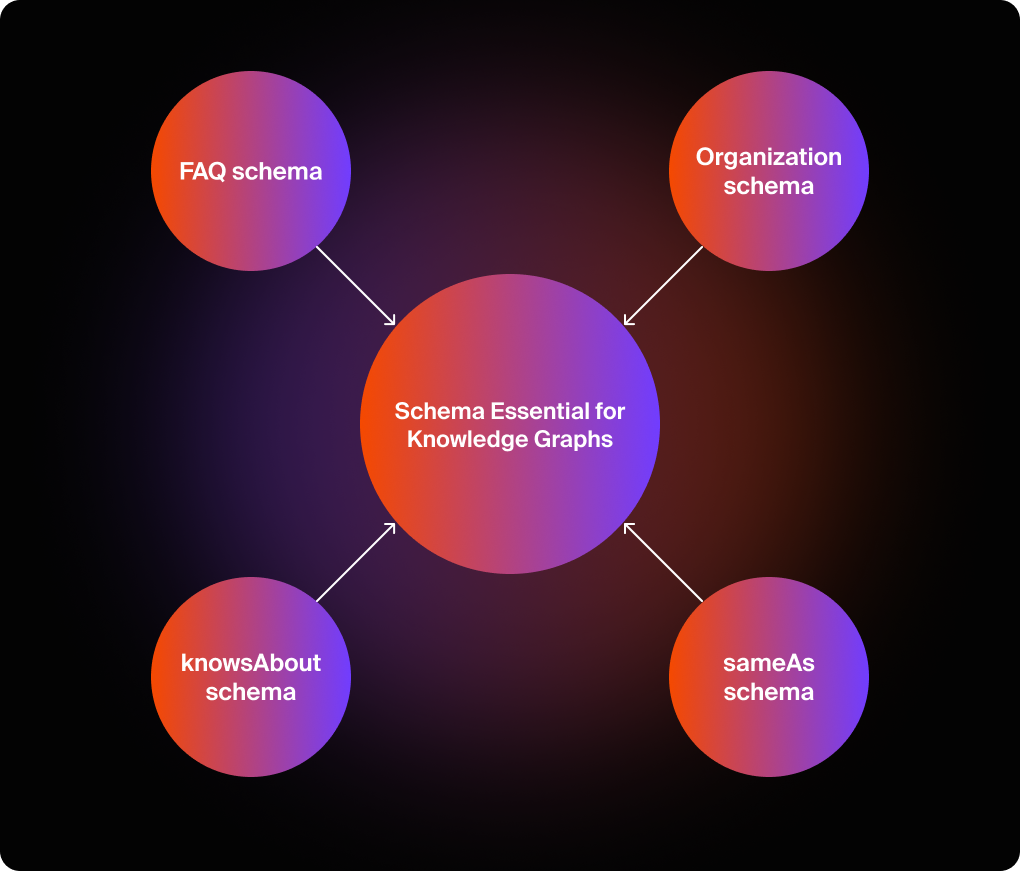
If you’re doing SEO, you should already be doing schema markup (if you’re not, that should be Priority One). The first thing you definitely need to do is implement Organization schema, which is the foundation for building a digital brand presence. This schema defines your founders, parent company, and physical location, helping Google validate you as an entity.
But to get a Knowledge Panel and truly gain AI visibility, you need to take it one step further. Here are our secret weapons: FAQ, knowsAbout, and SameAs schema.
- FAQ schema: The best way to do this is by creating FAQs at the bottom of your page from questions you’ve extracted from the People Also Ask box, and then adding FAQ schema. When you markup these pages with FAQ schema, you’re literally handing AI the exact text blocks they need to feature you in AI answers.
- knowsAbout schema: This schema is severely underused, but it shouldn’t be. By adding knowsAbout to your Organization or Person schema, you’re telling the Knowledge Graph which topics you are an authority on (e.g., “Growth Marketing,” “Venture Capital,” “SaaS Analytics”).
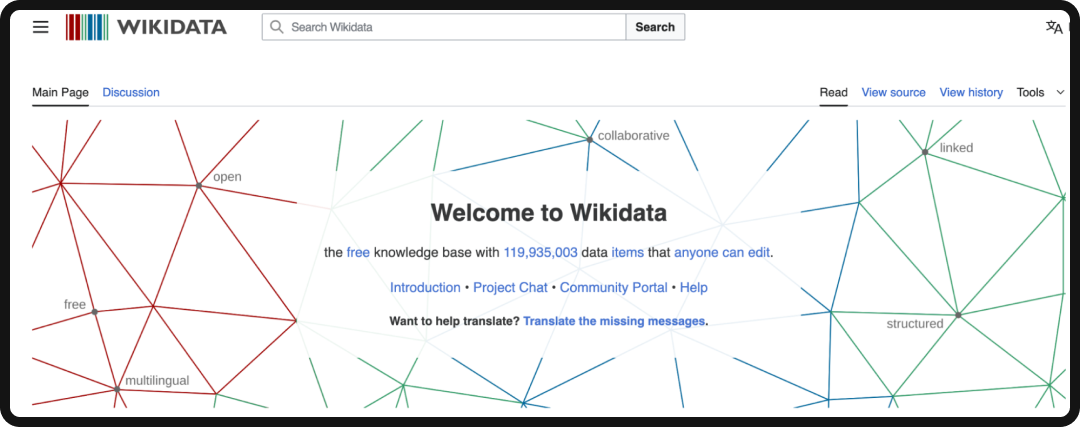
- sameAs schema: To close the loop on your entity, use sameAs within your Organization schema. This attribute bridges your website to your profiles on LinkedIn, Crunchbase, and most importantly, Wikidata.
Why Wikidata? Because it is one of the primary databases for the global Knowledge Graph. By linking your sameAs schema to a Wikidata entry, you’re providing the most fact-oriented cross-reference that proves to Google that you’re the same entity found on one of the world’s largest open-source datasets.
3. Managing Your “Off-Graph” Reputation
A major part of Knowledge Graph optimization is the work you do beyond your owned sources; we’re talking about earned media and third-party validation. And this also means doing more than responding to reviews, but actively shaping your digital sentiment.
This is so important because your brand’s reputation is synthesized from a multitude of third-party sources for Google’s entity validation. While owned sources are important, they’re not everything.
Think of it this way: Would you trust a brand just because of what they’re saying about themselves? You definitely wouldn’t; you’d be looking for unbiased, third-party opinions and reviews to make sure they’re all they’re cracked up to be. Knowledge Graphs operate the same way. Here’s how you can start:
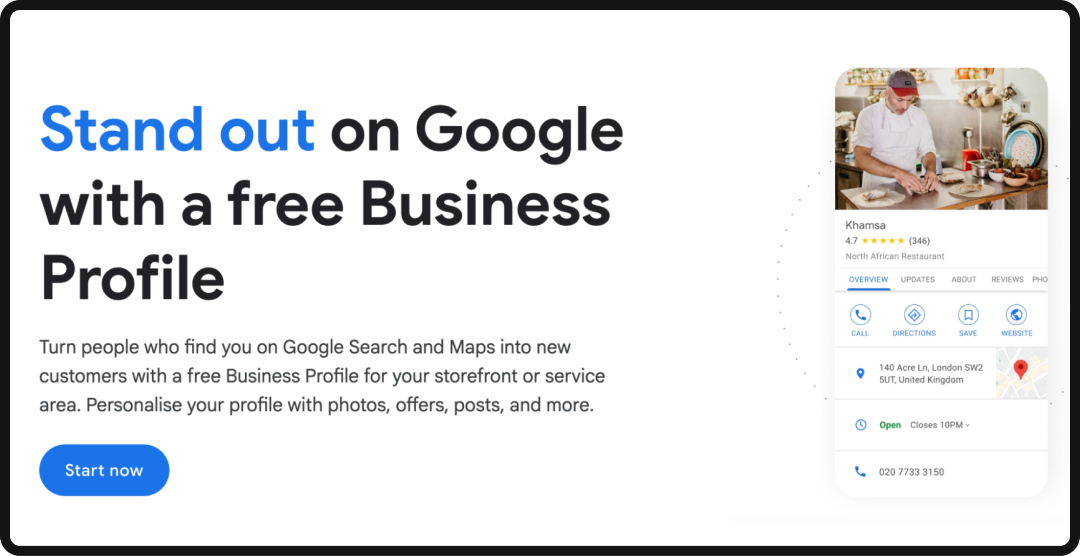
- Google Business Profile: Claiming and verifying your Google Business Profile is an elementary step, but a critical one at that. In 2026, your Google Business Profile anchors your digital entity, so you should be feeding it with frequent updates and photos, and responding to every review (positive or negative).
- The “Source Site” Hierarchy: Google prioritizes information from a “Seed List” of trusted websites to supplement what it finds on your domain. To solidify your Knowledge Panel, you need to be listed and optimized on these high-authority nodes:
- LinkedIn & Crunchbase: For B2B and corporate entity verification.
- Wikipedia: The gold standard for entity credibility.
- Industry-Specific Directories: For niche-specific authority (e.g., G2 for SaaS or The Wall Street Journal for Finance).
The “Conversational Trust” Update: Reddit & Quora
The rise of Reddit and Quora in search results hasn’t just impacted marketers but changed how LLMs calculate trust and verify facts. In 2026, LLMs weigh community discussions as heavily as official site data (if not more so, with Reddit leading in LLM citations) because these types of platforms represent authentic human sentiment.
If this doesn’t have you convinced that Reddit is an incredibly important brand visibility and marketing tool, maybe this article will.
4. Strategic Entity Partnerships
Building strong entity partnerships doesn’t mean link-building on every single website you can find (don’t go black hat on me now). Focus on contextual association; target specific sites that are relevant to your specific niche. To LLMs, a mention on a high-authority, relevant industry site is a signal that your brand “belongs” in that specific category.
When building strategic entity partnerships, keep these things in mind:
- Relevance over authority. Gather links from niche-specific blogs, which often carry more “entity weight” than generic or off-topic sites. If you’re a Fintech brand, for example, a link from a site that the Knowledge Graph already identifies as a “Finance Authority” is worth more than ten links from lifestyle magazines.
- The power of co-citation. Co-citation happens when two different websites mention your brand in relation to the same topic. Even without a direct link, if Website A and Website B both discuss “Growth Marketing” and mention “NoGood,” the Knowledge Graph creates a semantic link between those two entities.
- Unlinked mentions. AI doesn’t need a clickable link to make a connection. If your brand name is mentioned in proximity to your target keywords or topics on relevant sites, even without a link, the Knowledge Graph clocks that relationship, making digital PR all the more important nowadays.
Mastering the Knowledge Graph: Why 2026 Demands Entity-First Optimization
Google’s Knowledge Graph is older than TikTok, and more important now than it’s ever been, thanks to the role it plays in serving up generative answers both on and off of the SERP.
In 2026, the Knowledge Graph has evolved from being the source of Knowledge Panels into a validation layer for AI. When Gemini generates a response, it doesn’t just guess; it “grounds” its answers by cross-referencing its generative ideas against the structured nodes in the Graph, along with webpages and other sources. If your brand isn’t an entity in the Graph, then, you’re not just losing a blue link, but the citation or mention.
Ultimately, you’re the one who’s in control of your brand’s digital presence. The choice is clear: you can either be a passive bystander while an algorithm determines your reputation, or you can be the master of your own fate. With over 1B of the world’s population using AI, staying stagnant is no longer viable.
Don’t just be a search result. Be the definitive answer.