


If there were a fashion brand that could define the iconic style of Millennials and Gen Z alike, it would be Abercrombie & Fitch. From its legendary Abercrombie-branded zip-up sweaters and shirtless male models, it was all the rage among the young generation from the early 2000s until 2016.
However, despite its iconic status, the brand was named America’s “most hated retail brand” in 2016 by the American Customer Satisfaction Index.
So how did a fashion brand that captured the hearts of many young people become so hated? The answer is simple: it stopped listening to its audience.

What Caused the Downfall of Abercrombie?
Under CEO Mike Jeffries, who led the company from 1992, A&F became a cultural phenomenon built on exclusivity. Stores were dark and cologne-doused, projecting a “cool kids only” image that defined the brand for years. It worked, until it didn’t. In a 2006 interview with Salon, Jeffries bluntly stated the brand didn’t want “larger people” shopping there, and A&F’s discriminatory hiring practices ultimately landed them before the Supreme Court in 2015. Jeffries resigned in 2014, and by 2016, the damage was done: A&F was America’s most hated retail brand.
The turnaround came under CEO Fran Horowitz (appointed in 2017), who quietly dismantled the old playbook by shrinking logos, brightening stores, eliminating the cologne machines, and committing publicly to size inclusivity. What followed is one of retail’s most remarkable comebacks.
Understanding Abercrombie & Fitch’s Marketing Strategy
In 2023, Abercrombie & Fitch’s stock in the S&P 500 climbed by 285%, but it was still a long way from their labeling in 2016. A complete rebrand became necessary for the company to welcome inclusivity and diversity. The Abercrombie marketing strategy evolved from exclusionary tactics to customer-centric approaches that prioritized authentic connections.
The company executed its rebrand using the classic marketing framework of the 4 Ps:
People: Shifting from Exclusivity to Inclusivity
Undoubtedly, for those who grew up with Abercrombie, it was notoriously known as the “cool kids’ brand.” Former CEO Mike Jeffries said, “A lot of people don’t belong [in our clothes], and they can’t belong.” This elitist way of marketing quickly became extremely outdated and ultimately drove customers away.
Rather than chasing after a new generation of young people (Gen Alpha and Gen Beta), which would have required rebuilding brand equity and familiarity from scratch, Abercrombie & Fitch chose to re-engage their existing customers.
Their revamped marketing strategy made a calculated decision to focus on the generations that had grown up with Abercrombie, and would be more likely to welcome a rebrand with open arms: Millennials and Gen Z.
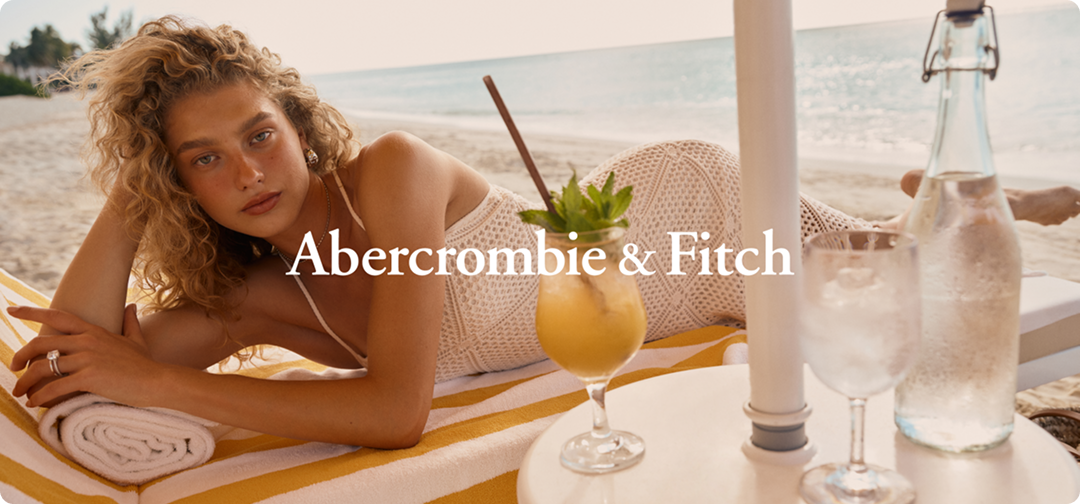
Product: Designing for Life Stages
For the next five years, Abercrombie & Fitch marketing teams conducted extensive research on this core demographic. As Millennials and Gen Z consumers advanced into their professional careers, the brand recognized an opportunity to transform their clothing offerings as more “grown up.”
This meant designing clothes for brunches, destination weddings, and office wear. Their design team began introducing blazers and suits for the office and dresses for weddings and parties. During their half a decade of market research, they also discovered that women were particularly dissatisfied with traditional jeans. Thus were born the now-famous stretchy Curve Love Jeans, which account for half of all of their denim sales.
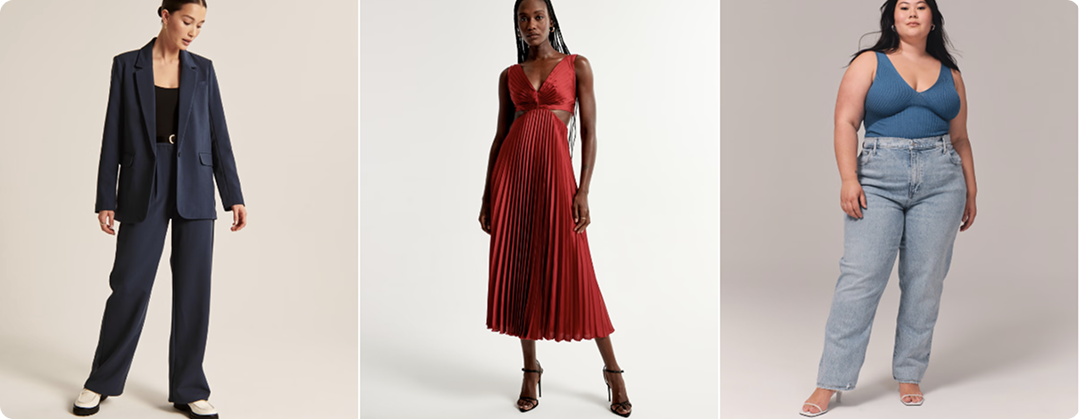
Positioning: Customer-Centric Transformation
In the past, A&F was obsessed with their customers “fitting into a certain lifestyle”; that kind of brand positioning simply wouldn’t fly with today’s audiences, so it needed a complete overhaul.
They needed to start listening to their customers and prioritize their needs above everything else. Modern consumers want a brand that fosters a sense of belonging. The brand’s new tagline perfectly captures this shift: “You bring the clothes to life. We just make them”.

Perception: Social Media & Influencer Marketing
Social media has become the cornerstone of the Abercrombie marketing strategy. Unlike their previous traditional advertising approach, they are now investing heavily in social media and influencer partnerships.
And what better way to spread the word on social media than finding fashion influencers with a large audience? Rather than relying on traditional paid advertising, the brand creates authentic discovery moments, allowing customers to “simply stumble upon” their products through trusted influencers.
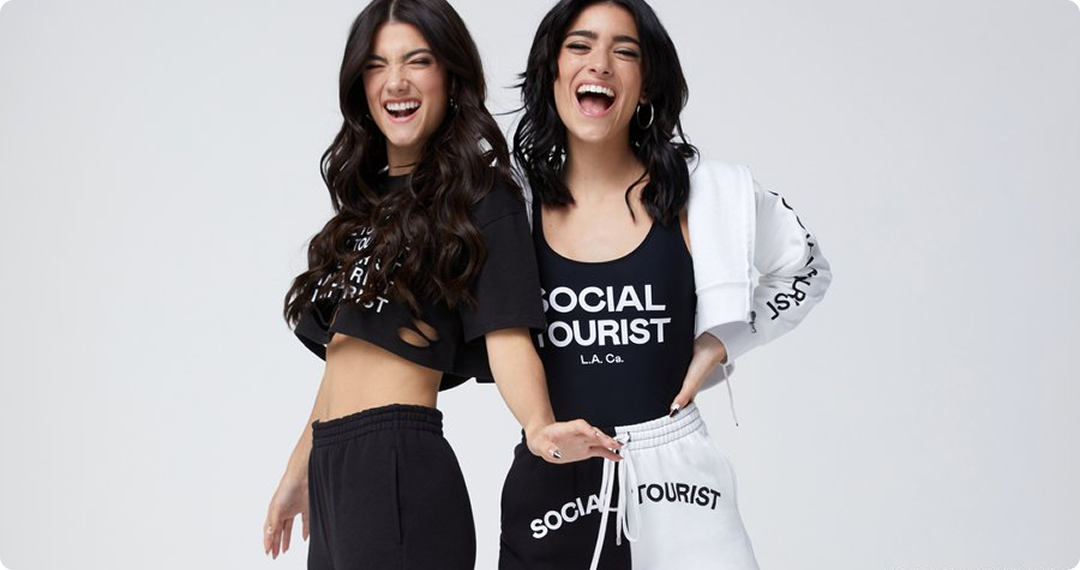
Abercrombie & the Influencer Strategy
Authenticity is the key to this rebrand. Influencers bring authenticity, which resonates deeply with their followers. By leveraging influencers who genuinely align with Abercrombie’s brand values, the company can effectively reach and engage a broader audience. These influencers provide relatable and trustworthy content, making the brand more approachable and credible. Additionally, influencer collaborations allow Abercrombie to tap into diverse demographics and niche markets, enhancing its appeal and relevance.
After perfecting their 4 Ps framework, the Abercrombie & Fitch marketing strategy developed a targeted influencer approach to re-engage their long-time fans. The typical Abercrombie customer ranges from the ages of 25 to 29 years old, and the brand carefully selects influencers within that age range to maximize relatability and appeal.
Abercrombie influencers range from different social media platforms but mostly stem from TikTok and Instagram, where the majority of fashion influencers build their audiences.
Moreover, Abercrombie’s influencer collaborations go beyond demographic alignment, strategically choosing influencers whose personal styles and values align closely with the brand’s ethos of casual luxury and inclusivity. By featuring these influencers in campaigns and collaborations, Abercrombie not only showcases its products in authentic, real-life contexts but also leverages the influencers’ engaged followings to drive brand awareness and affinity.
This approach helps Abercrombie stay relevant while positioning the brand as one that listens to and values the voices of its community. As social media continues to evolve, Abercrombie’s proactive engagement with influencers ensures that they remain at the forefront of fashion trends while maintaining a strong connection with their loyal customer base and attracting new followers seeking authenticity and style.
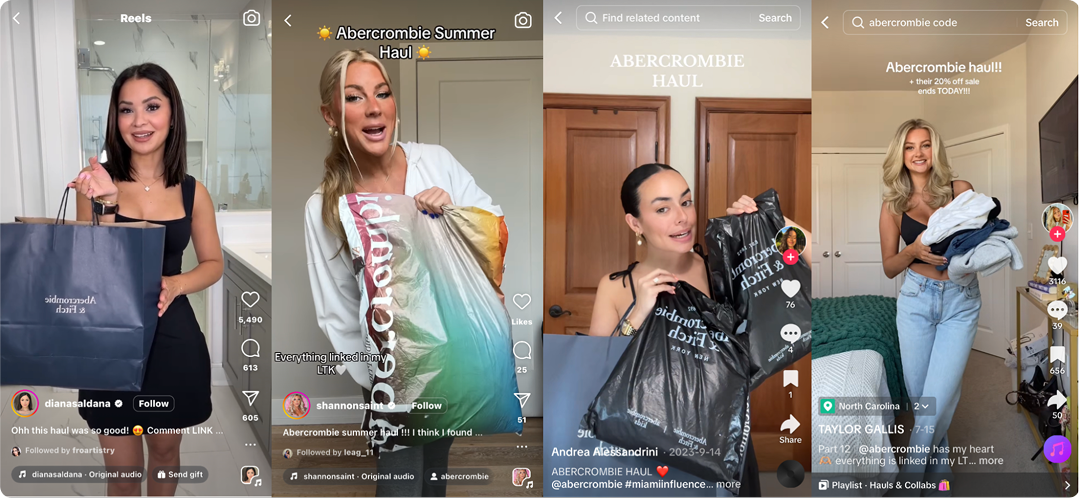
Abercrombie’s Most Recent Campaigns
Abercrombie has continued to double down on its customer-first, lifestyle-driven marketing approach through late 2024 and into 2025. Rather than chasing viral moments, the brand has leaned into consistent, community-driven content that reinforces its repositioning as a brand for real life.

The NFL Partnership Campaign
One of A&F’s most high-profile 2024 activations was its ongoing partnership with the NFL, which expanded for the fall season to include a licensed collection across all 32 teams and social media collaborations with four NFL players: TJ Watt, Nick Chubb, Fred Warner, and Rome Odunze. The campaign extended A&F’s reach beyond its core female demographic into a broader lifestyle audience, reflecting the brand’s growing confidence in its identity as a casual luxury everyday brand.
Denim as a Content Engine
Abercrombie’s denim line has become one of its most powerful organic marketing tools, generating a consistent stream of influencer hauls, styling videos, and customer reviews across TikTok and Instagram. Haul content featuring Abercrombie denim regularly accumulates millions of views, blurring the line between advertising and editorial in a way that resonates with audiences increasingly skeptical of overt brand messaging.
Lessons from the A&F Marketing Transformation
Abercrombie & Fitch’s rebranding journey shows a remarkable transformation driven by listening to their audience and embracing authenticity. From their controversial past to their current revival, the brand has navigated challenges with a renewed focus on inclusivity, diversity, and customer-centricity.
By meticulously reevaluating their “4 P’s” strategy (people, product, positioning, and perception) the Abercrombie & Fitch marketing team has not only restored their image, but also redefined their place in the fashion industry. Through their leveraging of influencer partnerships and modern social media marketing strategies, Abercrombie successfully reconnected with its core demographic of Millennials and Gen Z shoppers. The strategic use of influencer collaborations, particularly on platforms like TikTok and Instagram, has been the key to reaching and resonating with its target demographic, which is necessary for creating an authentic brand identity.
As Abercrombie continues to evolve, they remain committed to upholding their legacy of casual luxury while embracing the evolving preferences and values of their loyal customer base as they grow older.
By doing so, Abercrombie & Fitch has set the new standard for authenticity and customer engagement in the retail world. The lesson is clear: Abercrombie & Fitch is not just about clothing; it’s about fostering a sense of belonging and style that resonates authentically with its audience.
Abercrombie Marketing: Frequently Asked Questions
What age group does Abercrombie & Fitch target?
Today, Abercrombie & Fitch primarily targets Millennials and older Gen Z consumers, typically in the 22 to 35 age range. The brand’s typical core customer is currently estimated to be between 25 and 29 years old.
Did Taylor Swift model for Abercrombie & Fitch?
Yes. Long before she became one of the biggest pop stars in the world, a teenage Taylor Swift appeared in an Abercrombie & Fitch advertising campaign in the early 2000s. At the time, she was an aspiring young musician, and the modeling work predated her record deal and breakthrough 2006 debut album.
How much does Abercrombie & Fitch pay influencers?
Abercrombie & Fitch does not publicly disclose its influencer rates, and compensation varies widely depending on the influencer’s platform, follower count, engagement rate, and the scope of the campaign.