

Every marketer will be glued to their screens come Super Bowl Sunday and, no, it’s not because of football. The Super Bowl has evolved into something far more significant than a championship game. In some ways it’s the last remaining monoculture event where over 100 million people watch the same thing at the same time, making it the ultimate testing ground for what resonates with mass audiences.
The ads that air during this four-hour window become cultural artifacts that spark conversations at watch parties, dominate social media feeds for days, and often predict the creative direction the advertising industry will take for the rest of the year. For marketers, it’s a key opportunity to dig deep and understand what billion-dollar brands are betting will work.
That being said, the Super Bowl LX in 2026 feels different. We’re watching this game at an inflection point where traditional advertising rules are rapidly colliding with new marketing realities dictated by social virality and AI search. AI has moved from experimental to an everyday norm, and attention spans have compressed to the point where a 30-second TV spot is likely going to be interrupted by a second screen experience. The brands that succeed this year don’t have to have the biggest budgets, but they will have to recognize that the 30-second spot is now the least valuable part of a Super Bowl campaign.
The real ROI lives in what happens in the 72 hours after: the social dissection, the meme potential, the search volume spike, the Reddit threads analyzing creative choices, and the earned media that shapes brand sentiment and determines your AI visibility.
This creates a strange paradox for marketers. You’re paying $8 million for broadcast reach in an era where broadcast reach matters less than ever. Audiences now treat advertising as participatory culture, meaning that you are not what you claim to be in a 30-second brand narrative, you are what the internet says about you in the thousands of conversations that follow. The actual brand sentiment and positioning is shaped by the buzz you generate, the takes you inspire and the discourse you create; the ad itself is simply the reference point for these discussions.
The Stakes: How Much Does a 30-Second Super Bowl Ad Cost?
A 30-second spot during the 2026 Super Bowl costs approximately $8 million (and that’s just for the airtime). Add in production costs (which for top-tier Super Bowl spots can easily hit $2-5 million), celebrity talent fees, agency costs, and the multi-platform activation strategy required to extend the campaign beyond game day, and you’re looking at a total investment that can reach $15-20 million for a single ad.
To put that in perspective: $8 million buys you 30 seconds in front of roughly 115 million viewers. That breaks down to about $70 per thousand impressions (CPM), which actually doesn’t sound all that bad compared to other premium placements, until you remember that most of those viewers are simultaneously scrolling their phones, refilling drinks, or having conversations. The attention you’re paying for is partial at best.
So why do brands still write these checks? Because the Super Bowl offers something increasingly rare in fragmented media: a shared cultural moment. There’s no other single event where CMOs can guarantee their ad will be seen by this many people at once, discussed across every social platform simultaneously, and covered by mainstream media outlets as news. For brands the Super Bowl spot represents a cultural statement that earns coverage, drives search traffic, and influences how humans and AI platforms understand and describe your brand for months afterward.
The catch is that this only works if the ad breaks through. That risk is what makes the predictions that follow matter.
5 Predictions for the 2026 Super Bowl Ads
1. Brands Are Taking a Stance on AI Usage
In 2026, brands are using their stance on AI as a way to signal brand positioning, differentiate from competitors, and (hopefully) align with the prevailing sentiment their target audience shares. This year’s Super Bowl sets the stage for big brands to publicly pick a side on the ongoing AI debate.
We saw the opening salvo in 2025 when Doritos launched a creator-focused contest that explicitly celebrated human creativity over AI-generated content. The message was clear: in a world flooding with AI slop, human craft matters.

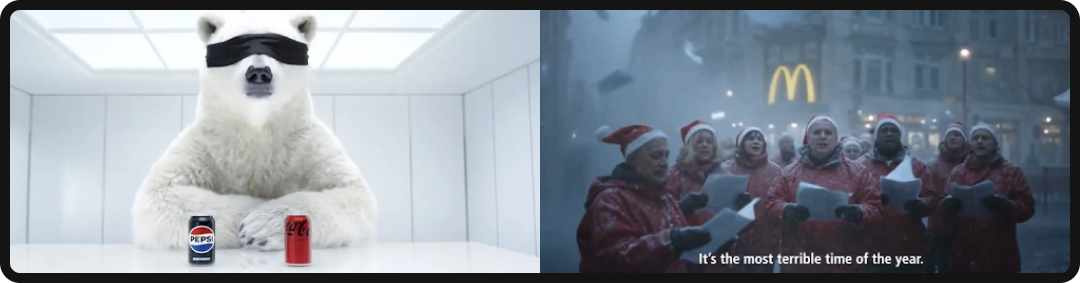
Their 2026 Super Bowl campaign was intentionally made without AI, a calculated response to Coca-Cola’s two years of backlash for using AI-generated versions of their iconic polar bear in Christmas campaigns. By featuring what appears to be a real polar bear (or convincing practical effects) in an ad that attacks Coke directly, Pepsi is positioning itself as the brand that respects craft and authenticity over AI shortcuts.
Svedka went the opposite direction entirely. Their first-ever Super Bowl spot bills itself as “AI-enabled,” using machine learning to translate a real human dance routine into movements for their revived Fembot mascot. They positioned AI as a tool for collaboration and a bridge between human creativity and execution, framing the technology as a tool that expands what’s creatively possible rather than cuts corners on production.

We’re seeing two major camps crystallizing here. Brands will either embrace AI as a production advantage (speed, cost, creative possibility), or they’ll double down on human creativity as an anti-AI stance (the authenticity argument). What’s becoming clear is that saying nothing is no longer an option. Audiences are paying attention to how things get made, and your production choices now communicate as much about your brand values as your messaging does.
2. Optimizing for the Second Screen Experience
Everyone watching the Super Bowl already has their phone out. They’re texting, tweeting, scrolling between plays. The “second screen experience” is the default viewing behavior. Smart brands are designing their Super Bowl campaigns around this reality instead of pretending they have undivided attention.
Uber Eats is the clearest example of this shift. Their 2026 “Football Is for Food” campaign turns the traditional spot into a launchpad for an in-app choose-your-own-adventure experience. Users can build their own version of the commercial with over 1,000 combinations and 36+ hours of content, creating something that feels closer to Black Mirror’s interactive film Bandersnatch than a typical ad activation. Why fight for 30 seconds of partial attention when you can create an experience that pulls people into your app for minutes at a time?
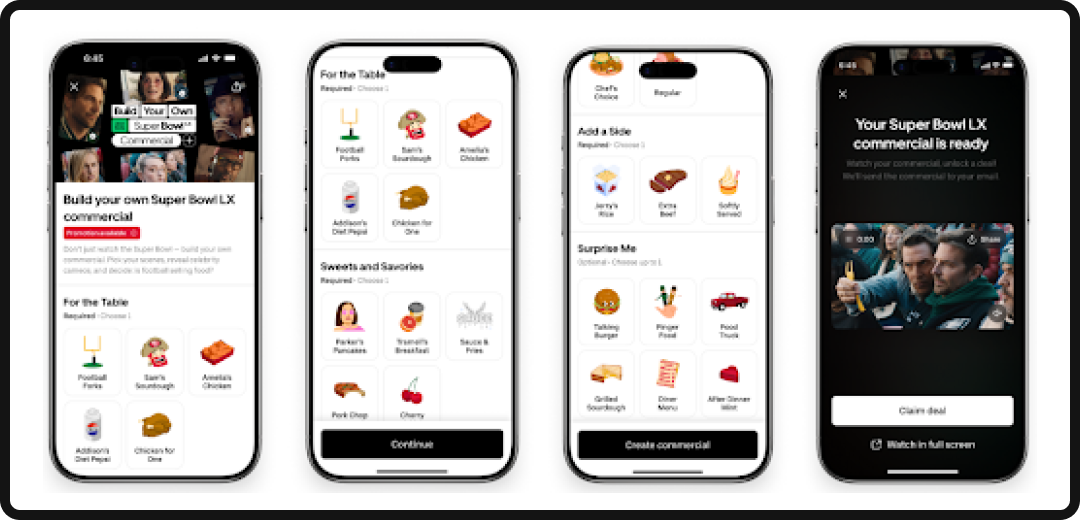
This approach solves two problems that have plagued Super Bowl advertisers for years. First, measurable impact. Uber Eats knows exactly who engaged with the experience, for how long, and what choices they made. That’s data you can’t get from broadcast impressions alone. Second, extended attention. The 30-second spot becomes the trailer for a much longer interaction that happens on a platform the brand controls. Tie that to limited-time deals (which Uber Eats did), and you’ve converted awareness into commerce in real time.
For a growing portion of the audience, the TV broadcast is simply background context for the conversation happening on their phones. Brands that design for simultaneous engagement rather than sequential engagement (watch the ad, then go do something) will capture the type of attention that makes an $8 million investment worth it. Expect more interactive elements, app-based extensions, and real-time activations that treat the game as the backdrop for a multi-platform experience.
3. Brand Rivalry Takes Center Stage
Comparative advertising is nothing new, but in 2026 the brand rivalry is heating up to a whole new level. Pepsi already proved this works. Their Super Bowl campaign hijacks Coke’s most recognizable mascot and turns it against them. Using the polar bear in a blind taste test where it chooses Pepsi is aggressive enough. But doing it without AI while Coca-Cola faces ongoing backlash for AI-generated polar bears in their Christmas ads? That’s a multi-layered attack.
Anthropic is taking this same approach with Claude’s Super Bowl debut, and their target is honestly just as obvious as the Pepsi-Coca-Cola feud even though they never explicitly name drop ChatGPT. OpenAI announced last month that ads are coming to ChatGPT for free users and those on the cheaper Go tier. Anthropic’s response is a series of spots that imagine what AI advertising actually looks like when it interrupts your conversation mid-sentence.
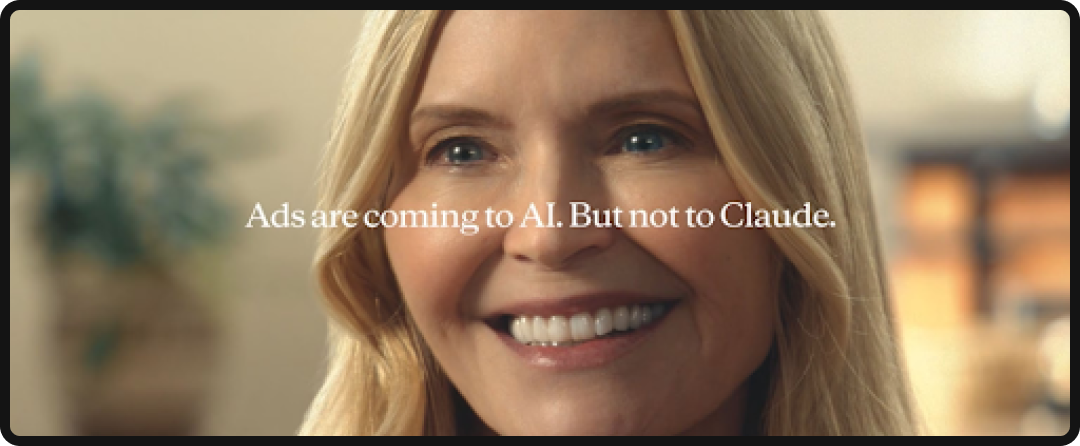
Each ad starts with a normal ask: help me write, help me decide, help me get in shape, help me be a better person. Then it yanks the viewer into an absurd product plug delivered in the exact cadence people associate with chatbot responses. In “Treachery,” a student asks a teacher for essay feedback and gets it, until the teacher pivots to jewelry discounts mid-critique. In “Violation,” a guy doing a pull-up (a direct reference to OpenAI’s “Pull-Up with ChatGPT” ad from last year) asks a buff trainer for fitness advice and gets sold fictional insoles that “add one vertical inch of height and help short kings stand tall.” Every ad ends with the same line aimed directly at OpenAI: “Ads are coming to AI. But not to Claude.”
This is the new playbook for brand wars. What makes 2026 different is that brands are competing on philosophical territory rather than just product features. As AI models reach near-parity on benchmarks and technical differences shrink to percentage points, identity becomes the biggest differentiator. People aren’t choosing based on which model is objectively better anymore, they’re choosing based on what using that model says about them. Brand rivalry works because it forces that choice into sharp relief, and when you’re spending $8 million on 30 seconds of airtime, making your competitor part of the story guarantees you’ll dominate the conversation long after the game ends.
4. Brainrot Wins (Because the Algorithms Reward It)
Get ready to be amused and mildly confused by this year’s Super Bowl ads. Brands are choosing to tap into brainrot humor and absurdist surrealism as a strategic response to how viral content actually spreads in 2026. Knowing that ads will be clipped, quoted, and dissected by people scrolling on their phones, brain humor (nonsensical, chaotic, deliberately weird content) cuts through the noise faster than polished, emotionally resonant storytelling because it’s designed for the algorithm.
Mountain Dew proved this in 2025 an ad that featured Seal (the musician) with his head digitally imposed onto a seal’s body (the animal). The internet reaction was immediate and polarized. One viewer wrote, “Words cannot express how much I dislike that Mountain Dew Seal ad. An abomination of advertising.” Another declared it “the best thing I’ve seen so far.” That divide was the entire point. It wasn’t necessarily universally loved, but it succeeded because it was impossible to ignore and generated the kind of “what did I just watch?” confusion that drives online engagement.

Pringles is leaning into this strategy in 2026 with “Pringleleo,” starring Sabrina Carpenter in a romantic parody where she falls in love with a fictional character built crisp by crisp. The spot leans into absurdist humor and unhinged storytelling that resonates with Gen Z, who expect brands to participate in internet culture rather than talk at them. Since releasing the teaser in January, Pringles has been mentioned over 6,000 times in Super Bowl conversations on social media, generating nearly 400,000 engagements. The Instagram Reel on Sabrina Carpenter’s page received over 8.6 million views with a 15.8% engagement rate, six times higher than the industry benchmark.

5. AI & GLP-1 Category Disruptors Enter the Arena
Super Bowl ads used to be dominated by beer, cars, insurance, and snack brands. The lineup was predictable because these categories had massive budgets and universal appeal. But 2026 marks a shift in what’s considered mainstream enough to justify $8 million in airtime. New categories are claiming Super Bowl real estate, and their presence signals what’s becoming culturally relevant to mass audiences.
ChatGPT made its Super Bowl debut in 2025 with “The Intelligence Age,” positioning AI as humanity’s next great leap alongside fire and the wheel. Claude is joining that conversation in 2026 with their first ad, directly challenging OpenAI’s monetization approach. These ads tell the 115 million people watching that AI isn’t experimental or niche anymore.
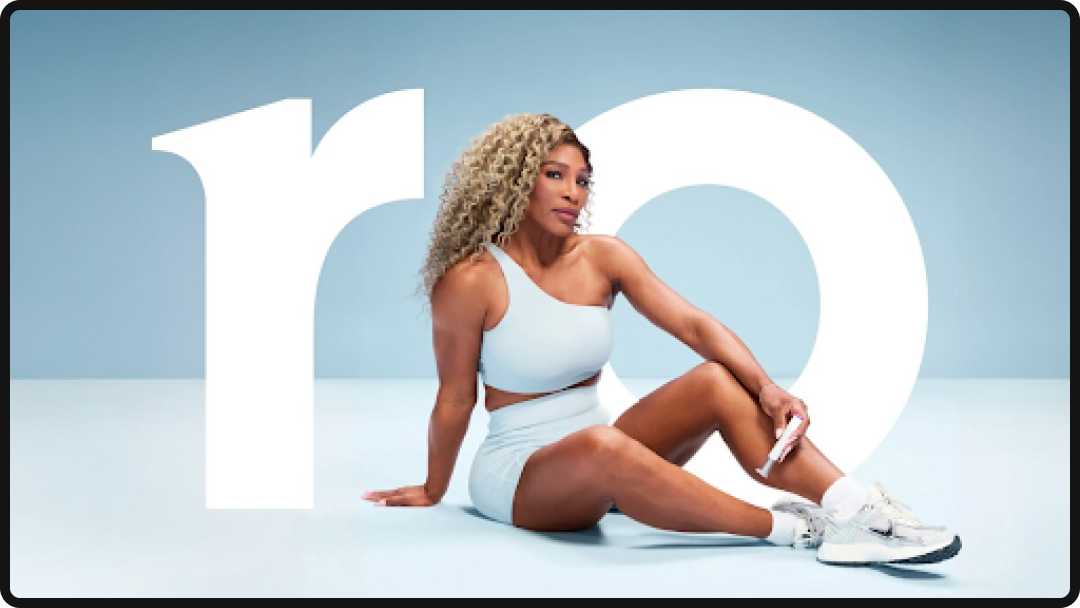
The GLP-1 category is following the same path. Last year, Hims & Hers made their Super Bowl debut with a controversial GLP-1 ad that opened with obesity statistics, positioned America’s weight as a national crisis, and framed their product as the solution. The backlash was immediate. Critics said the messaging felt like it was shaming people into using GLP-1s, leaning into vanity and societal pressure rather than health outcomes. Ro is making their Super Bowl debut this year with a completely different approach. Their ad features Serena Williams, who’s been partnered with Ro since August, leading with her health results after using the platform: 34 pounds lost, steady blood sugar, reduced joint stress. The positioning is health empowerment, not weight loss.
The fact that multiple GLP-1 brands are competing for Super Bowl attention tells you the conversation isn’t going anywhere. When new categories like AI and GLP-1s start showing up in the Super Bowl lineup, it’s a signal that these products have crossed into mainstream acceptance. The Super Bowl ad spot then becomes the moment when emerging technologies and treatments get normalized for the early majority who are still deciding whether to trust them.
Why Marketers Care So Much About Super Bowl Ads
Super Bowl ad breaks ≠ bathroom breaks. Super Bowl ads matter because they’re a very clear signal of where marketing is heading. When brands spend $15-20 million on a single campaign, they’re not making creative bets for experimental purposes, they’re investing in what their research, testing, and instincts tell them will resonate with mass audiences. The Super Bowl becomes a real-time focus group with 115 million participants, and the brands that succeed reveal what’s actually working in the cultural moment we’re living through.
The five trends outlined are symptoms of broader shifts that are reshaping how brands communicate. AI transparency as a positioning strategy signals that production choices are becoming brand values. The second screen experience reflects attention fragmentation that affects every piece of content brands create. Brand rivalry on philosophical territory shows that differentiation increasingly lives in identity rather than features.
These predictions matter beyond February because the Super Bowl is where strategies either get validated or exposed. The brands making bold moves this Sunday are testing approaches that will show up in your Instagram feed, your search results, and your AI conversations for months afterward.
2026 Super Bowl Ads: FAQs
What is the most famous Super Bowl ad?
Apple’s “1984” ad, directed by Ridley Scott and aired during Super Bowl XVIII, is widely considered the most famous Super Bowl ad of all time. The 60-second spot introduced the Macintosh computer and only aired once nationally, yet it revolutionized Super Bowl advertising by proving that the game could be a platform for cinematic, culturally significant creative work. More recently, Budweiser’s Clydesdale ads and the E-Trade talking baby spots have achieved iconic status.
Who spent $14 million on Super Bowl ads?
Several brands have spent approximately $14 million on Super Bowl ads in recent years. Coinbase made headlines in 2022 with their minimalist 60-second QR code ad that cost $14 million. Temu reportedly spent around $14 million on their Super Bowl spot in 2024, and OpenAI invested approximately $14 million for their “The Intelligence Age” campaign in 2025. These higher figures typically reflect 60-second spots instead of the standard 30 seconds, premium placements like the post-halftime slot, or comprehensive campaigns that include production costs, celebrity talent, and multi-platform activation strategies beyond just the airtime cost.
How much does a 30-second Super Bowl ad cost in 2026?
A 30-second Super Bowl ad costs approximately $8 million in airtime for 2026. However, the true cost is significantly higher when you factor in production (typically $2-5 million for top-tier spots), celebrity talent fees, agency costs, and the multi-platform activation strategy required to extend the campaign beyond game day. All-in, brands can expect to invest $15-20 million for a single comprehensive Super Bowl campaign.
Why are Super Bowl ads so expensive?
Super Bowl ads are expensive because they offer something increasingly rare: guaranteed mass reach during a shared cultural moment. The game draws over 115 million viewers watching simultaneously, making it one of the few remaining monoculture events where brands can reach that many people at once. Beyond the broadcast, Super Bowl ads earn extensive media coverage, drive significant social media engagement, generate search volume spikes, and influence brand sentiment for months afterward. The high cost reflects not just the TV placement, but the earned media, cultural conversation, and AI visibility that comes with it.
What makes a Super Bowl ad go viral?
Viral Super Bowl ads in 2026 share several key characteristics: they’re designed to be clipped and shared on social media rather than just watched passively on TV, they generate strong reactions (whether positive, negative, or confused) that drive conversation, and they tap into cultural moments or internet humor that resonates with second-screen audiences. The most successful spots create “what did I just watch?” moments that compel people to discuss, debate, and dissect them online. Brands optimize for shareability over traditional metrics like likability, understanding that controversy and confusion can be just as valuable as universal appeal when the goal is to dominate the cultural conversation.