

When you want to learn more about a brand, where’s the first place you look? If you’re Gen Z or a Millennial, I bet your answer is Instagram, TikTok, or perhaps even Reddit (for those super niche questions).
The findings below shed light on why younger generations are choosing social as their first stop for search: they trust it to deliver information embedded directly into meaningful, positive experiences. This is likely a result of Gen Z and Millennials using social media with intention in mind. Instead of doomscrolling for hours (COVID did a number on us all) younger generations are opting to use social media in more productive ways: to search, engage, and actively curate their feeds to reflect their interests and values. The findings show:
- According to Emarketer, 46% of Gen Z and 35% of Millennials prefer social media over traditional search engines
- According to Sprout Social, 90% of Gen Z and 84% of Millennials say content on social (e.g., ads, influencer posts, brand content) has influenced a purchase in the past six months
Personally, when I want to dabble in market research, I go straight to social media 99% of the time… specifically Instagram. You might be wondering, “What, Google isn’t good enough anymore?” The more important question to ponder in order to explain this user behavior shift is what social search offers that the traditional search doesn’t: immediacy and insight.
Let’s pause and look at the consumer journey for a second. Before we even step foot in a store or click “Add to Cart,” there are a thousand little details that impact our brand perception, and it all starts with research. However, the way customers research is changing, which means it’s time for your brand to pivot.

Looking up a brand (or any topic for that matter) on a search engine like Google takes effort and time, and the answers you’re looking for are often hidden, only to be uncovered after an hour of sleuthing around.
Compare this to social media search functions, and instantly you’re hit with graphics and visuals, organic UGC videos, comments, and clear product storytelling that paints a picture of the entire brand as well as the general sentiment following them; something traditional search could never replicate.
Additionally, our social algorithms are perfectly tailored to the formats, creators, and topics we already like, adding an extra layer of padding to our social search results that present an inherent bias. Why wouldn’t we start our search on a platform that curates everything for our wants and needs?
As a result, the recency, personalization, and speed of social media as a search engine has completely transformed the way younger generations treat and look at social: as the new “.com” for brand marketing.
Social Media Is the New Landing Page
In a world where information overload is only one click away, consumers use social as a sounding board. The way I see it, social is the first step in a consumer’s discovery process: an initial gut check. Where a brand’s website offers the hard selling points, social media (both brand-owned and UGC) showcase a brand’s soft skills, and both have equal weight in influencing purchase decisions. Here’s an easy way to think about it: Where social sets the tone, your website confirms it.
While it’s hard to pinpoint exactly when we started going to social media before reaching for our Google browsers, the shift from “Google it” to “look it up on TikTok” signals a desire for intimacy and content that only a human could make. Pair this with the rise in AI usage and the effects of being “chronically online” and it all makes sense: social is used as a search engine because it gives brands, restaurants, hotels, and products a human feel, and that’s the most valuable asset for brands in today’s culture.
Although this shift has felt subtle, it’s transformative for social, business, and commerce. Not only does it show a drastic change in how consumers discover products and brands, but it effectively changes how brand marketing should be approached. For us marketers, that looks like making social the front-line channel for building awareness, managing perception, engaging with customers, and receiving feedback.
Social media functions as your brand’s homepage or front door, acting as the first point of contact with your audience. Think of a landing page as the first thing a potential customer sees when they click on an ad or a link; it’s designed to tell you exactly what a brand does, why you should care, and what to do next. Traditionally, that job belonged to your website. But for a growing number of consumers, especially younger ones, your social profile is doing that work first. It’s the new front door: the place where brand identity is built, first impressions are formed, and purchase decisions start taking shape, all before someone ever clicks “visit website.” Social media builds brand identity, fosters engagement, and drives traffic to websites, serving as a dynamic, real-time reflection of a company’s personality and values.
That’s a lot of pressure! The good news is, your socials are likely prime for social optimization. Sometimes that means a few small tweaks, and sometimes that means a new perspective.
6 Things That Your Social Profiles Need to Satisfy Searching Users
In the past, people have dismissed social media, treating it like an afterthought, but it’s often the first entry point consumers have with your brand. Data from We Are Social shows that 44% of online adults use social media to research brands ahead of a potential purchase. Your social media is one of the first entry points consumers have with your brand, and they’re often making purchase decisions on the spot as a result. “We’re all different, and we’re all the same” is a sentiment I often remind myself of as a social media strategist.
Though each brand has its own unique product, target audience, priority platforms, and niche evergreen moments, let’s not forget that at the root of all marketing is the study of people. Communities. The emotions behind every decision (purchasing or not).
This brings me to an important question I want every brand marketer to ask themselves: when someone hits your socials for the first time, what questions are they trying to answer? Dare I frame this another way: how is your brand or product filling a gap in their lives, and how is it supposed to make them feel about themselves?
As I see it now, social media is no longer a primarily entertainment platform; consumers want to walk away with tangible learning. Think about it: 82% of consumers now use social media for product research, and according to Sprout Social, 52% of users prefer social search over AI chatbots specifically because they want real, firsthand experiences they can actually learn from. In the age of optimization, scrolling has become an active habit. If the basis of good marketing is storytelling, your website should answer the “what,” whereas your social answers the “why should I care.”
Let’s go back to my question. Depending on your brand, here are some things that users might be wanting to find out about you by snooping on your socials:
- What do they actually offer?
- Can I trust this brand?
- What’s their vibe like?
- Do their values match mine?
- Can I see myself purchasing from or supporting this brand?
- Do I belong within this community?
Notice how each of these answers goes beyond the surface level product questions and forays into deeper psychological concepts. In a nutshell, when existing followers or first-time visitors of your brand are visiting your social media, they are running countless queries and making a series of snap judgments because engaging with a new brand often comes with risk: quality control, long-term investment, or the fear of external judgment. On the fundamental level, their brain tries to reduce uncertainty as fast as possible and social media is often the best place to do so (not only on your brand’s profile but through UGC as well). That mental scan can look like:
|
Mental Scan |
What They’re Looking For |
|---|---|
|
Instant Categorization |
A rapid, often subliminal read on what your brand does, how it makes them feel, and whether it’s relevant to them |
|
Risk vs. Reward Calculation |
Whether the cost (money, time, social credibility) is worth what your brand is promising |
|
Credibility Scanning |
Proof that you’re the real deal: follower count, comment quality, UGC, press mentions |
|
Relevance Filtering |
Whether your brand speaks to their lifestyle and values |
|
Emotional Resonance |
Proof of life (that your account has been built and strategized by a real person, not AI) |
|
Next Step Clarity |
Whether it’s obvious what to do next, or if it’s easier to just move on |
The reality is that all of this happens fast, so your socials have to showcase your brand’s strengths right off the bat: reducing uncertainty, building trust, and creating enough emotional pull to turn a quick glance into intrigue.
5 Ways in Which Social Media Is The New Landing Page
I know, this is a lot to take in, especially considering the pace of social (the second we get comfortable, bam! Another change is already upon us) but fear not: there’s a lot of room to build on existing frameworks. Let’s break them down into steps:
1. Bio & Link-in-Bio Become Your Above-the-Fold Moment
This is the most direct landing page parallel. As you know, whatever lives before the scroll has to be clear, easy to navigate, and useful.
- The bio is your headline, value prop, and CTA all in 150 characters or less
- Link-in-bio is where the conversion actually happens and there are a host of tools to help you there (Linktree, Sprinklr, Bitly, etc.)
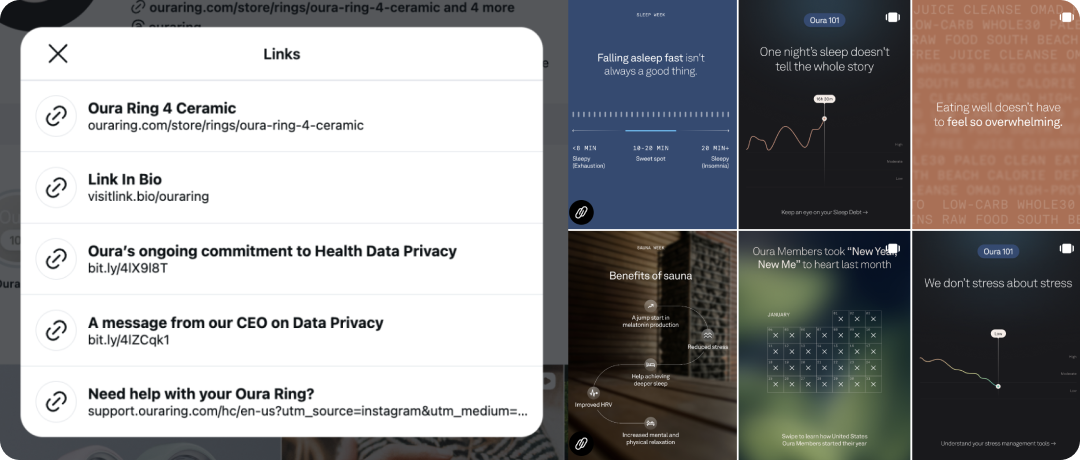
Example: Oura’s link-in-bio section offers viewers a fuss-free way to access the most important information about their brand and product.
NoGood Tip: Keep this section as bare bones and clean as possible. Viewers can be easily overwhelmed if you have too many links.
2. Pinned Posts as Hero Content
There’s two ways to think about pinned posts:
- Your brand’s greatest hits, e.g. a viral post, a partnership highlight, or a brand activation recap reel.
- Your brand’s foundation, e.g. product highlight, values statement, or a press release.
Either way, your pinned posts should answer the question, “What is this and why should I care?” immediately. The point here is intentionality: what you pin is an editorial decision that you want your audience members to walk away remembering.
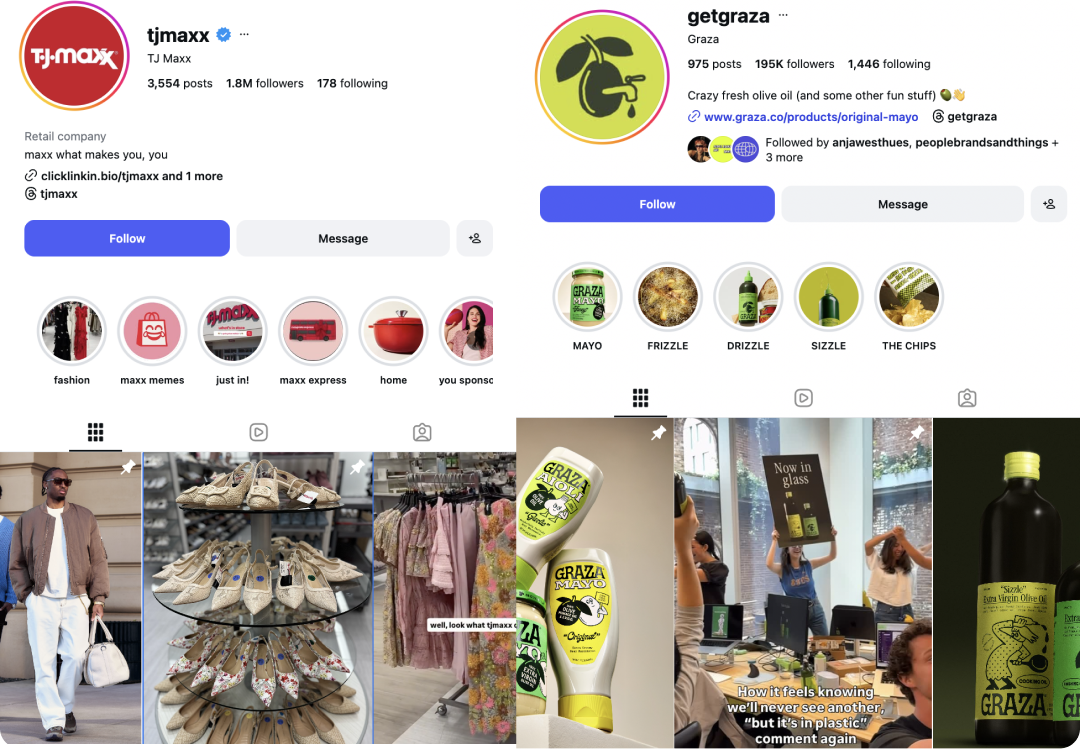
Example: TJMaxx showcases the first option (their partnerships with Stanley Tucci and Ilona Maher) where Graza showcases the second (all pinned posts feature new product launches and announcements).
NoGood Tip: Experiment! The great thing about pinned posts is that they are not permanent, so you can move them around as often as you’d like.
3. Highlights & Covers as Navigation
Highlights are one of the most underutilized (but most important) navigation touchpoints on your brand’s profile. Highlights are basically your navigation bar: FAQs, press, UGC, campaigns, etc.
Most brands treat them as an archive, but I challenge you to think of them as a sitemap catered to your audience and your product.
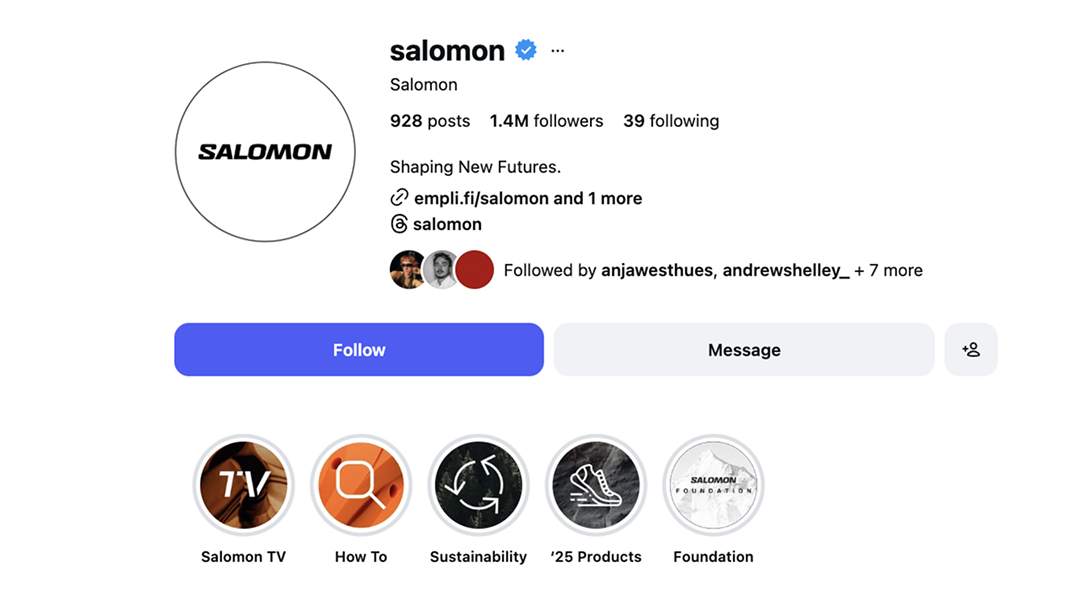
Example: Salomon’s highlights are simple, up-to-date, and feature important product information and brand values that are easily scannable for new and old consumers.
NoGood Tip: When it comes to highlights, less is more; try to select 4-5 highlights that you want to prioritize.
4. Grid or Feed Aesthetic = First Impression of Your Brand
This one is less about individual posts and more about the bigger picture (literally). Scroll through your profile now and ask yourself the following: what does your profile feel like at a glance? Observe the color, cadence, and content mix.
This is like the vibe check before anyone actually taps into an individual post or registers copy.
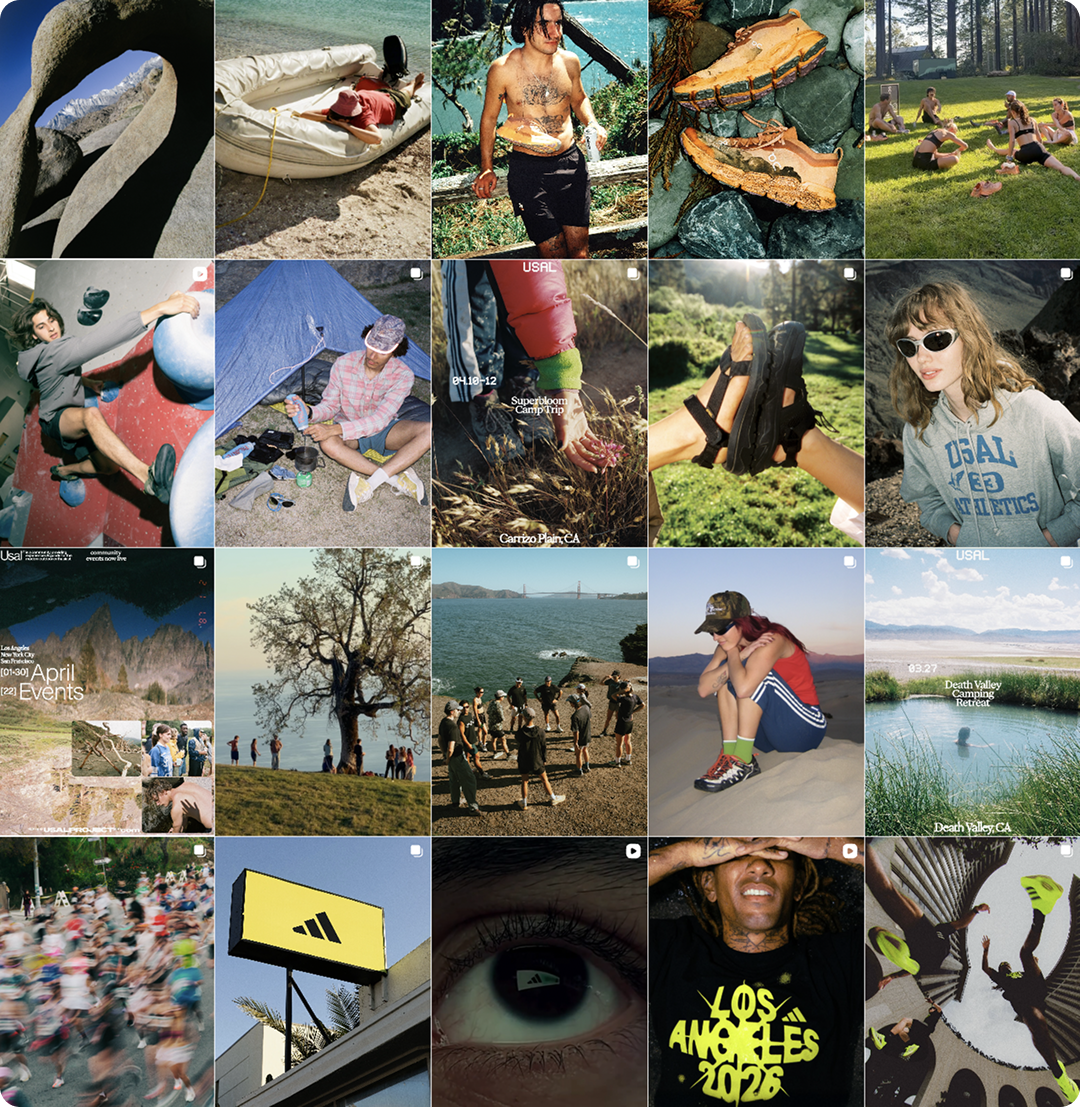
Example: Usal Project’s feed is like a breath of fresh (nature) air, which fits perfectly considering they’re a community-centered brand that designs immersive outdoor experiences, events, and partnerships that connect people to nature and to each other.
NoGood Tip: Diversify your content. A pretty grid surely doesn’t hurt, but it’s not the be all-end all as far as priorities go. A cocktail of brand education, product spotlights, community, and lifestyle posts are what take a grid from purely aesthetic to purposeful.
5. Comment Section as Community Hub
This is where social media pulls ahead of a traditional landing page. On a website, the conversation is one-sided; your brand speaks and visitors listen. On social media, you have direct communication with your audience. Your customers can actually join in, and feel like they’re a part of your community. How your brand responds (or doesn’t) to comments tells a first-time visitor everything about the culture of your brand. Pay attention to the trends:
- Are people asking the same question repeatedly?
- Are they tagging friends?
- Are they mostly negative, positive, neutral?
- Are they random or related to the content?
You’d be surprised how much you can learn and use as inspiration simply from observing the general trends in your comment section. Cough cough, if you haven’t already, I highly suggest you develop a social listening strategy that helps you filter through comments and mentions (both reactive and proactive).

Example: Diet Coke consistently responds to comments on their owned socials, creating a rapport between their audience and their brand.
NoGood Tip: If you make the decision to actively respond to comments make sure you are clear on the following before you start dropping replies: a distinct brand voice, copy bank to pull from on the fly, guidelines on emoji and punctuation use, have a process in place for reacting to negative comments. The more you set up a process, the easier it will be to make quick decisions.
4 Brands Who Successfully Treat Social as a Landing Page
Now that we’ve outlined the methods your brand can use to treat social as a landing page, it’s time to see it in practice. If you’re feeling unsure of where to start, don’t panic; we all start somewhere!
Yes, the following brands have finessed the art of social as a landing page, but they didn’t stumble into great social profiles. As they say, Rome wasn’t built in a day and neither is your social media strategy. Without further ado, here’s what each one gets right:
1. Ladder
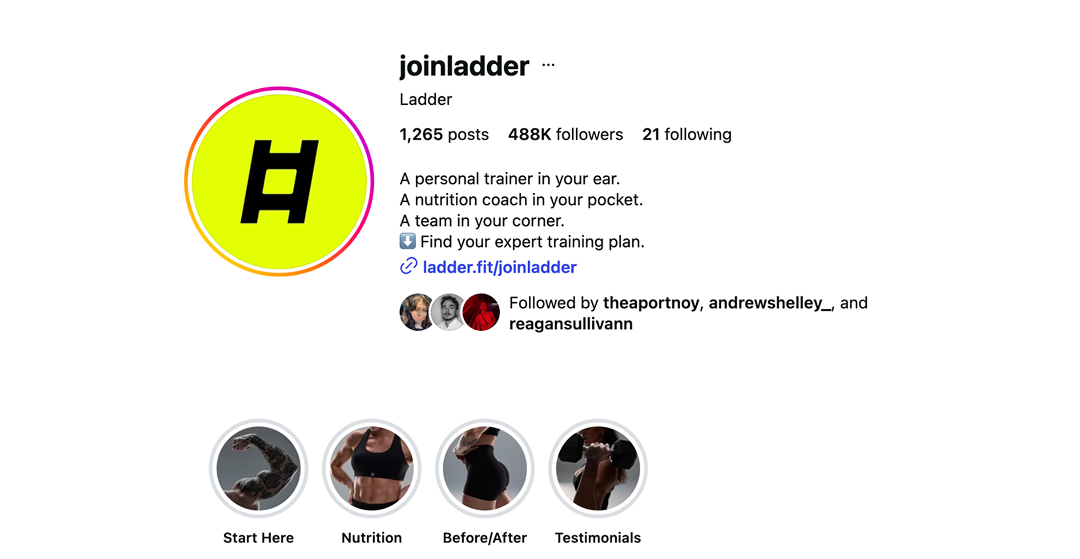
Ladder’s Instagram is a great example of a literal landing page translation. Their bio provides immediate clarity on what the app does, and why you need it. Their highlights do the same job: start here, nutrition, before-and-after, and testimonials.
It feels clear and direct without being overly sales-y. A first-time visitor can go from discovery to conversion without ever leaving the profile.
2. Eight Sleep
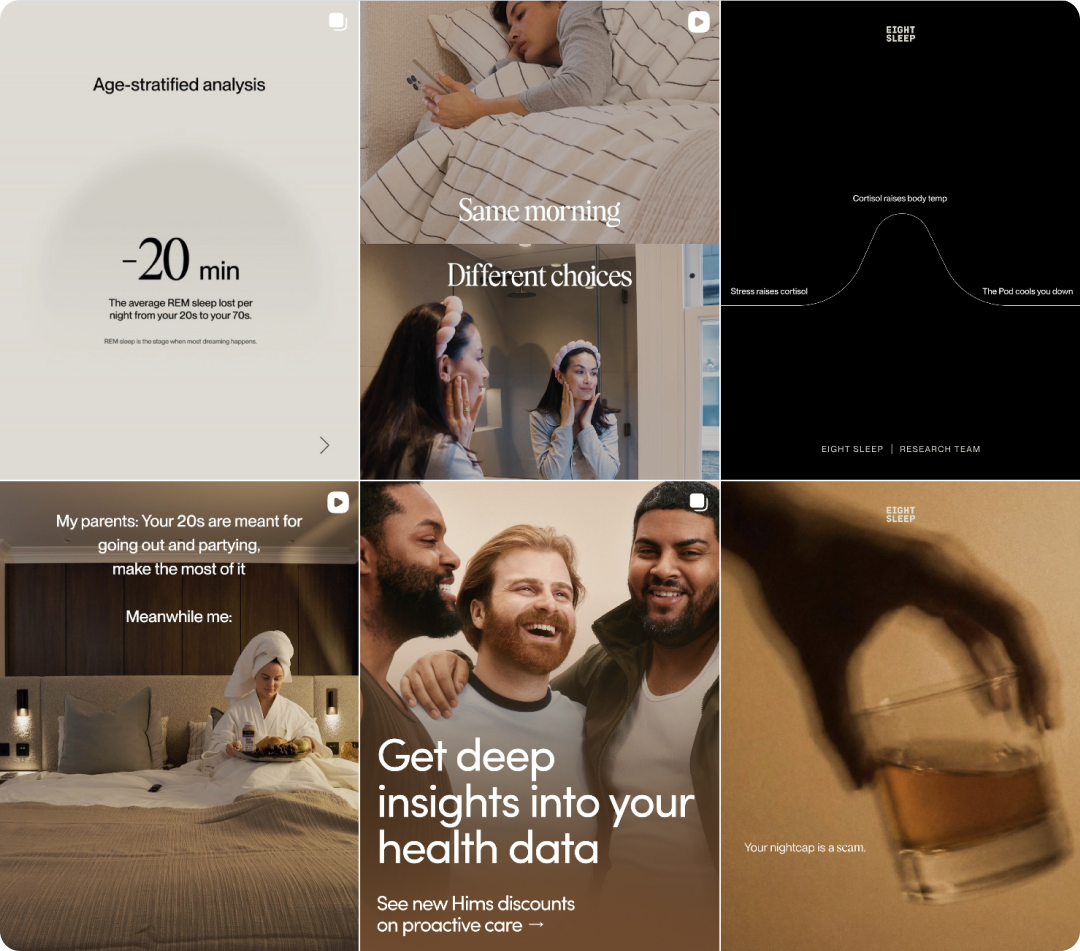
Eight Sleep plays the long game. Their grid doesn’t scream “buy our mattress”; it pulls you into a world where performance, recovery, and wellness all intersect. Abstract lifestyle imagery sits next to hard data, partner spotlights, and athlete features, creating a feed that feels both aspirational and credible. It’s the kind of grid that makes you stop and think, “okay, these people actually know what they’re talking about.” For a brand selling a high-ticket product, that trust-building happens long before anyone clicks the link in bio.
3. Ffern
Ffern barely shows you the product, but that’s the whole point. The small-batch perfume brand’s grid leads almost entirely with world-building: botanical illustration, film photography, seasonal editorial content.
Their highlights are organized like magazine issues which tells you immediately that this brand operates like an editorial outlet. The grid answers, “What’s the vibe?” and, “Do I belong here? Because I sure want to” before a single word registers.

4. Wilde House Paper
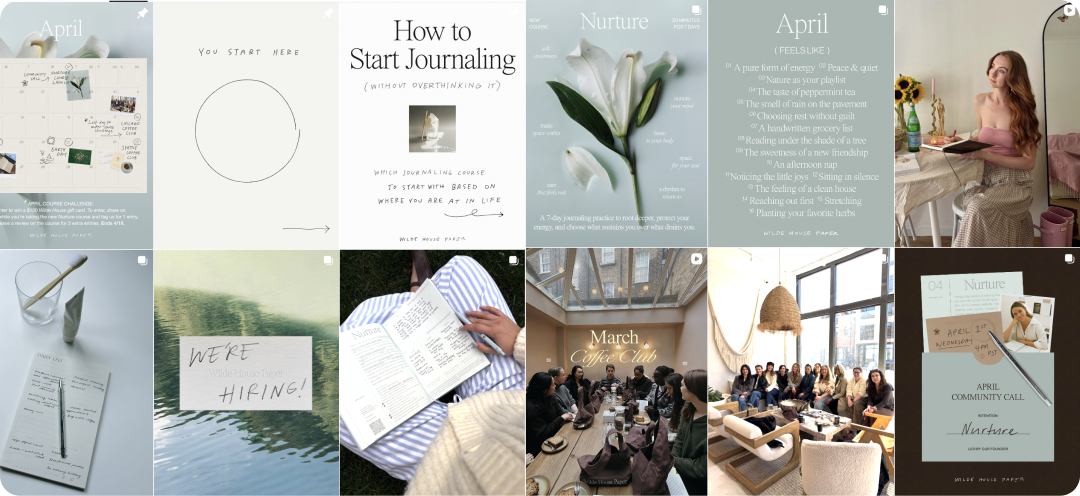
Wilde House Paper is champion at fostering a sense of community. The grid, where monthly “feels like” posts, IRL Coffee Club gatherings, emotional affirmations, and product shots all live side by side create an overwhelming sense of togetherness. It feels less like a brand feed and more like a community bulletin board.
The Social Media Funnel Is Real; Here’s How to Build One
By now you’re probably wondering, “How does someone move from discovering your profile to actually converting?” Picture a funnel: the top is dedicated to awareness, the middle to consideration, and the bottom conversion (where the magic happens).
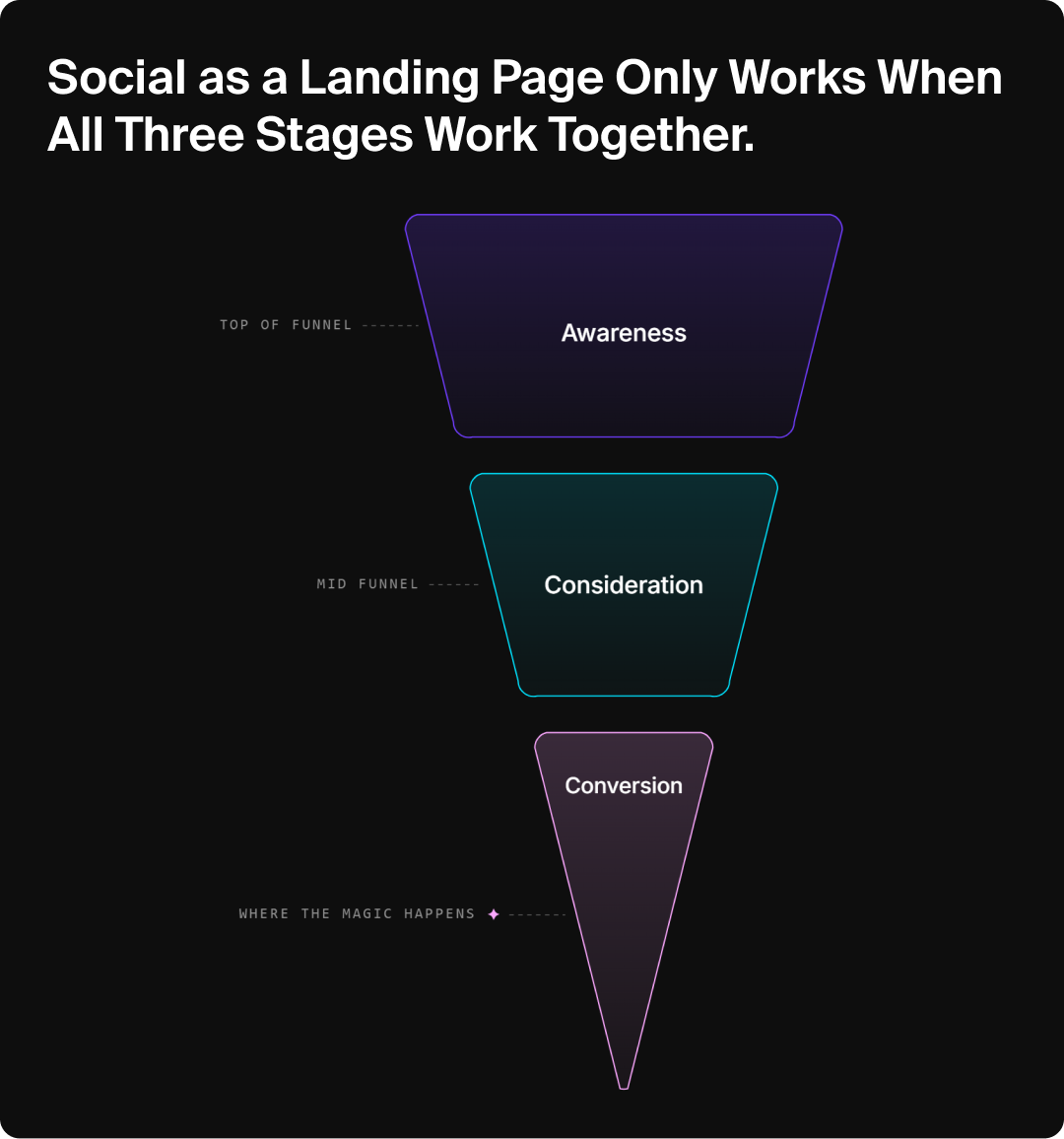
Social as a landing page only works when you marry the individual elements on your brand’s profile to create a journey. A first-time visitor lands on your profile, the grid gives them the vibe check, the bio gives them clarity, the highlights give them depth, the pinned posts give them proof, and the link-in-bio gives them the next step. It’s literally a funnel!
The best part is that you don’t have to choose between a great social presence and a great website. The brands winning right now treat them as two chapters of the same story; each should be able to stand alone, but is ultimately stronger together. A symbiotic relationship, if you will.
As a reminder, social acts as the gut check and your website closes the deal.
Conclusion
Leveraging social media as a landing page isn’t just another trend to chase; it’s a fundamental shift in how your consumers discover, evaluate, and decide to buy from brands. The scroll is the new storefront, and your profile is either making a case for your brand or losing ground to one that is.
The good news is that many of these changes start small; Start with your bio, tighten up your link-in-bio, be intentional about what you pin, treat your highlights like a navigation bar, and pay attention to what’s happening in your comment section. Each of those elements is a touchpoint in a journey that your audience is already observing and judging, with or without your guidance.
At first glance it might seem like you have to overhaul everything but the great thing about social media is that it’s kind of like playing Tetris in the sense that it’s made to be constantly tinkered with (think of yourself as a social media engineer if it helps!).
Remember: social is the gut check and your website closes the deal. The brands winning right now are the ones who understand that these aren’t two separate strategies; they’re two chapters of the same story. So the real question isn’t whether social is your new landing page. It’s whether yours is ready when the scroll lands on you.