

Everyone wants to go viral. And for the last decade, short-form content has felt like a golden ticket. A 15 second clip, trending audio, or relatable meme is fast, cheap to produce, and aggressively pushed by every social media algorithm.
However, over the last few years, long-form content has quietly been staging its comeback. And from its dominance in AI search citations, to its ability to create brand value and affinity… the brands paying attention to this shift are reaping the benefits.
And if you stumbled onto this blog wondering what the difference is between short-form content versus long-form content, and how you actually create long-form content that is built to succeed… you’re in the right place.
This blog will cover everything you need to set you and your brand up for success: content ideation and YouTube SEO, to best practices when it comes to content creation, stats to pay attention to, and posting frequency.
What Is Long-Form Content?
Before we delve into making successful long-form content, we first need to establish what the definition and purpose of long-form content is.
There is one key difference between long-form and short-form content: long-form content goes deep, while short-form content goes wide. Short-form content is designed to deliver a quick dopamine hit by providing its information and value in quick bursts. Long-form content is built geared around providing value and creating a meaningful connection with your audience.
What Is Short Content vs. Long Content?
Short-form content is TikToks, Instagram Reels, and YouTube Shorts. It’s designed for quick consumption, and rarely goes over 60 seconds per video. The goal of short-form content is to create immediate engagement.
Long-form content is 5-10+ minute YouTube videos, blog articles, and podcasts. It’s designed to help build trust; and instead of just engagement farming, it’s demanding audience retention, while also delivering more value.
How Long Is Considered Long-Form Content?
For video content (which will be the primary focus of this blog), long-form generally means anything over 5-10+ minutes. However, for platforms like YouTube, it can be as little as three minutes. Once your video crosses this threshold, YouTube’s algorithm changes how it pushes your content by moving it off of the YouTube Shorts tab.
This designation also changes how the algorithm determines what’s a “good video.” While engagement rate and watch percentage are the domineering stats for YouTube short-form, YouTube prioritizes watch time for long-form content. The longer a viewer watches your content, the harder the algorithm is likely to push it.
But there’s a difference between long-form content, and content that is just… long. A 20-minute video of valueless filler isn’t long-form content. Successful long-form content is valuable and is actually worth your audience’s time investment.
What Is an Example of Long-Form Content?
Long-form content is a 10-20 minute YouTube video, a podcast episode, or a detailed blog article. It goes beyond short-form, diving deeper into a topic while actually keeping the audience engaged.
Does Long-Form Content Actually Matter?
Short answer? Yes. A lot.
While short-form content has its value and can help you maximize your reach, long-form content is how you maximize your value (both inside and outside of YouTube).
Search Engine Dominance
Long-form content is favored by Google’s algorithm since it is more comprehensive content that helps thoroughly answer questions. I’m sure when you were looking up “how to create long-form content”, you weren’t looking for a 30 second clip. You were looking for an in-depth guide like this blog, and that’s why Google recommended it.
Google is undisputedly the largest search engine in the world, and YouTube is the second largest search engine in the world. Together, they work in tandem (giving you double the exposure). But the value of long-form YouTube content expands outside of traditional search.
The Shift to AI Search
More and more, people’s search habits are starting to drift from Google Search and blue links towards AI chatbots and personalized experiences. And a little known fun fact about AI chatbots is one of their top citation sources for answers is YouTube long-form content!

This means there is a massive untapped opportunity for the creators and brands who prioritize long-form content to gain additional authority. This kind of exposure is something you simply cannot replicate through traditional social media algorithms. Instead of just trying to provide an answer, your video and brand becomes the answer.
And unlike viral social media content that peaks and dies off, these citations can drive traffic to your content for months, or even years.
The Numbers Don’t Lie
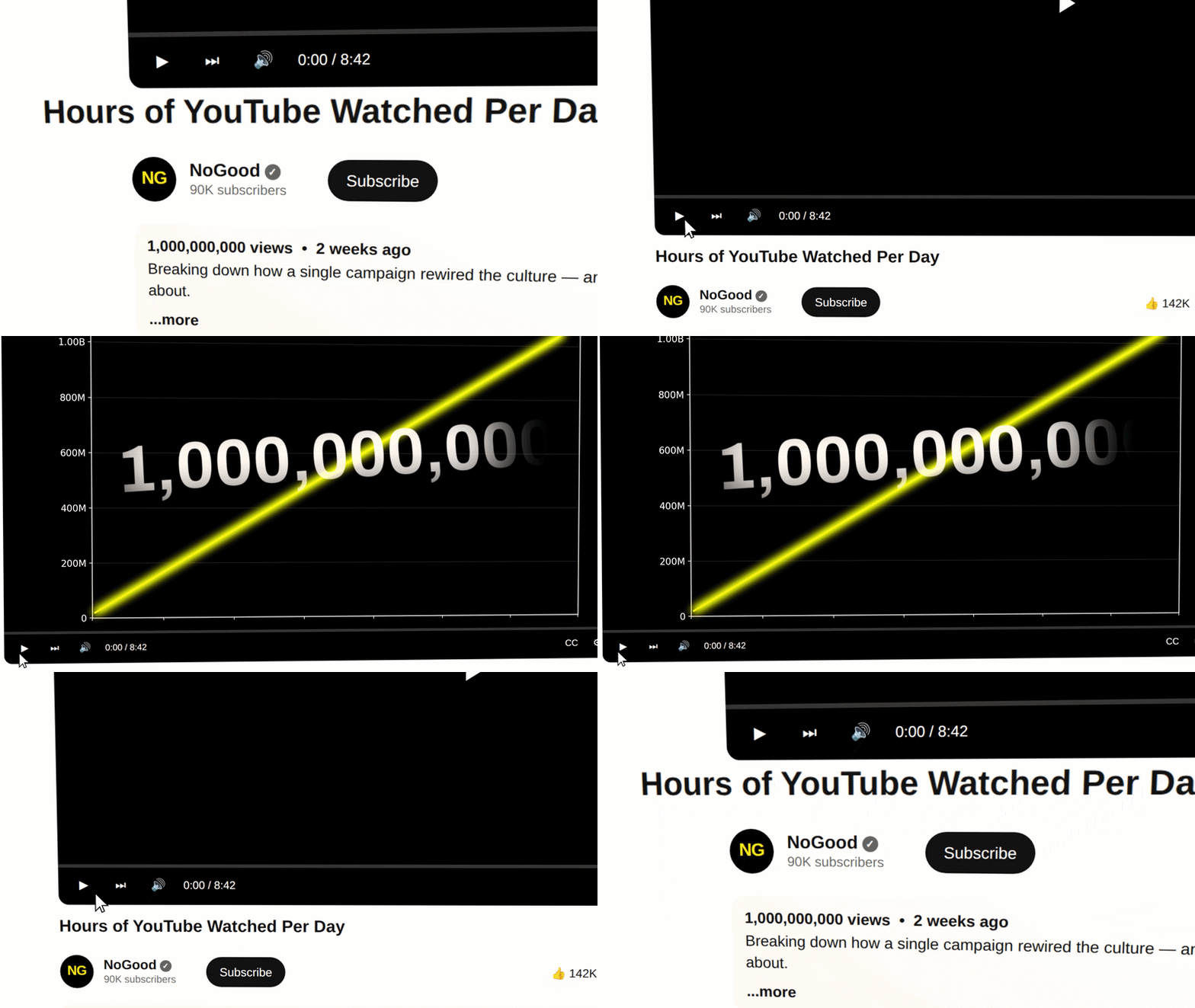
According to Marketing LTB, long-form content attracts 77% more backlinks than short posts, meaning more authority and more organic traffic over time. And according to SQ Magazine, YouTube users worldwide watch over 1 billion hours of content every single day. Every. Single. Day.
It’s easy to fall under the illusion that everyone’s attention span has been reduced to TikTok brainrot levels, but the reality is, long-form content still holds a commanding place in the social media universe. If you have any doubt, open Spotify and look at the wave of four-hour podcasts pulling millions of listeners every week.
At the end of the day, people will gravitate toward any duration as long as the interest is there. The internet is massive. Baby Shark and a two hour breakdown of the Roman Empire can coexist and both have millions of views to show for it.
But long-form has one ingredient that short-form has a genuinely hard time replicating: a real connection with the viewer. Think of short-form like fast food. And look, I love a good nugget and fries, but most of the time, it’s forgotten the second after you’re done. People see the video, maybe laugh, maybe like it, and move on. It’s a lot more difficult to form a relationship.
Long-form is that restaurant in Paris where the waiter takes forever to come but by the time the food arrives, you’re not going anywhere. You’re even going to review it.
How to Make Long-Form Content That Actually Works
Creating long-form content can feel daunting at first, whether it’s a written piece or a video. But let’s break it down simply.
Start With a Strong Hook
Did you know that long-form and short-form content share a common ancestor? It’s called a hook. A hook is the first few seconds of your content, and it’s crucial; it’s the deciding factor in whether someone sticks around or keeps scrolling. Whether the video is 30 seconds or 30 minutes, what made them stay was their interest, and that interest was almost always captured right at the beginning.
Hooks will always matter, but here’s something worth knowing:
The more subscribers or followers you have, the more you can get away with a slower build.
And if you’re ever stuck trying to write a hook? Skip it. Finish the rest of the script first and circle back. Having the full picture often makes it easier to nail the opening.
Structure Is Everything
Long-form content without structure is like an unmaintained pathway with tall grass covering whatever’s on the other side. Whether it’s chapters on YouTube, timestamps in the description, or H2 headers in a blog post, always let your audience know where they’re going.
And as a bonus, that extra effort pays off in SEO, too; articles with comprehensive subheadings rank 31% better for multiple keywords.
Bring Something New to the Table
The biggest mistake brands make with long-form content is focusing on making it long rather than making it good, padding thin ideas just to hit a word count or runtime. Before you hit publish, ask yourself these three questions
- Could someone have gotten all of this information in two minutes?
- Is my take actually original?
- Did I go deep enough?
These are uncomfortable questions, but they’re the right ones. Trust is built over time, and throwing content at the wall hoping it sticks isn’t a strategy, it’s a prayer.
The Secret Formula for Long-Form Content
I might end up in social media prison for the rest of my life for telling you this, but your long-form content can become short-form content (in fact, it should). Creators use this technique all the time. Cut the highlights, edit them down, and upload as a Short or Reel.
Want an extra hack on top of that? Drop the full long-form version link in the description. Just like that, you’ve built yourself a centipede of content.
YouTube SEO: The Basics You Need to Know
Your audience is out there somewhere. They’re desperately trying to find fascinating content, but they’re lost in the YouTube forest of brain rot. They need to find you, and this is where YouTube SEO comes into play.
Thumbnail
Don’t worry, you don’t need a college course in graphic design to create a compelling thumbnail. Tools like Canva have easy to use templates, and a lot of creators are now adopting a more minimalistic look instead of a giant collage of photoshopped images.
Either way, your thumbnail is crucial; it’s often the first thing that gets a new viewer to click.
Title & Description
Arguably your most important SEO real estate. Include your target keyword in the title and make sure it sounds natural, not forced. For the description, actually explain what the video covers. Not just a few lines, but a full paragraph with relevant terms worked in.
Timestamps
Also called chapters, timestamps improve the viewer experience and give Google more structured data to index, which increases your chances of appearing in search results. It’s a small effort that pays off.
Tags & Category Selection
This one is debatable in the creator space. Some will say it won’t move the needle, while others swear by it. The reality is, it helps YouTube understand the context of your content, which should help surface it to the right audience. Worth doing even if the impact is modest.
How Often Should You Be Posting?
Consistency is key, but the precise answer really depends on your capacity. More content is great in theory, but one high-quality video will outperform three rushed ones every single time.
Most growing channels post one to two long-form videos per week, which also helps prevent newer uploads from burying older ones before they’ve had a chance to gain traction.
Another underrated advantage of long-form YouTube content is that the algorithm can push your video days, sometimes even weeks after it was posted. You’re not just racing the clock like you are on TikTok or Instagram.
And once you’ve built up a few posts and gained some subscribers, head over to YouTube Studio and check when your audience is most active. Use that data to schedule your posts at the right time.
The Bottom Line
Short-form gets you seen. Long-form gets you known.
There may be fewer creators in the long-form space compared to short-form, but you should see that as a positive, not a negative. Less competition, more playing field. The brands and creators willing to go deeper are the ones that build something lasting real trust, real authority, and an audience that actually comes back.
So if your brand has been putting off the long-form investment, consider this your sign to start.