

I have a confession: I’m a Claude girlie through and through.
Not just because I’ve run the benchmarks, or because I can cite you the token limits or reasoning scores. I’m a Claude girlie because when I close my laptop after a “jam session,” I feel like someone who values craft over speed, depth over efficiency, the process as much as the output.
In other words, that feeling I get from using collaborating with Claude? It’s branding.
And in a market where AI models have reached near-parity on core benchmarks (and the tech differences are now measured in percentage points) that feeling increasingly matters more than the specs. People begin to make choices based on LLM specialization, as well as the brand values they align with.
The question users ask is no longer “which AI is best?” Instead, the question is: which one do I trust? Which one feels right? And more importantly, which one am I willing (or even proud) to tell people I use?
That shift from caring about capabilities to caring about identity is rewriting everything about how AI companies approach marketing and building communities. When users are grappling with decision fatigue and (in the case of AI at large) philosophical and existential anxiety, brand becomes the biggest tie breaker.
The Cultural Context: AI’s Existential Tension Problem
To understand why AI branding matters so much right now, let’s start by taking a closer look at the unique cultural moment we’re in.

There’s a framework I keep coming back to from Jasmine Bina and her Substack, Concept Bureau. She applies sociologist Michele Gelfand’s work on tight versus loose cultures (originally associated with societal and national norms) to markets and categories.
The idea is the following: cultures, as well as verticals and industries, exist on a spectrum. Tight cultures (think finance or healthcare) have:
- Clear rules and strict enforcement
- Low tolerance for deviation
- Innovation comes from adding looseness (more choice, flexibility)
This is likely why you’ve seen the rise of relevance-forward and vibe-first marketing from fintech brands (like CashApp and their Timothee Chalamet collaboration), for example.
Conversely, loose cultures have:
- Too much choice and no consensus
- High tolerance for chaos
- Value comes from adding clarity (reducing overwhelm, narrowing options)
AI sits firmly in the loose camp.
Every new product launch feels simultaneously exciting and, let’s be honest, exhausting. Every feature announcement promises capability while deepening decision paralysis. There’s no playbook, no consensus, no shared understanding of what responsible AI use even looks like.
And beneath all this chaos sits a deeper tension: people don’t know how to feel about AI.
Not in a simple “is this good or bad” way; it’s more foundational than that. There’s no cultural script yet, no agreed-upon norms about what’s acceptable versus what crosses a line. The same behavior reads as innovative in one context and lazy in another, as efficient or as cheating, as creative augmentation or creative erosion. People are making up their own rules in real time, drawing personal boundaries that don’t match anyone else’s, and constantly second-guessing whether they’re on the right side of some invisible ethical line that hasn’t been drawn yet.
Every interaction with AI forces an existential question: am I outsourcing my thinking? Am I losing something essential? Am I becoming less creative, less capable, less me?
The technology can’t answer that. Only the brand can, and this is exactly why we come back to that feeling AI branding can create for clarity and a moral compass.
Pew Research found that 52% of Americans are more concerned than excited about AI, up from just 37% before ChatGPT launched. Even as usage continues to grow exponentially (ChatGPT grew more than 4x year-over-year to 800 million weekly users), the anxiety is still growing right alongside it. While most people rate AI’s risks as high, worrying it will damage creativity and weaken human relationships, they keep using it anyway.
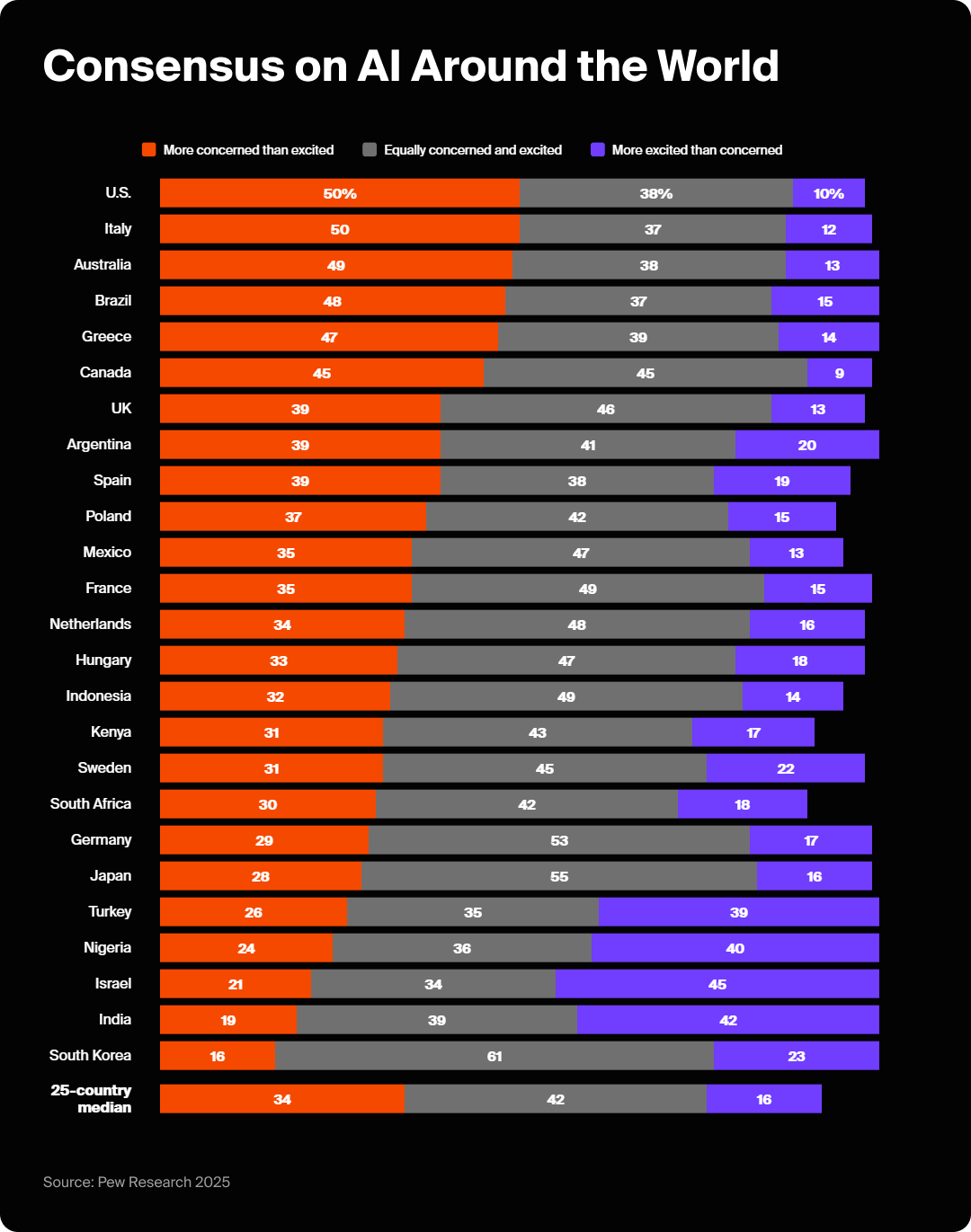
That’s the real tension brands have to navigate: adoption without trust, utility without comfort, integration without guidance. What people need is a brand that can hold the contradictions without rushing to fix them, and that’s exactly what the best AI companies have figured out how to do.
AI Branding In Three Acts
To understand why brand has become the battleground, we need to take a closer look at how we got here. The shift happened fast, less than three years from the ChatGPT launch to the brand identities crystallizing today; so here’s the rough arc:
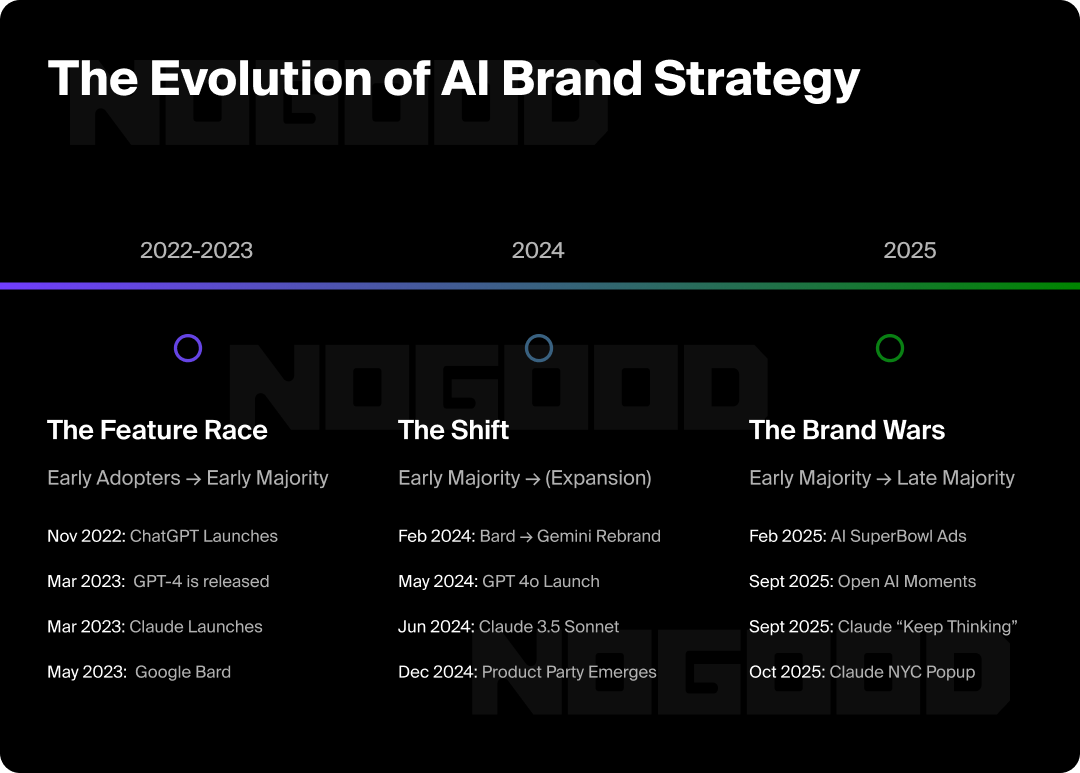
Act I: The Feature Race (2022-2023)
ChatGPT launched in November 2022 and broke the internet: 1 million users in five days. Every week brought a new model, a new benchmark, a new “this changes everything” moment. Google scrambled to release Bard. Anthropic launched Claude. Perplexity positioned itself as the citation-friendly alternative.

The playbook was simple: ship fast, announce features, post screenshots. Capabilities were everything. Speed, token count, and benchmark performance were the metrics that mattered the most.
In other words, marketing was product velocity, while branding was an afterthought.
This worked because earlier audiences cared about what the technology could do. They wanted to know: can it code? Can it write? How many tokens? How fast? The answers about technical specs were enough, because the audience was among the innovators and early adopters.

But as AI adoption skyrocketed and the focus slowly shifted away from being innovator- and early adopter-heavy, every new feature announcement began to contribute to decision paralysis rather than solving it. In a loose culture, adding more options without adding clarity just deepens the chaos, and at this stage where more people were exposed to generative AI, the feature race risked feeding the very noise it should have been reducing.
By mid-2025, and as the early majority began adopting the technology, things began to shift. The LLM performance began to converge, with new models releasing at a higher frequency and the general delta in performance decreasing. ChatGPT, Claude, and Gemini could handle the same core tasks with roughly equivalent quality. The differences became marginal, measured in percentage points, not paradigm shifts, while users began focusing on individual use cases and the performance of each model within those scenarios.
At the same time, trust issues began to scale: hallucinations became memes, and job displacement fears intensified. Users began experiencing real decision paralysis, with too many options and not enough differentiation (or education, for that matter).
In short, pure capability-focused marketing stopped working.
Act II: The First Efforts (2024-early 2025)
Early 2025 was the year AI companies realized they weren’t just competing with each other anymore; they were competing with people’s fear, confusion, and decision paralysis. The early adopters had already signed up. The question was how to cross the chasm to the early majority: the pragmatists who don’t care about being first, who need proof before they commit, who trust recommendations from people like them more than they trust tech visionaries.
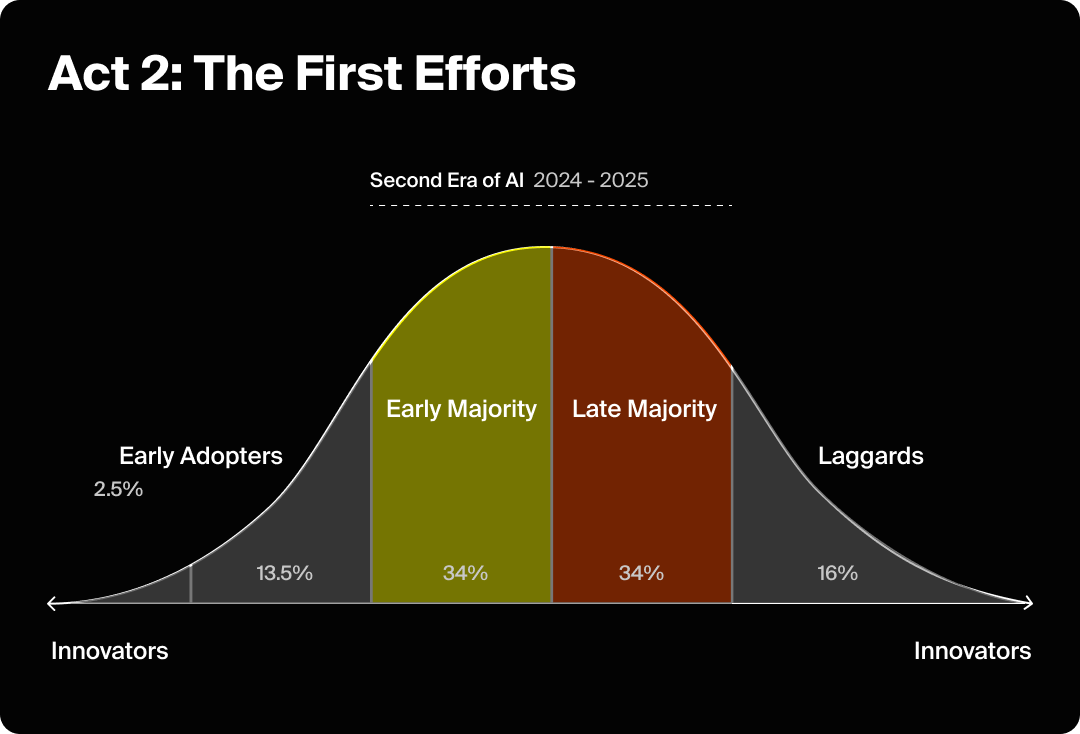
The problem showed up clearly in user behavior. Power users obsessed over benchmarks and context windows. But the next cohort on the adoption curve (the early majority) chose based on ~vibe~. They picked the AI that felt right, not the one with the best specs. And “felt right” meant something specific: safe, accessible, proven, permissible.
In tight-loose culture terms, companies were finally recognizing the dissonance, as well as the shift in consumer needs. But their first attempts at adding structure (and making AI feel less chaotic and more familiar) didn’t always land with the audience they were trying to reach.
Companies tried different approaches to reach that mainstream audience, and not all of them worked.
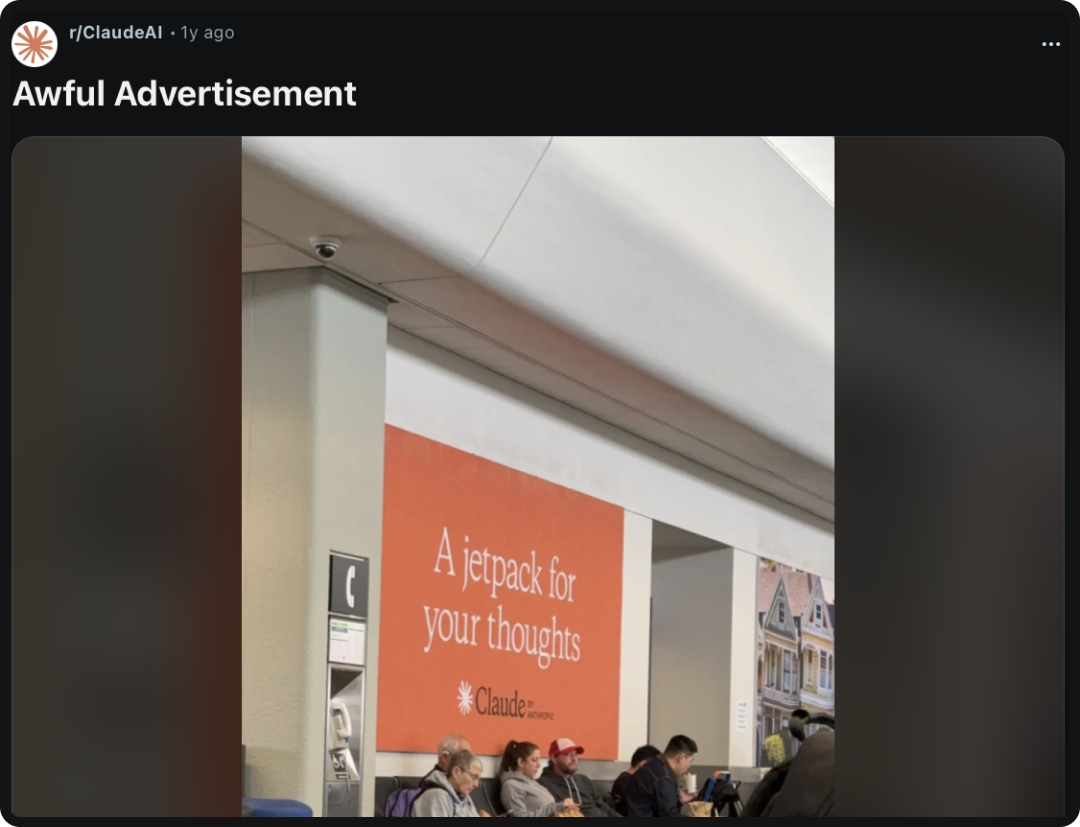
Anthropic tried abstract, conceptual billboard campaigns in 2024 (“A jetpack for your thoughts,” “Powerful, fast, or safe. Pick three.”). For people already familiar with Claude, the wordplay landed as clever. For everyone else, it created confusion about what category the product even belonged to. Instead of reducing overwhelm, the ads added to it, leading to more questions and fewer answers.
OpenAI took a different bet in February 2025, taking ChatGPT to the Super Bowl with “The Intelligence Age,” positioning AI alongside fire, the wheel, and the internet as humanity’s next great leap. For tech enthusiasts who already saw AI as inevitable progress, the ad landed. But for an audience still deciding whether to trust AI at all, framing it as historically inevitable didn’t answer their real questions: will this help me? Do people like me use it? What would people think if they knew I used this?
So, what’s the consensus? Both Anthropic and OpenAI’s campaigns were well-produced and thoughtful. But they were trying to add clarity by making AI feel important rather than making it feel approachable. The early majority didn’t need to be convinced AI mattered. They needed to be shown how to use it without feeling like they were losing themselves in the process.
Act III: The Identity Wars (late 2025+)
By mid-2025, AI companies figured out what the early majority actually needed; not just better benchmarks or feature announcements, but mental and emotional frameworks. AI adoption was becoming inevitable, but how to adopt it in a personal(ized) way wasn’t as obvious.
The pivot had two parts: make it feel human, and give people a clear framework to understand what kind of AI user each of them is, or could be.

OpenAI’s “Moments” campaign in September dropped a lot of the “revolutionary” language from their Super Bowl ad. Instead of positioning AI as historically significant, they positioned it as practically useful.
A guy doing pull-ups in a park, a couple cooking dinner, siblings planning a road trip. Shot on 35mm film with indie music from 2014, the whole thing felt warm and grainy; like home videos, not a tech demo. The message was very different from the Super Bowl ad: ChatGPT helps you live your life the way you already do, but better.
Anthropic made the same pivot with the “Keep Thinking” campaign, but provided a completely different framework.The brand showed problem-solvers at work through a 90-second film that was nostalgic and intellectual. Rather than taking the stance of “AI makes life easier,” it leaned into the “AI makes thinking better.” Claude doesn’t replace intellectual labor; it amplifies it.
And then came the physical activations. Anthropic opened a pop-up in New York’s West Village in October, taking over the Air Mail newsstand for a week. People lined up around the block for coffee and “Thinking” caps and a space to sit with actual books and pens and paper.
The activation billed itself as a “zero slop zone,” a pointed rejection of AI-generated content flooding the internet. The message was clear: we’re not adding to the noise, we’re helping you think through it.

The physical pop-up in October made the positioning tangible through books, coffee, and merch. People lined up around the block because the brand gave them a framework for understanding themselves as AI users: you’re thoughtful, you’re intentional, you care about depth over speed, and using Claude reinforces that identity; it doesn’t threaten it.
Here’s what both campaigns understood: unlike the innovators and early adopters who cared about how (well) AI worked, the early majority was struggling with what using AI said about them. So brands provided clear frameworks:
- OpenAI’s framework: You’re practical and present. ChatGPT is for everyone, for ordinary moments, for living your life better.
- Anthropic’s framework: You’re a thinker. Claude is for people who care about intellectual rigor, who want to amplify their thinking without outsourcing it.
Both frameworks clarified the human role because people weren’t just anxious about whether AI worked; they were anxious about what happens to them when AI works.
This is how you add structure to a loose culture: you don’t just reduce options, you give people a clear identity to step into. Rather than claiming “our AI is better,” you say, “Here’s who you are when you use our AI.” Each brand created a distinct territory, and with it a specific way of making sense of AI use that resolved the existential anxiety without forcing people to figure it out alone.
But frameworks can backfire when they misread what people actually need.
In the same month, Friend.com spent $1 million on the largest subway campaign in MTA history: 11,000 posters promoting a $129 AI companion necklace that listens constantly and texts you throughout the day. Within days, the ads were defaced, spreading as viral protest art across social media.
Where OpenAI and Anthropic positioned AI as enhancing what you already do, Friend.com positioned it as replacing what you’re missing. This particular framework (intentional or not, rage bait or not) triggered the exact anxiety the other brands were working to reduce. This is what happens when you misread what a loose culture needs: instead of offering clarity, you risk amplifying the fear.
Once companies figured out how to provide frameworks at scale, differentiation became the name of the new game. Now, they needed to define their distinct brand territories:
- Who exactly are we for?
- What specific tension do we resolve?
- And more importantly, what does choosing us over the competition say about you?
Different players picked different lanes. And those choices created the identities that define the market today.
The (Non-Exhaustive) AI Brand Territories Through the Social Lens
Each of the major AI companies has figured out how to add structure to the chaos, but they’ve done it in fundamentally different ways. OpenAI chose clarity through ubiquity. Anthropic chose clarity through intellectual identity.
These aren’t just positioning statements. They’re distinct frameworks for resolving the existential tension of AI use. Let’s look at how each brand built their territory.

OpenAI (ChatGPT): Everything, Everywhere, All at Once
OpenAI’s strategy is, in fancy terms, mass appeal through ubiquity. They want ChatGPT to be what Google was in the 2000s: the default AI that everyone uses without thinking twice.
A lot of this positioning is due to the brand’s first-mover advantage. ChatGPT reached 100 million users in just two months after launch; faster than any app in history (for context, Facebook took 4.5 years, and TikTok took 9 months). As of September 2025, that number has been reported by Sam Altman himself to have reached 800 million weekly active users.
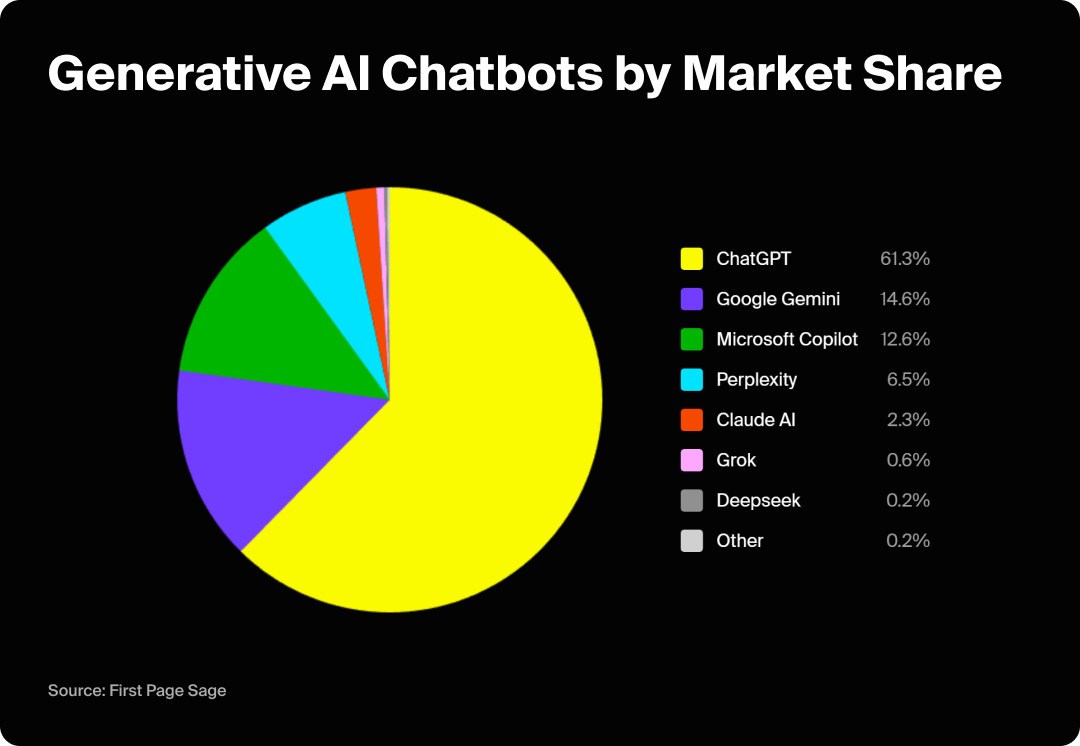
This wasn’t accidental. OpenAI made a deliberate bet on consumer-first growth: launch ChatGPT as a free product, let it go viral, build massive adoption, then monetize enterprise later. ChatGPT Enterprise didn’t launch until August 2023, nine months after the consumer product broke the internet. That consumer base was what drove brand recognition, and the widespread usage created the “everyone already uses this” perception that makes the early majority feel safe adopting.
In a loose culture where people don’t know the rules yet, “everyone’s doing it” becomes its own form of structure. If you’re anxious about whether using AI makes you lazy or less creative, seeing your coworker, your friend, and your mom all using ChatGPT provides social proof that it’s acceptable. OpenAI resolved the, “Am I wrong for using this?” question by making AI use so widespread that not using it became the outlier.
When you start with hundreds of millions of consumers, everything that follows optimizes for breadth over depth, accessibility over specialization, normalcy over exclusivity. The “Moments” campaign, which was OpenAI’s largest brand push yet, squarely aimed to normalize AI use, making it feel like something your friend would recommend rather than something to fear.
The mass appeal strategy also goes deeper than advertising and shows up most clearly in how OpenAI built their social and creator ecosystem.
The brand separated ChatGPT’s social presence from OpenAI’s parent company presence entirely:
- On LinkedIn, OpenAI (9M followers) maintains the corporate voice through company announcements, research updates, and thought leadership for enterprise and innovator technical audiences.
- ChatGPT’s Instagram (2M followers) and TikTok (1.4M followers) do something different: they lean into internet culture in the broadest sense possible. The Instagram feed is a mix of AI-generated images (colorful, surreal, deliberately AI-generated-coded), prompt recommendations, and UGC-style content that feels more like a meme account than a tech brand. ChatGPT is positioned less as sophisticated technology on these accounts and more as a helpful companion that happens to be fun.
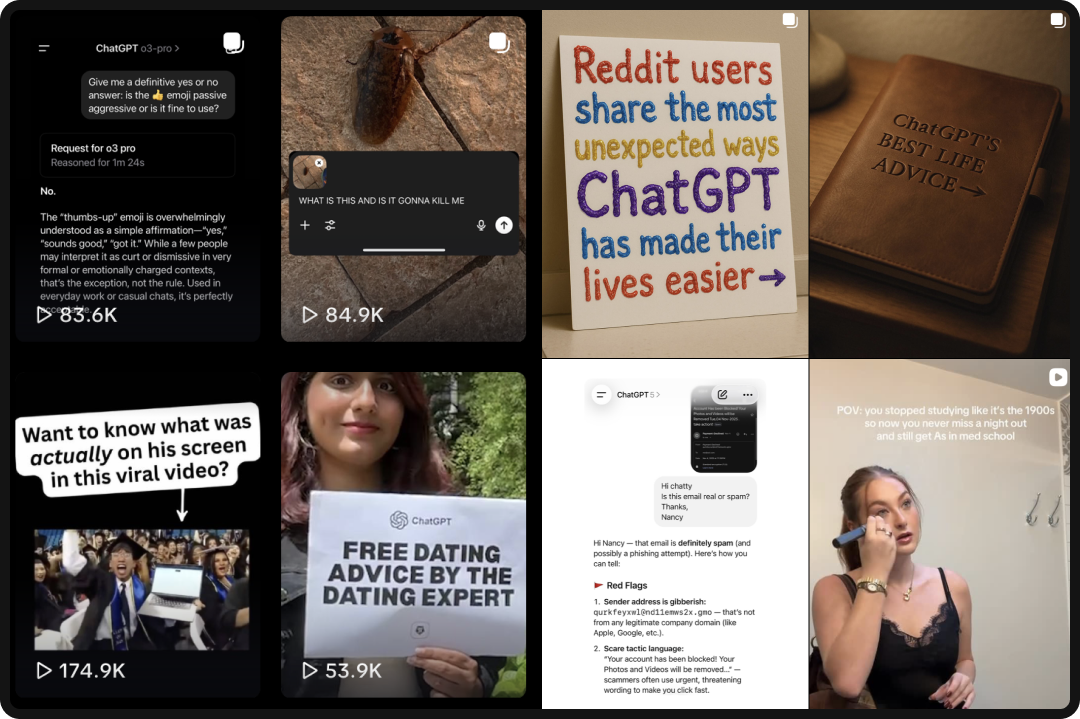
There is also a powerful UGC flywheel and ecosystem around ChatGPT that’s not talked about enough. People use it for everything: roasting their Instagram feeds, reading their astrology charts, or even analyzing situationship text chains. The use cases are wildly diverse, deeply personal, and often absurdly specific, but that’s also the formula for viral flywheel moments that ChatGPT doesn’t even need to proactively invest in.
ChatGPT doesn’t have to tell users what it can be for; users themselves decide what it’s for, and then create content showing other people their favorite discoveries and use cases. The brand leans into the culture of people creating content about ChatGPT rather than just content created by ChatGPT the brand.
ChatGPT’s UGC flywheel works like this:
- User discovers an engaging or practical use case
- User creates UGC content sharing their discovery
- Brand amplifies the content (optional)
- More users get inspired and share their own discoveries

To root this argument in numbers, here’s a stat to put things into context: as of this month (December 2025) there are 5.4M posts under the #chatgpt hashtag on TikTok, and all of these posts are created by the community, for the community. In other words, this is the foundational community-led growth flywheel that brands like Notion or Figma have also unlocked (which I discuss in more detail in a separate blog post).

ChatGPT’s creator and influencer strategy reinforces mass appeal. OpenAI works with creators across wildly different niches, from humor to lifestyle, productivity, relationships, and everything in between. The strategy is to show up everywhere, for everyone, in ways that feel native to each platform and each audience. Whether it’s a productivity influencer showing how ChatGPT helps with work, or a comedy creator with a parody on ChatGPT’s infamous em dashes, ChatGPT’s DTC presence covers wildly different use cases for the same tool, with a particular emphasis on normalcy.
The positioning is relentlessly broad: from a DTC perspective, ChatGPT is for everyone, for everything, for any moment in your life when you need help, ideas, or just someone to talk to. It’s not necessarily specialized or exclusive because naturally, it’s the AI you already use, whether you’re planning dinner, stalking your ex, learning a new skill, or just bored and want to see what happens when you ask it to analyze your personality based on your Spotify Wrapped.
The brand solved the early majority’s anxiety by making AI use feel completely normal, the kind of thing everyone does now, like Googling something or Venmoing someone. In other words, ChatGPT has officially unlocked the colloquial status of being a verb, and people are leaning into it.
OpenAI’s approach to adding structure in a loose culture was to make the behavior so common that it creates its own norms. When there’s no consensus on what “acceptable AI use” looks like, ubiquity itself becomes the consensus. Everyone’s doing it, so it must be okay. That’s clarity through normalization.
Anthropic (Claude): Differentiation Through Intellectual Identity
While OpenAI went broad, Anthropic went narrow. Instead of being the default AI, Claude is trying to be the AI for people who care about how they think, not just what they produce.
And the strategy is working: Anthropic’s growth trajectory is very much rooted in their initial enterprise focus and push, as the brand now boasts 32% of the enterprise AI market compared to OpenAI’s 25%. While on its own, the difference might not be striking, it’s the context that really matters: the 32% market share is a significant pivot from 2023, when OpenAI held 50% of the enterprise market share and Anthropic had just 12%. In code generation specifically, Claude dominates with 42% market share; more than double OpenAI’s 21%.Claude has just 5% of ChatGPT’s user base, but generates approximately $211 per monthly user compared to OpenAI’s $25 per weekly user; an 8x difference in monetization efficiency. Smaller audience, higher value, deliberate positioning.
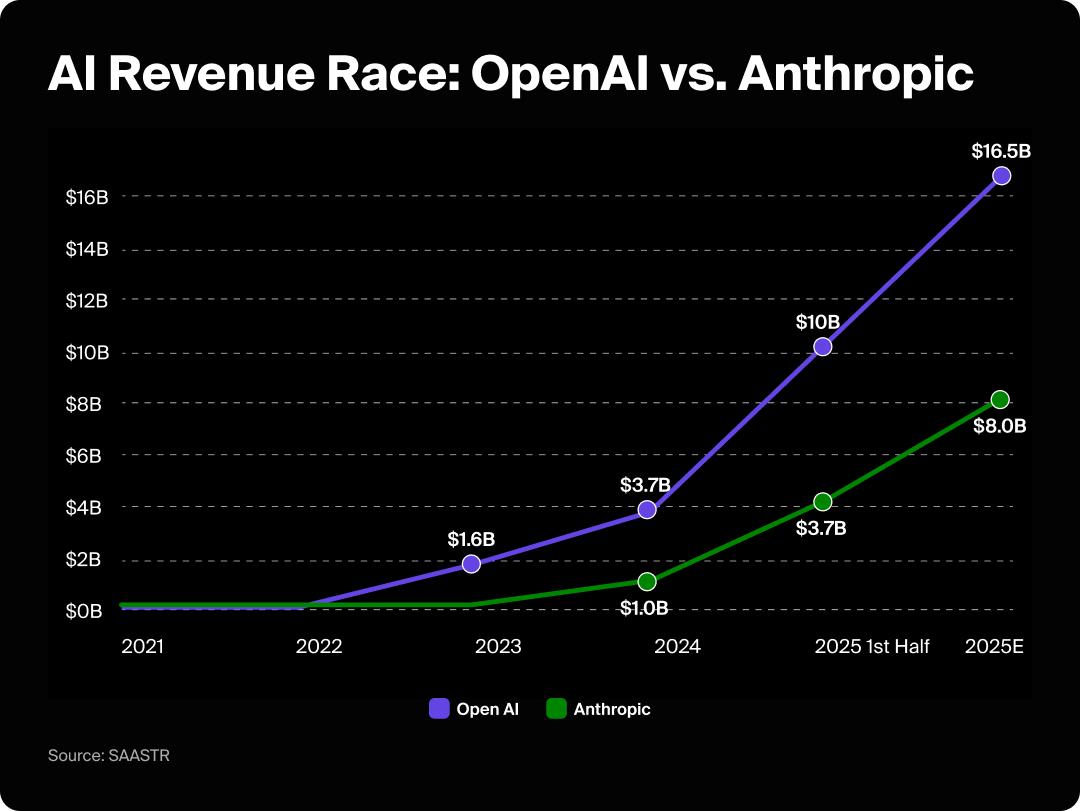
Anthropic’s enterprise win is a result of a completely different go-to-market path than OpenAI. While OpenAI went consumer-first and viral, Anthropic doubled down on enterprise by building deep B2B relationships through Constitutional AI, safety frameworks, and positioning Claude as the thoughtful, responsible choice for serious work. The consumer/DTC pivot that’s picking up momentum is more recent: things like the “Keep Thinking” campaign launched in mid-2025, or the pop-ups that followed suit very quickly.
Where OpenAI addressed anxiety through “everyone’s doing it,” Anthropic resolved it through “you’re doing it the right way.” In a loose culture, that distinction matters. Some people don’t want to be like everyone else; instead, they want to feel like they’re making a more “niche,” intentional choice. Anthropic gave them that framework: using Claude doesn’t just mean you’re adopting AI, it means you’re the kind of person who cares about how AI gets used.
Their social and creator ecosystem is a great window into the brand’s strategy leading up to this point: they’re selectively catching up, targeting a narrow, high-value audience rather than chasing mass appeal.
Claude’s social presence is significantly smaller compared to ChatGPT or OpenAI’s:
- 151K Instagram followers (compared to ChatGPT’s 2M)
- 3.9K TikTok followers (compared to ChatGPT’s 1.4M)
- 188K on the Claude LinkedIn page
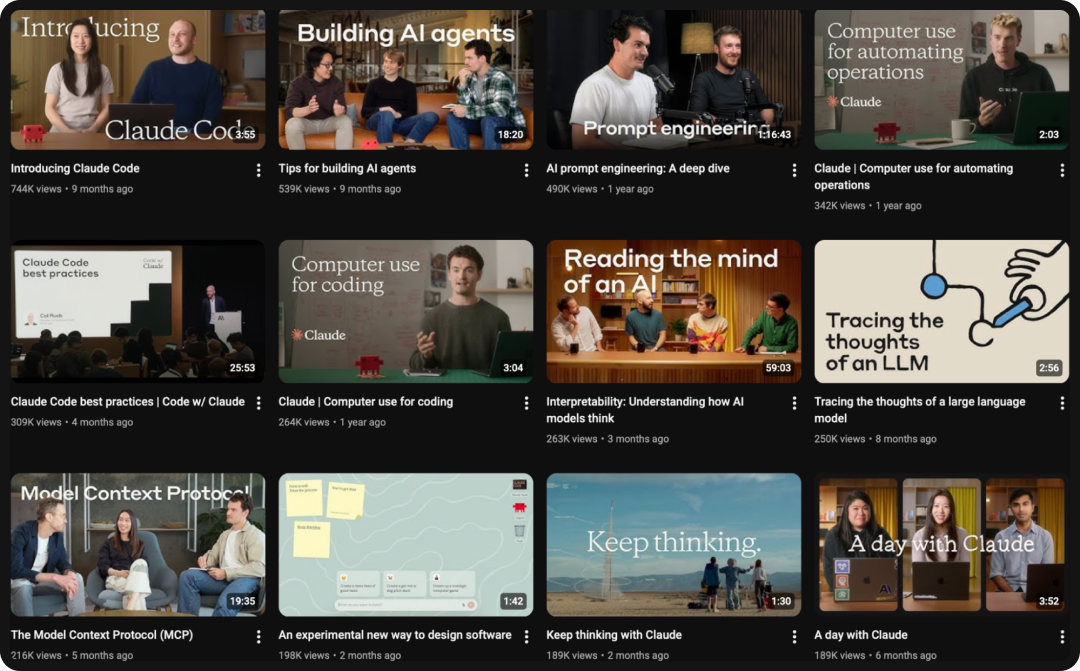
The hashtag post volume tells the same story, especially when it comes to the consumer-specific awareness level: #chatgpt has 5.4M posts on TikTok where #claude has only 307.5K; a 17.5x difference. That being said, and unlike OpenAI’s consumer-heavy channel mix with an emphasis on Instagram and TikTok, Anthropic and Claude have fostered a more engaged (and technical) community on X (Anthropic: 709K followers, Claude: 192K), YouTube (Anthropic: 319K followers), and Reddit.
But the gap in the numbers is not the full story: Claude and Anthropic are playing a game that’s fundamentally different from broad reach. Where OpenAI’s approach is making AI feel relatable, Anthropic’s approach drives clarity through education by giving people the practical tools and step-by-step guidance they need to feel confident and capable.
Their social content is incredibly curated, not ubiquitous. Claude’s social feed in particular is focused on helpfulness and empowerment as key themes, ranging from hands-on Claude tutorials to short-form videos that feel like journal entries where Claude is secondary to the creator’s thought process, or even series on YouTube like the AI Fluency Course that tackle more foundational AI education.
The LinkedIn and X split between Claude vs. Anthropic is strategic, too. The Anthropic parent company focuses on PR, policy, research, and B2B case studies emphasizing their enterprise dominance. The Claude product page is all about practical, actionable product education with hyper-specific scenarios, hands-on how-tos, and particular use cases.
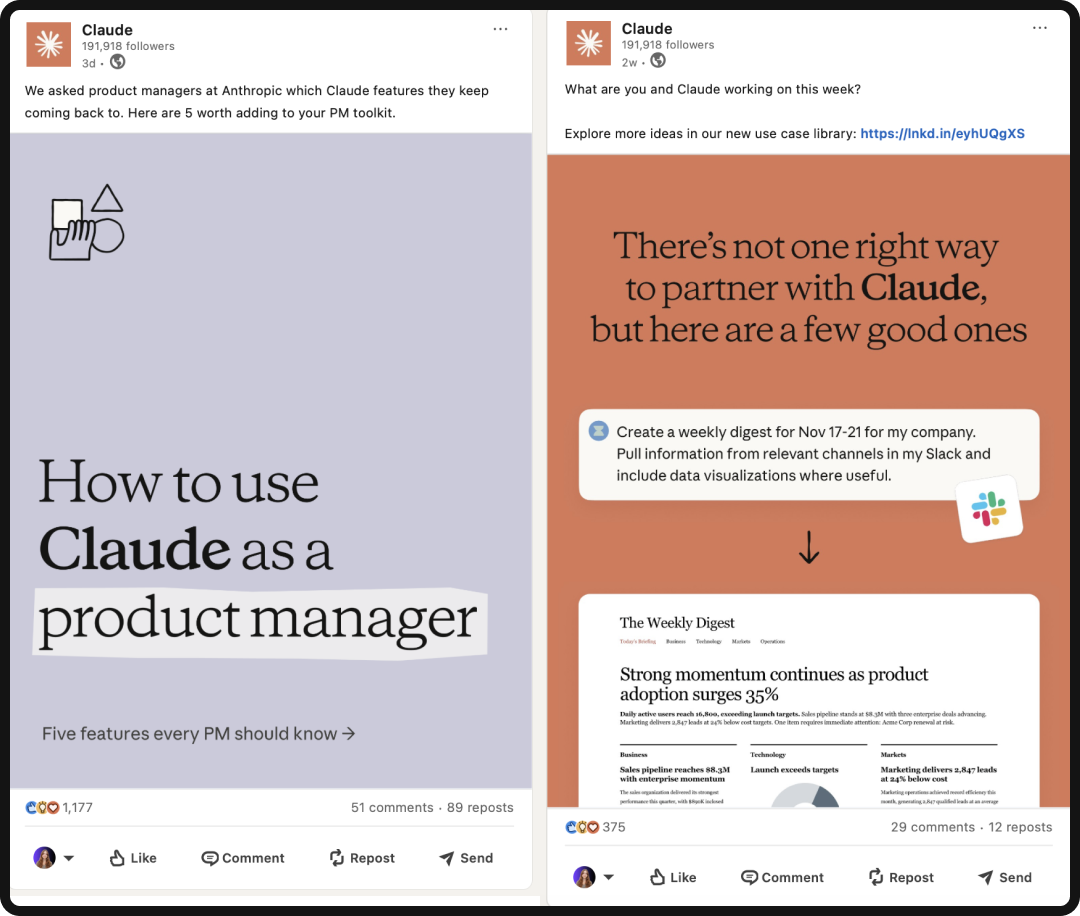
The brand’s creator and influencer strategy follows the same logic. Claude’s Instagram feed and owned content is selectively balanced out with content co-created by creatives, technical talent, and problem-solvers across various industries. They’re people who would naturally care about depth and craft, not just productivity hacks or viral moments.
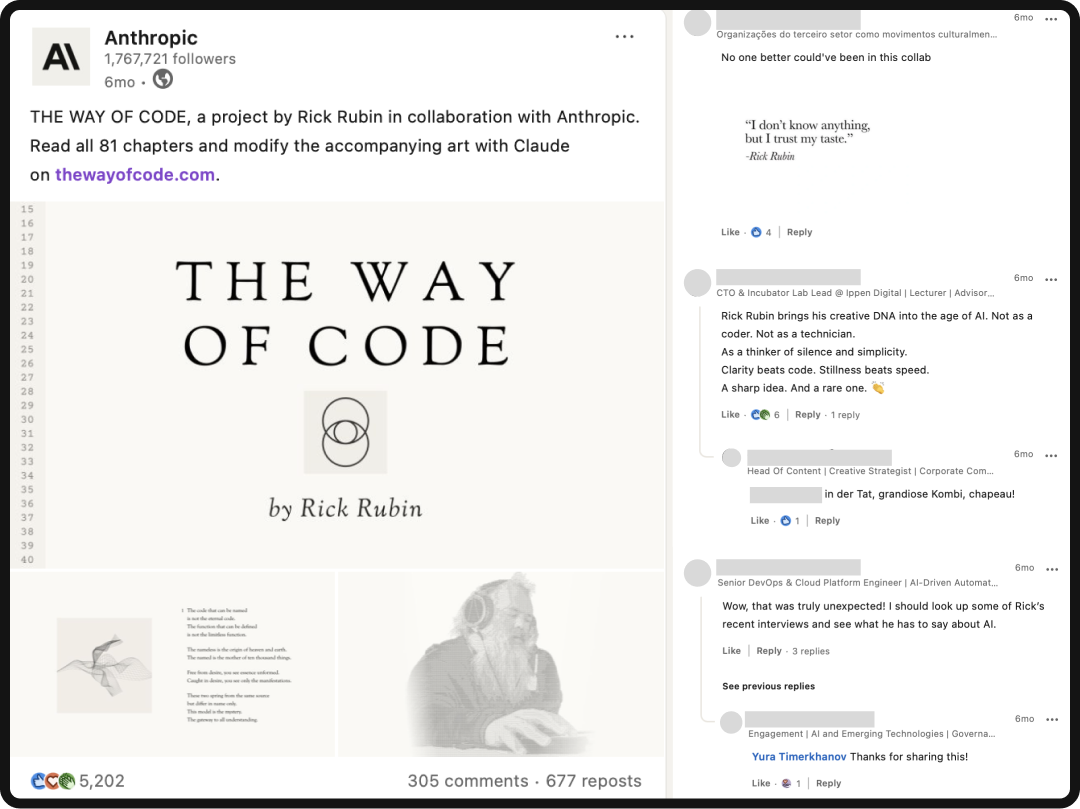
The Rick Rubin collaboration illustrates this approach very clearly. In May 2025, Anthropic partnered with the legendary music producer to create “The Way of Code,” an interactive digital book that reimagines the Tao Te Ching through “vibe coding.” The project features 81 chapters combining Taoist philosophy with modifiable visual artifacts made with Claude.
Anthropic deliberately went with a 60-year-old music producer who built his career on caring about craft over output, which happens to be the exact opposite of AI’s productivity-hacking stereotype. The brand is intentionally building a bridge with people who think AI should deepen creative practice, who reject the “10x your productivity” hustle culture, and who believe technology should make you more human rather than automate you away.
Rubin gives Anthropic (and therefore Claude) cultural credibility with that audience in a way no productivity-hacking influencer ever could.
More recently, Claude has started dipping its proverbial toe into user personas more explicitly; take this personality-forward Instagram post, for example. This is a signal of the Claude team exploring avenues to connect with the community better as they define their territory more clearly and in parallel to the general awareness levels for Claude growing, giving people language to identify with and a niche culture that ChatGPT’s mass appeal doesn’t necessarily deliver on.

When a consumer chooses Claude today, it’s not because the benchmarks are dramatically better, but because the brand provides a framework that resolves an existential tension: you can adopt AI without compromising your intellectual rigor.
The brand showed people how to be thoughtful AI users, and turns out, there’s a massive market for that.
Anthropic’s approach to adding structure in a loose culture was to create an identity for people who want to opt into something more intentional than the default. When OpenAI says “everyone’s doing it,” Anthropic says “but you’re doing it differently.” That’s clarity through differentiation; not just from other AI tools, but from the kind of AI user you might not want to be.
Perplexity: Founder-Led Growth Meets (Big) Distribution Bets
Perplexity has a lot going on. Actually, maybe too much going on, and that’s both the story and the challenge.
By September 2025, the company had raised $500 million at a $20 billion valuation, processing 780 million queries in May alone, or around 30 million daily. Korean usage more than doubled from 330,000 to over 820,000 monthly active users between January and August. The growth was real, the momentum was clear, and Perplexity had valuable strategic pieces that could add up to something coherent. The question was whether they’d figure out how to make those pieces work together.
The positioning was straightforward from the start: answers you can trust, thanks to citations. Every response included inline references, every claim was traceable, sources appeared at the top of answers rather than buried at the bottom. The company’s tagline was as simple and direct as possible: “Ask questions and trust the answers.” In a category where people don’t know what’s true, “here’s where we got this information” becomes its own form of clarity. That positioning worked: it addressed real anxiety about AI accuracy and differentiated Perplexity from ChatGPT’s hallucination problems and Google’s cluttered results.
Then there was the founder-led growth strategy. CEO Aravind Srinivas essentially was the brand in the early days. Years before founding Perplexity, Srinivas had built credibility on Twitter by breaking down complex research papers into digestible threads. He came from OpenAI, Google Brain, DeepMind (read: serious technical chops) but what made him stand out was how he communicated, making concepts accessible through clear explanation rather than dumbing them down.
That approach became how Perplexity showed up: transparent in answers, transparent in operations, real human need at the core. Srinivas’s X account and Perplexity’s X account both have 370K followers, which tells you how much the founder and the brand were equally visible in the strategy. This worked well enough to build authentic community and rapid early adoption.

By 2024, though, the company recognized that positioning alone wasn’t enough. They needed a distinct brand identity, not just differentiation. Enter the rebrand with Smith & Diction, shifting from functional positioning (citations) to philosophical territory (curiosity). The Instagram feed became the main playground for this identity’s expression, a direct attempt to give users something emotional to connect with beyond features and benefits. It was a smart move in theory: curiosity as an aspirational identity could work.
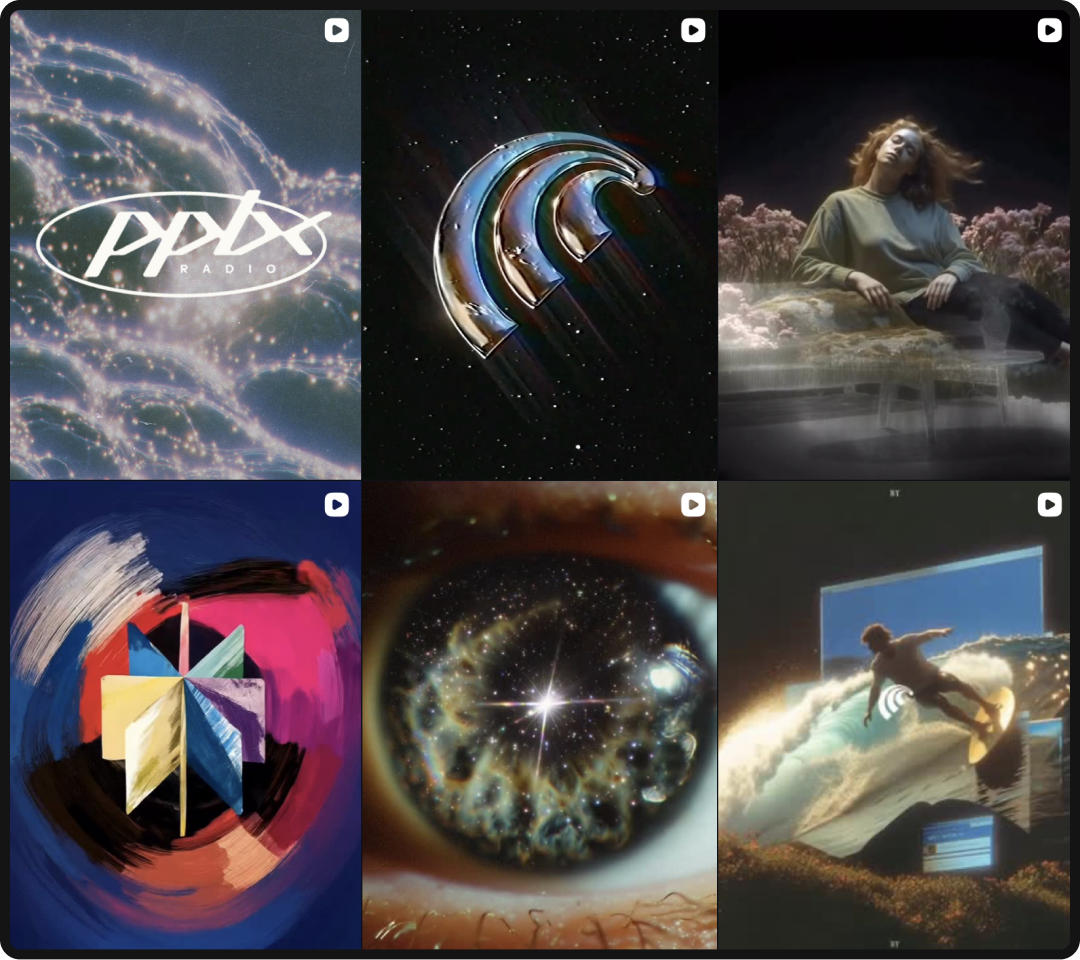
Then came the big marketing bets. Perplexity started swinging for the fences with high-profile partnerships: Lewis Hamilton’s “The Garage” content series, an interactive CR7 experience where users could ask Cristiano Ronaldo questions “in his voice” (notably, Ronaldo also joined Perplexity as an investor), an OOH push with Lee Jung-Jae for their biggest advertising push yet. These weren’t small creator partnerships; these were major celebrity plays designed to break through the noise and signal that Perplexity was playing in a different league.
Similar to Anthropic’s IRL push, Perplexity also set up shop for an in-person activation in 2025. A cafe in Seoul called Cafe Curious opened in September 2025, jumping on Korea’s explosive user growth and cafe culture. Customers came for coffee, and the AI reveal happened at the register with Pro discounts and trial QR codes. The space leaned hard into the curiosity rebrand, creating a tangible expression of the philosophical territory they were trying to claim.

Perplexity has also doubled down on a large-scale distribution play. Their $400M Snapchat integration embedded the answer engine for 943 million monthly active users. Not brand building in the traditional sense; this was access at scale.
Let’s look at the back-of-the-envelope math: if even 5% of Snapchat’s 900M+ MAU audience touched Perplexity monthly post-launch, that’s 45 million new users, a 1.5x increase over their existing base. The math was compelling: be the verification layer embedded everywhere people already search, and let distribution do the heavy lifting while brand identity catches up.
Strategic partnerships with creators and newsletters rounded out Perplexity’s growth mix. A bundle with Lenny Rachitsky’s newsletter gave paid subscribers a free year of Perplexity Pro, positioning the tool within productivity and product management circles. More partnerships like this signaled an understanding that trust transfers: if someone you already subscribe to vouches for a tool, you’re more likely to try it.
So here’s what Perplexity had by late 2025:
- Clear positioning (verification)
- Authentic founder-led momentum
- A visual rebrand to emotional territory (curiosity)
- Massive celebrity partnerships
- Experiential physical spaces
- A distribution deal that could 3x their user base
- Strategic creator collaborations
On paper, those are all the right pieces.
The challenge was that they didn’t quite click together yet. Srinivas continued operating largely in the product-update playbook on X, think: technical explanations, feature announcements, transparency about bugs and fixes. That authenticity was valuable, but it existed alongside Instagram’s aspirational curiosity aesthetic, which existed alongside Squid Game-esque ads, which existed alongside a Seoul cafe, which existed alongside the Snapchat integration news.
Each piece pointed in a slightly different direction. The celebrity partnerships were big swings, but they lived as isolated moments rather than pillars of an ongoing narrative. The curiosity rebrand was beautiful in execution but inconsistent in delivery across the day-to-day content that would actually build community and habit.
In a loose culture, this creates risk. Without a cohesive identity to anchor everything, each new initiative, no matter how smart individually, feels like starting from scratch rather than building momentum. Distribution without brand clarity just creates more touchpoints for a fragmented message. Big marketing bets without a steady content ecosystem to support them become expensive one-offs instead of compounding brand equity.
Perplexity figured out positioning, and that’s certainly not nothing. Verification addresses a real source of anxiety when it comes to AI trust, and the founder-led approach built an authentic early community. The 2024 rebrand showed they understood the gap between functional differentiation and emotional identity. All the strategic moves since then are valuable pieces. The opportunity now is making those pieces work together, finding the thread that connects transparency and curiosity and celebrity and distribution into a framework that actually resolves the chaos instead of adding to it.
Gemini: When Your Ecosystem Is Your Identity
Gemini has scale that most AI companies can only dream about. 450 million monthly active users by mid-2025, 13.5% market share in the AI chatbot space, embedded across Google Search where 2 billion users see AI Overviews monthly, built into Android, Gmail, Docs, YouTube.
We are talking about over 180 million app downloads since launch, and technical capability that outperforms GPT-4 on some benchmarks, with a 2 million token context window that’s 15.6 times larger than GPT-4’s (at least for now).
The distribution is massive, the technology is capable, and Google’s resources are essentially unlimited.
But here’s the difference in Gemini’s brand strategy: it doesn’t have an independent identity. It has Google’s identity. And that’s both by design and by necessity.
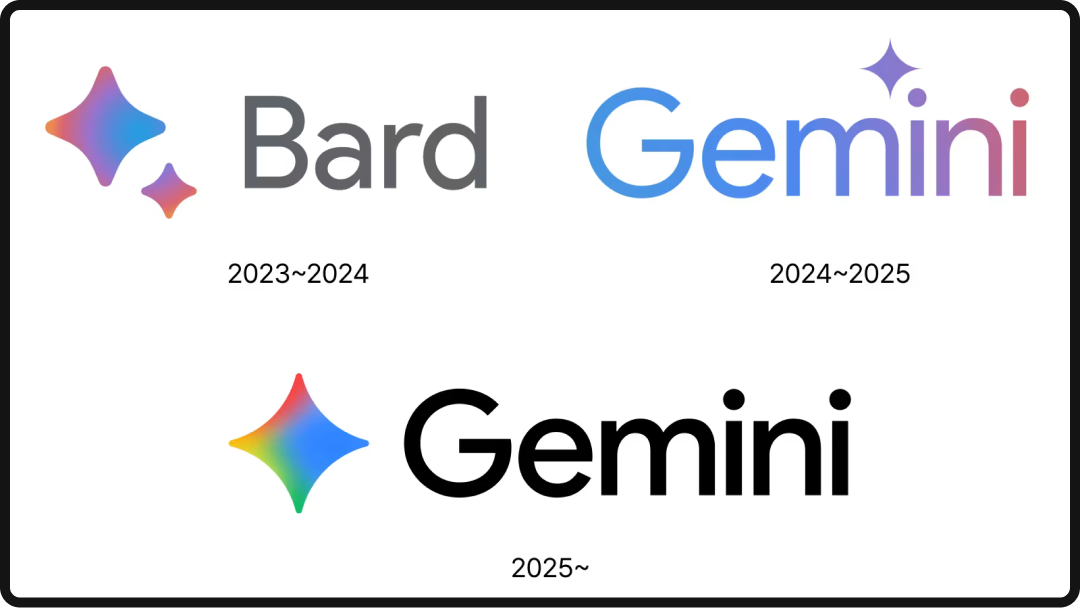
The logo redesign in July 2025 made this explicit. Gemini shifted from its original purple-blue palette to Google’s signature gradient: the recognizable melange of red, yellow, green, and blue flowing together in the same style as the Google “G” and the rest of the products in the Google family. The visual change reinforced what was already structurally true: Gemini is part of the Google ecosystem rather than a standalone product with its own positioning. The brand language centers on “Google Magic,” which sounds appealing until you realize it doesn’t differentiate Gemini from anything else Google does. Chrome is Google magic. Search is Google magic. Maps is Google magic. So, what makes Gemini’s magic distinct from the rest of the suite?
Gemini’s answer is actually less about distinction and more about integration. Rather than trying to separate from Google, it’s trying to make Google itself smarter.
The social strategy is an example of this explicitly in play. Google operates multiple handles: @google (15.7M followers on Instagram only), @shopwithgoogle (100K+), and @googlegemini (~800K, and before you say anything, yes, the handle name itself attaches Gemini to Google). The distribution of brand effort across them reveals how AI has become the narrative thread across Google’s entire ecosystem rather than a standalone product story.
Gemini’s presence focuses on product utility: everyday use cases that are helpful, functional or delightful, showing people what Gemini can do.

But the big brand moves happen elsewhere. Take the recent Sarah Jessica Parker collaboration: SJP styling a holiday campaign using Google’s AI-powered virtual try-on tools, shot in her NYC home, framed as “shop smarter with AI,” and the AI narrative was the invisible infrastructure making the Google shopping experience better.
That’s Google’s emerging brand pattern. AI is no longer a standalone product Google is selling; rather, It’s the reason Google’s existing products just got better. Search is smarter now. Gmail drafts better now. Maps understands context now. Shopping is more personalized now. Gemini powers it all, but “Google with AI” is what users actually hear. Google is repositioning itself as an AI-first company, and Gemini is the engine enabling that transformation rather than a destination in its own right.
Google tried a standalone AI identity once: if you remember, Bard launched in March 2023 as its own product with its own name. The February 2024 rebrand to Gemini and the fast-to-follow visual integration into Google’s family solidified Google’s direct effort to integrate it into its existing product lineup. The company learned that fighting for independent identity meant competing with its own ecosystem advantage.
Instead of convincing people to adopt something new, Gemini makes what people already use significantly better. It reduces any onboarding friction. It doesn’t require any behavior change. It’s the old and familiar Google product suite, now with AI woven in.
Where OpenAI made a deliberate bet on consumer-first growth (launch ChatGPT as a standalone product, let it go viral, build massive adoption, then monetize enterprise later), and where Anthropic doubled down on enterprise-first credibility (build deep B2B relationships through Constitutional AI and safety frameworks, then pivot to consumer), Gemini went ecosystem-first because it had to. It’s baked into Search, Android, Workspace… everywhere Google already exists.
You don’t have to download Gemini separately and choose to use it of your own free will; you will stumble upon it while doing things you were already doing in Google’s universe.
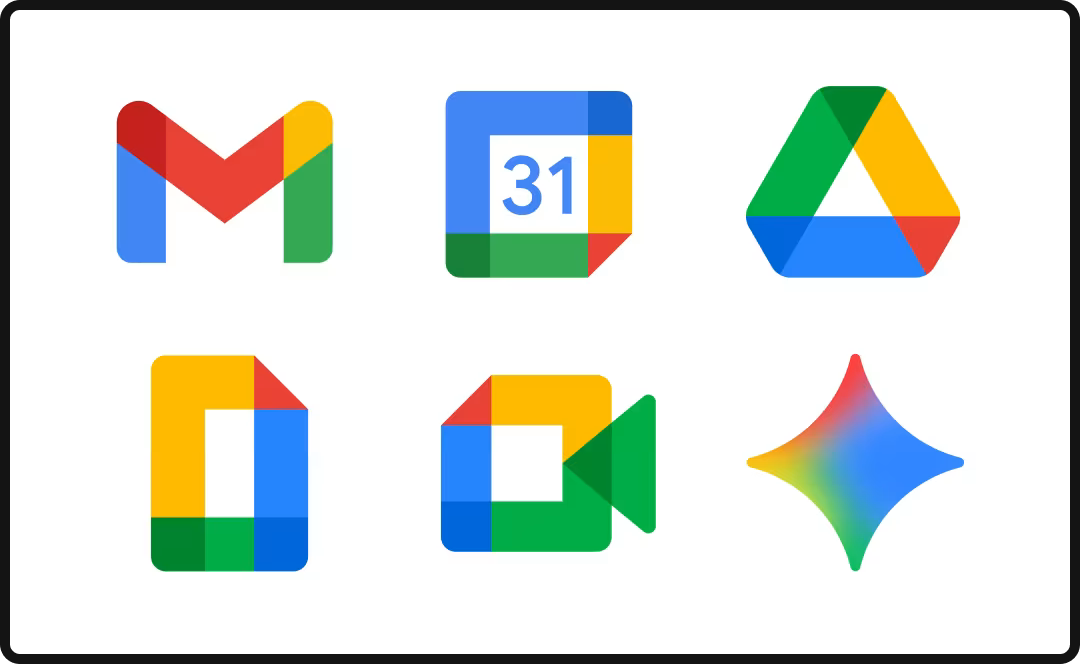
That distribution advantage is real and powerful. The integration means that Gemini touches more users more frequently than almost any other AI, simply by virtue of being part of the infrastructure people already rely on. Gemini’s current identity is Google’s identity by necessity, because building something completely separate could potentially undermine the core value proposition.
This is where the tight-loose culture framework brings us to something interesting. Gemini isn’t trying to add structure to a loose culture the way OpenAI and Anthropic are. It’s trying to absorb AI functionality into Google’s existing structure, which is a different strategic play altogether. The brand doesn’t need to give people a framework for “who am I when I use this?” because the implied answer is “you’re using Google, like you always have.” For many users, that’s enough, because Google already represents trust, reliability, ubiquity, and answers to questions. The brand equity is far-reaching and well-established.
For people trying to make sense of what their AI use says about them, Gemini provides a framework that allows them to continue to be a Google user. And for a large portion of users, it’s exactly what they want: the tools they already trust, now just significantly better.
People come across Gemini naturally in Search results, in Docs, in Android. Whether those “meet-cutes” translate to intentional, repeated use or remain occasional touches is part of what makes Gemini’s game different.
The strategic question Gemini faces isn’t about execution or marketing or finding the right creator partnerships. It’s more fundamental than that: Can you build a distinct brand identity when you’re fundamentally an extension of a parent brand that already defines you so completely? OpenAI was smart about separating ChatGPT’s consumer brand from OpenAI’s corporate and research identity. Anthropic carved out clear space between Claude’s consumer presence and Anthropic’s enterprise reputation. Both created room for the product to have its own personality, its own voice, its own reason for being beyond “its part of the suite.”
Gemini is Google AI, and that means every brand decision has to serve Google’s ecosystem strategy first:
- It can’t develop an identity that contradicts or competes with Google’s broader positioning.
- It can’t take creative risks that might confuse users about what Google stands for.
- It exists to make Google’s existing products better, smarter, more capable, and not to become a destination in its own right.
This isn’t necessarily wrong as a strategy. It’s just a different game than what OpenAI or Anthropic are playing. Gemini isn’t competing to win hearts and minds through identity; it’s competing to make AI feel like a natural, inevitable extension of the Google services people already trust and use daily. The bet is on distribution over differentiation, on ubiquity through integration rather than ubiquity through adoption, on being so embedded in existing workflows that conscious choice becomes unnecessary.
In a loose culture where people need frameworks for “who am I when I use this?”, Gemini offers a distinct answer: you’re someone who doesn’t need that distinction. For users trying to construct an identity around their AI use (*cough* guilty as charged), Gemini provides a frictionless framework. You trust established infrastructure, and “I just use Google” is its own form of clarity.
That’s not opting out of identity. That’s choosing the anti-identity identity. And for a huge segment of users navigating AI’s loose culture, that’s exactly the structure they need.
And that could very much be the entire point. Maybe Gemini isn’t trying to win the identity wars at all. Maybe the strategy is to win by making identity irrelevant, to be so embedded, so default, so automatic that people stop thinking of “using Gemini” as a choice they’re making and start thinking of it as just “using Google, which happens to have really good AI now.”
If that’s the play, it’s working in terms of reach. The question is whether reach at this scale makes traditional brand identity frameworks obsolete, because Gemini does, after all, come with a significant built-in advantage. It’s not a massive leap to assume that when you’re embedded in 2 billion people’s daily workflows, you don’t need to make people identify with your brand. You just need to make their existing tools indispensable.
So… What’s the Pattern?
Remember the tight-loose culture framework from the beginning? Here’s how it played out across these brands.
In a loose culture like AI, where there are too many options, no consensus, and constant anxiety, value comes from adding structure. But structure doesn’t necessarily mean one thing. Each brand found a different way to reduce overwhelm and provide clarity:
- OpenAI: Clarity through normalization. “Everyone uses this, so it’s safe for you too.”
- Anthropic: Clarity through identity. “You’re a thoughtful person, and this tool matches who you are.”
- Perplexity: Clarity through verification (positioning clear, identity still forming). “You can verify everything… but who does that make you?”
- Gemini: Clarity through familiarity and integration. “It’s Google, but better with AI.”
All four address the loose culture tension to a certain degree, and they did it by offering different frameworks for what it means to be an AI user.
The winning brands also help people reconcile contradictions. They create space for “I use AI daily” and “I’m still creative and valuable” to coexist without one negating the other. Rather than forcing resolution, they hold the tension.
- OpenAI says, “Don’t overthink it, everyone uses this.”
- Anthropic says, “Be intentional about your choice.”
- Gemini says, “You don’t need to choose at all.”
That holding pattern is what makes people feel comfortable enough to commit.
Analog has become the primary trust-building device across the category. Shooting on film, nostalgic music, IRL activations, human touch; when you’re selling something that fundamentally unsettles people, wrapping it in familiar visual language reduces friction. It’s why OpenAI used 35mm film and indie tracks from 2014, and also why Anthropic and Perplexity leaned into physical popups.
What’s also become clear is that brand is emerging as a differentiator equivalent to product features. When Anthropic’s enterprise share skyrocketed, it wasn’t only due to model performance; Anthropic’s strong positioning on safety, systems thinking and policy contributed to their moat as an AI partner of choice. In a loose culture, the brand that provides the most resonant framework wins, even if the technology underneath is functionally similar.
The most successful brands are also deploying specific persuasion strategies. They’re creating identity resonance and giving users genuine autonomy rather than forcing them into closed ecosystems. Each brand is making strategic choices about how to win loyalty in a category where functional differences are getting smaller and smaller.
The difference is, brands getting this right are winning loyal believers, not just users. And in a loose culture, that loyalty comes from successfully answering the question: “What does using this AI say about me?”
A Few Parting Thoughts
I started this (long) piece with a half-joke, half-serious-statement: I am a Claude girlie.
As the saying goes, there is some truth to every joke, though; and this one in particular illustrates my point on the role of brand in AI as an increasingly saturated sector.
In my case, it’s not only about Constitutional AI or safety frameworks or even writing quality, though those things matter. Using Claude signals something to myself about how I want to work, how I want to think, how I want to engage with AI, and also how I like to be perceived. From my perspective, it says I care about the craft of creation, not just the output, and that I’m not trying to hack my way to productivity, I’m trying to think better.
That’s an identity I claim thanks to a brand.
This is what it looks like when a brand successfully adds structure to a loose culture. Instead of making me figure out on my own what kind of AI user I want to be, Claude gave me a framework: thoughtful, intentional, craft-focused. That clarity resolved the anxiety I didn’t even know I had about what using AI said about me.
When every company can claim their model is “the most advanced,” when benchmarks shift weekly and features get replicated within weeks, identity could soon be the only sustainable differentiator and bet left. The technology will keep converging; what won’t converge is how using it makes you feel about yourself.
The companies that win will be the ones that understand people will soon stop buying AI and will start buying the story they get to tell themselves about who they are when they use it.
The brand territories aren’t being outlined in the labs anymore. They’re being outlined in the frameworks companies provide for making sense of a fundamentally chaotic category. They’re being won by the brands that figured out how to add structure where none existed, and gave people a clear answer to the question: “Who am I when I use this?”
That’s not a technical problem. That’s a branding problem. And in a loose culture, the brand that solves it wins.