

Scrolling Is The New Streaming
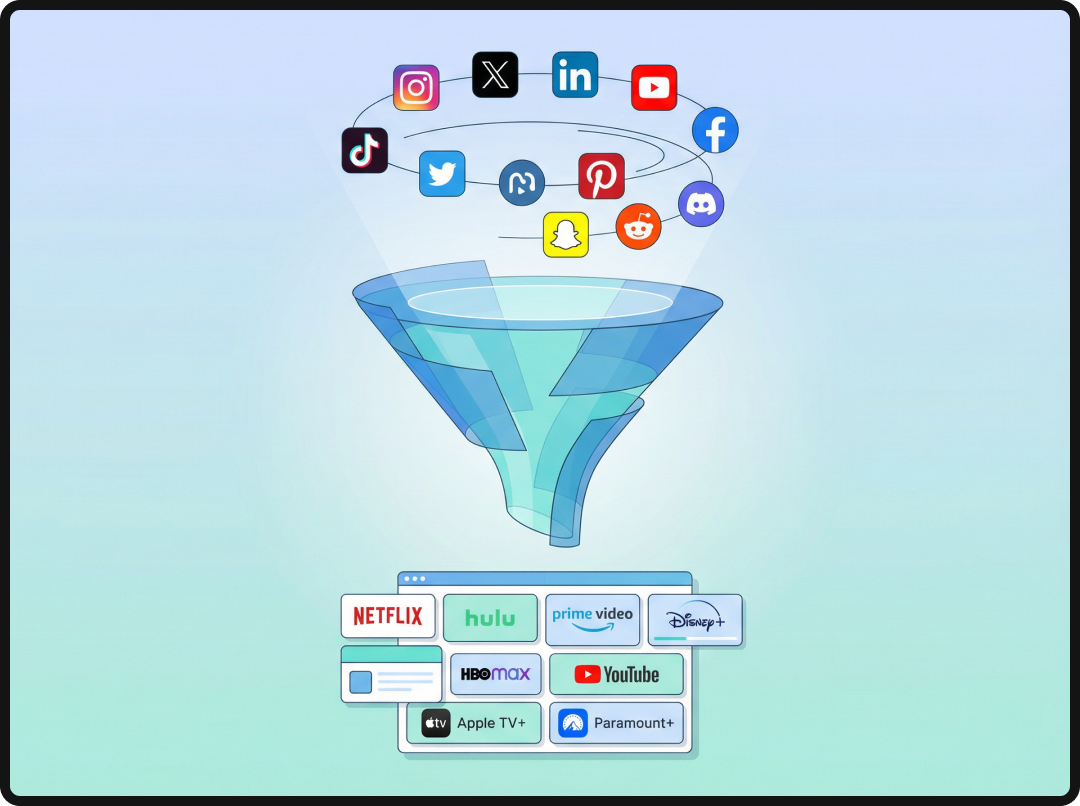
Remember when social media was just about posting vacation photos and stalking your high school ex? Well, say goodbye to that, because we’ve entered an era where your For You page and Reels are competing with film and television formats like Netflix for your attention; and, spoiler alert, social is winning.
Social media entertainment has shifted from pastime to main attraction, reshaping how we consume, create, and think about entertainment.
From TikTok dances to Instagram Reels and Twitch streams, the crossover of entertainment and social is all about creating content that pulls you in and keeps you watching. And with social media entertainment becoming such a prominent part of media consumption, we’re seeing a rise in social media marketers and content creators who’ve built entertainment empires without ever touching traditional media.
Now, entertainment industries are scrambling to adapt and make sure they aren’t falling behind on what’s trending and relevant. With Disney Entertainment Television experimenting with short-form content and ABC News maintaining robust social presences, legacy media companies are (slowly) learning to speak the language of social platforms.
But what does this mean moving forward, and how are both brands and entertainment companies supposed to accommodate these changes?
What It Means to Become Entertainment in the Evolution of Social Media Marketing
Traditional advertising was bound to croak sooner or later. Everyone’s over sitting through a 30-second commercial break when the next video is just a scroll away. People have become so used to tuning out anything that feels like an ad, which forces companies’ marketing strategies to completely change.
This is where social entertainment marketing comes into play. Over 60% of social content aims to entertain, educate, or inform, while almost half of organizations still focus on direct promotion. The brands that get it are already well on their way creating entertainment experiences that people actually choose to watch (on top of buying ad space); here are some of my favorite examples:
- Cava is experimenting with a dating-style show, Bowlmates
- InStyle is producing its own content series, The Intern
- NowThis has leaned into man-on-the-street videos with their series Are You Okay?
It’s obvious how much the landscape has changed. Traditional ads don’t hold attention the way they used to, so brands have to think beyond what they sell and focus on how they show up in people’s feeds. Being creative, experimenting with new formats, and telling stories that entertain is no longer optional.
Social platforms have also responded to growing ad fatigue by rolling out more interactive features to fight ad fatigue, like TrueView In-Stream Ads on YouTube, branded filters on Instagram and Snapchat, and augmented reality experiences. Features like these are also ways brands can make themselves known without “forcing themselves” into people’s feeds.
How Entertainment Studios Are Keeping Their Heads Above Water
You may be wondering: if people turn to social media for entertainment, what happens to the studios that were built for it? Don’t worry, film buffs, they’re still there, it’s just that now they have to move quickly to keep up with how people actually use social media.
Instead of just posting trailers and announcements, entertainment studios have to understand and adopt the trends and formats that already work on social platforms.
For example, studios like Sony Pictures have used TikTok campaigns that feel more fan-driven, leaning into trends and pushing the boundaries of social media marketing; this builds hype and conversation around releases in a way traditional ads just… can’t anymore.
Fan culture is huge, and it has even leading entertainment studios hiring fan editors or posting adopted fan-edit styles directly to their official accounts; think emotional clips, popular songs, memes, and quick edits that feel native to the platform.
Companies like Lionsgate, Hulu, Sony, and Paramount+ do this to keep younger audiences (particularly Gen Z) “locked in” and interested in even their older releases.
The Creator Economy Is Outshining Hollywood
If you think “content creator” is just a fancy term for “unemployed person with a camera,” you’re about five years behind. Almost half (47%) of Gen Zs and a third of millennials surveyed said their favorite form of video content is social media videos and live streams. This goes deeper than you could have ever imagined.
Lionsgate, Paramount, and ABC News aren’t at war with each other anymore. It’s now them vs. a teenager with a personality and a ring light. Everything from cooking tutorials to “get ready with me” videos are racking up millions of views as user-generated content evolves from amateur hour to professional-grade entertainment that rivals the things coming out of even Hollywood studios.
Content creators know that audiences are looking for something to connect with that feels personal and real. These basic fundamentals are what traditional media lack in terms of authenticity, which is why it’s important (not only for mainstream media, but also for all brands) to fill in these social and growth strategy positions.
Brands are already taking the initiative with this shift. GAP, Inc. recently created a Chief Entertainment Officer role, appointing Pam Kaufman, President and CEO of International Markets, Global Consumer Products & Experiences for Paramount, as EVP. Her role focuses on building and scaling Gap’s entertainment and content across their brands.
Roles in entertainment within social production are crucial in bridging the gap between high-production valued media and the fast-paced, experimental world of social platforms. The rules of production and performance have been completely rewritten, a big driver for why the creator economy has expanded so rapidly.
The Future Of Storytelling: Storytellers Look Different
People love a good story, but we already knew that; where we get those stories and who is telling them is where the magic really happens. Audiences turn to social the same way they used to turn to TV, and both are all about the narrative.
More and more, companies are hiring people whose job is basically to tell stories. These “storytellers,” and strategic communicators are in charge of shaping narratives across blogs, reports, and social media. Traditional media is declining, and job postings for these “modernized” roles are doubling, proving just how much this skill matters in today’s digital world.
Brands can’t rely on outside coverage anymore; they have to have their own voice, and that’s what storytellers are here to do.
Storytelling is pretty much the whole difference between brands that feel real and relatable, and ones that miss the mark. Strong storytelling is what helps brands connect with audiences more authentically and build lasting relationships instead of just pushing messages.
Another way that storytelling has evolved the digital landscape is that Gen Z is spending about 54% more time on social media platforms watching user-generated content than the average consumer, and 26% less time watching TV and movies.
The takeaway? The line between social media and entertainment no longer exists for younger generations. To them, everything is “content” fighting for their attention.
Traditional media outlets are down bad right now, and frankly, it’s because they were too slow to adapt. Meanwhile, content creators who started in their bedrooms five years ago are now signing deals worth millions with brands that have pivoted to participate in the creator economy and actively searched for people to tell their story.
The New Era of Entertainment & Brands Should Adapt
So, what now? Social media is now (mostly) entertainment, and all entertainment is now content. Companies that understand this convergence and embrace it by hiring positions that specialize in telling their brand’s story are the ones that will thrive.
We’ve already seen the major players take on this challenge:
- Disney partnering with TikTok creators
- ABC News optimizing content for Instagram Reels
- Traditional streaming services using YouTube Ads and embedded advertising to reach audiences where they actually spend their time
The strategic takeaway for brands here is to invest in community management and social teams that can respond in real-time, not put budget towards high-production marketing campaigns that take months to develop.
Content strategies have changed from posh and proper to authentic and conversational. Brands need to be part of the cultural zeitgeist and prioritize engagement rates instead of some elaborate production that everyone will forget about as soon as they see the “Skip” button.