
As 2026 creeps in, the landscape of SEO proves to be a realm where the only constant is change. For SEOs and digital marketers, keeping pace with the evolving nature of search engine algorithms is the only way to stay afloat as LLMs are projected to capture 17% of organic traffic in 2026. In 2026, SEO alone isn’t gonna cut it; you’re gonna need to be optimizing for AI, if you haven’t already, by performing Answer Engine Optimization (AEO).
With this in mind, we’re gonna touch upon several key areas that are fundamental to crafting a resilient and effective SEO (and AEO) content strategy. These areas include the direct impact of search engine algorithm updates this year and their reverberations on content types and user experience, the influence of AI that’s reshaping content creation and optimization, and the integration of emerging content types that resonate with our target audience.
Moreover, as the markers of success continually transform, we’ll break down the evolving KPIs for measuring the performance of your SEO and AEO strategies.
This all-encompassing overview will be a culmination of learnings and strategy adjustments that our team has accumulated throughout this year of AI growth and algorithmic changes.
Navigating Google Search Algorithm Updates
SEO underwent a few algorithm changes this year, with 3 major updates taking place: two core updates in March and June, and one spam update in August. As an SEO, you’re not only supposed to interpret these changes but also create strategies to thrive amidst them. Let’s break down each of these updates for you and what other changes Google made in 2025.
March 2025 Core Update
When this update rolled out, it resulted in the most volatile search engine results pages (SERPs) in the past year. One of the reasons was that Google recalibrated how they treated forum content, with visibility declining on platforms like proboards.com. Search Engine Land also found that large volumes of pages that are programmatic, and specifically designed for SEO rather than humans, experienced a sharp decline. The update was felt across industries, making it a truly impactful one.
June 2025 Core Update
Search Engine Journal speculated that this core update was influenced by MUVERA, a retrieval algorithm that makes retrieving webpages more accurate and efficient, and Google’s Graph Foundation Model, which is an adaptable AI model that increases algorithmic precision. While the update was considered big, it didn’t necessarily cause massive changes. What is speculated to have changed is an improved ability to surface relevant content, better retrieval, better interpretation of trustworthiness and authoritativeness, and the increased ability to identify low-quality websites.
August 2025 Spam Update
This penalty-only update should only have impacted your content if it went against Google’s spam guidelines. Spammy sites are ranking lower or not at all, so if you’re doing things right, you should only have seen positive changes after this update.
The Removal of num=100
While this isn’t an algorithm change, Google removed the ability to run the num=100 parameter in September, which broke tools like Ahrefs and GSC. This was because these tools were running that parameter, likely overinflating your true impact. You can read more about it in our article, but the most important thing you need to know is that while your impressions probably dipped in Q3, it means that they’re now more accurate.

The Effects of Algorithm Updates on Page Rankings
Following these updates, some websites witnessed a change in metrics and rankings. The underlying message is clear: providing content that is truly helpful for humans is more important than ever as the internet is being flooded with AI slop. Adhering to helpful content and spam content guidelines along with creating bottom-of-funnel content are the best ways to standout and thrive amidst these changes.
1. Content Review & Update Process Based on H-E-E-A-T Factors
Embracing the core tenets of helpfulness, experience, expertise, authority, and trustworthiness can aid in weathering the impact of these algorithm changes. This involves reviewing and refreshing existing content by making sure it’s still accurate and relevant to audiences today. It’s not just about making content sound better, but about making sure it’s truly up-to-date.
By injecting new life into older content, SEOs can safeguard their websites against the brunt of fluctuating search engine algorithms.
2. Review Google’s Spam Content Guidelines
If you did see a dip in your performance, it may be due to the fact that you’re not following Google’s spam policies. Google’s been devaluing “programmatic” pages that are created simply to rank, so if you have any of those, make sure you get rid of them. This also means no keyword stuffing, spammy links, sneaky redirects, or anything else that Google lists as malicious.
Remember, participating in any of these practices isn’t helpful short-term or long-term, and is a great way to lose visibility, clicks, and relevance.
3. Target Bottom-of-Funnel Needs
Since people are becoming increasingly satisfied with answers provided by SERP features like AI Overviews, something called zero-click search, you’re losing clicks on this type of content. Instead, you should be creating content for more high-intent queries, like “best wireless gaming headsets.”
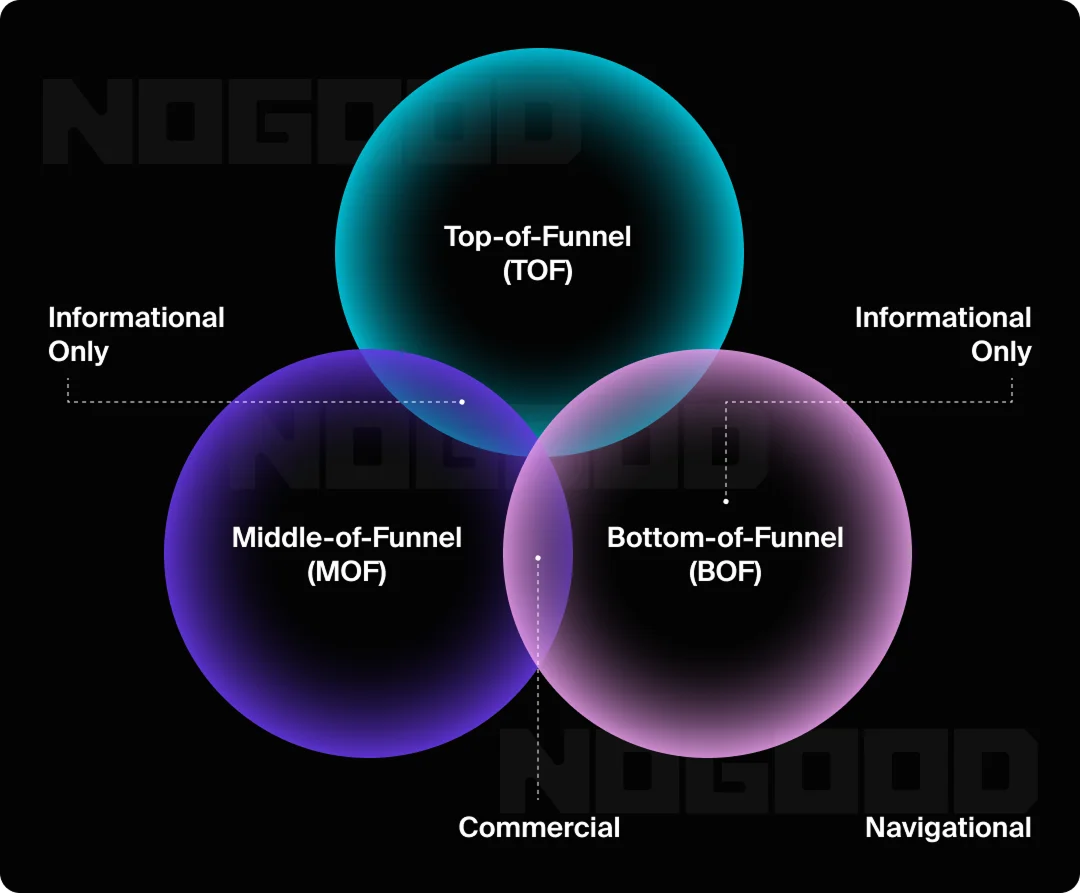
You can check out our Keyword Matrix article to get more in-depth advice about the type of keywords you should be targeting as we head into 2026.
The Role of AI & Answer Engine Optimization (AEO)
In 2026, AEO will only become more important as it’s predicted that LLMs will capture 17% of organic search traffic this year. While you’ve probably already heard all about AEO, the most important thing for you to know is that it builds off of traditional SEO, so you should only have to make some small adjustments to your existing content strategy.
Understanding the Shift: AEO vs. SEO
As mentioned, AEO is an evolution of SEO. With SEO, Google was serving people a list of blue links, but now, more people are using AI to search, and it’s providing users with a definitive answer rather than making them choose from a list of blue links.
The catch is that this is resulting in fewer clicks (which we also described earlier as the zero-click search phenomenon), so the new imperative is ensuring your brand’s content is the source the AI chooses to cite and reference.
Main Components of AEO Content
So, how do you create content to become visible in LLMs? Here are a few ways:
Semantic Clarity & Structure
- Answer-First Format: Start the introduction or relevant section with a short, direct answer to the core question, which is more likely to be grabbed by AI.
- Logical Heading Hierarchy: Use H2s, H3s, and H4s to create an outline that acts as a machine-readable map to crawlers. Every section should cover one distinct idea, making it easy for the AI to understand each section and how they relate to each other.
- Use of Lists & Tables: Favor bulleted lists, numbered steps, and comparison tables for data or sequential information.
Reinforcing H-E-E-A-T
- Author Credentials: Every piece of content should be attributed to a Subject-Matter Expert, who should be backed up with author bios. Author bios should have the author’s credentials, experience, and links to professional profiles (LinkedIn, etc.).
- Evidence & Citations: Support every claim with factual evidence and link out to authoritative sources in your niche (like developer guides, .gov, .org, or recognized industry research). Always ensure data is current by optimizing and updating on a set basis.
- Content Freshness: Regularly audit and refresh your top-performing content, making sure that it’s dated and reflects the most recent time it was updated.

The Importance of Technical AEO
Creating AEO content isn’t just about what you write and how you write it; it’s also about your technical performance, which helps crawlers understand your brand and its content better.
Leveraging Schema Markup
- Schema Implementation: Use structured data (like FAQ, HowTo, and Organization schema) to explicitly tell AI and search engines what your content means and how it should be used in an answer.
- Entity Alignment: Ensure your Organization and Author schema clearly define who your brand is and what topics you are an authority on.

The Emerging LLMs.txt
While not yet a universal standard, LLMs.txt is an emerging proposal that allows sites to provide a structured, machine-readable index of their most valuable content directly to LLM crawlers. As an evolution of robots.txt, it’s the best way to help AI know which of your content it should be prioritizing.
Digital PR & Outreach
Digital PR has taken a new meaning as we head into 2026, with value falling less on backlinking and more on making sure you have earned sources that are mentioning your brand in positive, context-rich articles. This will help you build authority and gain the trust not only of AI crawlers and search engine algorithms, but also of humans, who should be your top priority when you’re crafting content.
The Shift from Links to Citations & Brand Mentions
With AEO, the new currency is being cited and mentioned, inside AI or out. Since LLMs typically cite high-authority, trusted sources, your digital PR strategy should mean a targeted outreach campaign to become mentioned through interviews or by offering other high-value information. This shift focuses efforts on driving contextual authority over a bunch of backlinks.

The Power of Public Data & Data-Driven PR
Your digital PR should also include an effort to create original data to establish an authoritative knowledge gap. This involves publishing proprietary assets like industry reports, research, or other assets that authoritative sources (and by virtue, LLMs) need to cite. Furthermore, by newsjacking, brands can quickly provide citable data or expert commentary on trending topics to secure timely press mentions and prove expertise.
Multi-Platform Outreach & The Community Signal
Since LLM crawlers don’t just skim the SERP, effective outreach must be multi-platform to capture extensive trust signals. This means orchestrating community engagement on platforms like Reddit and Quora to encourage user-generated content (UGC) and customer participation. These are powerful entity signals that influence how AI generates an answer, even if people aren’t dropping links to your brand in the comments.
Integrating Emerging Content Types Into Your Strategy
The dynamic nature of SEO mandates the continual adoption of new content types. A well-rounded SEO content strategy embraces new formats that resonate with the evolving preferences, behaviors, and technologies. In 2026, we expect video content (particularly short form) to continue reigning supreme, while structured content is going to increase in popularity.
Video Content
According to Search Engine Land, 46% of Gen Z and 35% of millennials prefer social search (search on social media) over traditional search engines. And with the average person spending over 2 hours per day on social media, you have to make sure you’re targeting these engaged users through video content, which is the majority of social media content.

Videos have increasingly become the preferred medium for younger audiences, especially Gen Z, who are known for their short attention span and preference for visual learning. Creating and incorporating video content into your strategy is not just about catering to current trends, but about engaging with an audience that’ll define future consumer behaviors.
To increase the potential for your video to become visible in the SERP, you should optimize video titles, descriptions, and meta tags with target keywords, create transcripts for accessibility and additional indexable text, and host videos on platforms that are frequently crawled by search engine bots (like YouTube).
In 2026, it’s expected that video will continue to dominate internet traffic, with 82% of all video traffic in 2025 being video content.
HTML Content
As we mentioned, structuring your content with proper headings (H1s, H2s, H3s, etc.) is great for crawlers and humans. But something else we’ve started to implement here at NoGood is HTML tables, which look something like this:
|
Metric |
What It Measures |
Target Time |
|---|---|---|
|
LCP |
Measures loading performance |
Under 2.5 seconds |
|
INP |
Evaluates responsiveness by measuring how quickly the page reacts to user actions |
Under 200ms |
|
CLS |
Measures visual stability |
Under 0.1 second |
These tables can be built with a WordPress plug-in or by following a guide that describes how you can implement HTML code for a table.
Creating HTML tables (rather than an image) is better for SEO and AEO because HTML is machine-readable, and while AI is increasingly becoming multimodal, AI will always understand code the best. Here are some of the key benefits of implementing HTML tables:
- AI Citation & Extraction (AEO): LLMs can read the column headers and corresponding data points to synthesize definitive summaries or comparisons. An image of the same table is often ignored or only indexed through alt text, which is insufficient for data extraction.
- Accessibility & Indexing (SEO): HTML tables are fully crawlable, indexable, and accessible for search engine crawlers, too, who rely on the underlying code to understand content relationships. Furthermore, for users relying on screen readers, HTML tables correctly communicate column and row headers, providing a great user experience (UX).
- Responsiveness (UX): An HTML table can be styled using CSS to be fully responsive, adjusting column sizes or stacking vertically on mobile screens. An image of a table is static and might shrink, becoming unreadable on smaller devices, leading to poor UX and negatively impacting Core Web Vitals.
Leveraging AI & Machine Learning for Successful Strategies
With over two-thirds of companies claiming to use AI in their operations, if you haven’t implemented it yet, you’re already behind. With audience needs and crawlers becoming more sophisticated, integrating AI into your content workflows as a marketer is a stride toward outstanding UX, streamlined content production, and better-optimized content.
Use Cases in Content Creation & Optimization
One of the best ways to use AI for content creation is by using an LLM to help you come up with an outline based on the keywords and other supplementary information you provide it with. While it’s always best to write it out with your own voice, an LLM like ChatGPT, Gemini, or Claude can help you get a head start by brainstorming ideas and guiding you on the important points you should discuss in your piece.
For content optimization, you can also use LLMs to identify content gaps in your piece and the top-ranking and cited pieces. From there, you should take those gaps and improve upon what your competitors have included that you didn’t, so you can truly stand out.
The reality is that an LLM can’t do content creation and optimization for you, but done the right way, it can make the process speedier.
Future Prospects With AI SEO Tools
Looking beyond LLMs, the horizon of specialized SEO and AEO tool innovation is expanding, promising to offer even more sophisticated capabilities than what we’ve discussed.
Tools for Identifying AI-Generated Content
New AI tools are emerging to distinguish AI-generated content from human-written pieces. If you’re using AI to help you write content, a tool like this can be useful as it can pinpoint which areas are sounding too robotic and which could sound more human. Additionally, it can help you maintain brand voice and consistency.
AEO Tools
There are a variety of AEO tools out there that can help you determine your visibility in AI answers and the sentiment around them, but some take it a step further, like Goodie. While Goodie identifies where you’re showing up in AI, it also helps you optimize your content for LLMs and can generate AEO-adherent blogs.
Conversion Rate Optimization (CRO) Tools
Finally, AI CRO tools are transforming how we measure and enhance user interaction with our content. By analyzing patterns in user behavior, these tools provide actionable insights to elevate the user journey from initial click to conversion. This redefines the efficiency of our content types, ensuring they’re not just discoverable but also instrumental in achieving our digital marketing objectives.
Measuring SEO & AEO Content Performance
In the context of SEO and AEO, measuring content performance is critical to understanding the impact of your efforts and making data-driven decisions for future strategies. The thing is, in 2026, the things you’re measuring are going to have changed, especially with AEO. In addition to tracking organic traffic, you’re going to have to track visibility and citations in AI, amongst other KPIs.
Traditional KPIs for SEO Success
Organic traffic remains a primary leading indicator of SEO success, reflecting the effectiveness of a website in attracting visitors through unpaid search results. Similarly, monitoring keyword position provides insight into the visibility of your SEO content for targeted search terms. Click-through rates (CTR) reveal the level of engagement that your search listings are generating, while conversion rates are the ultimate testament to the ability of your content to fulfill its intended business objectives.
New KPIs for 2026
The future of SEO calls for a broadened perspective on the metrics we consider when assessing performance. With new technologies and user behaviors emerging, here are several SEO and AEO KPIs to watch in 2026:
1. AI Visibility & Citations
These KPIs indicate whether your content is the go-to source for direct answers, showcasing your dominance in topical authority and influence in AI. You can measure the effectiveness of your AEO efforts by looking at branded traffic, which is when someone Googles your brand name, which may be a result of AI exposure.
However, as mentioned, there are tools that can track this for you, like Goodie. Goodie tracks which conversations your brand is mentioned in, if they’re cited with a link, the sentiment of your mentions, and in which LLMs. All of this information can inform your content strategy and tell you where you could be improving your performance in AI.

2. Mobile Page Performance (Core Web Vitals)
In line with Google’s mobile-first indexing, understanding the performance of your content on mobile devices is crucial, as over 64% of web traffic came from mobile devices in 2025. Metrics involving mobile page speed and usability, such as Google’s Core Web Vitals (Largest Contentful Paint, First Input Delay, and Cumulative Layout Shift), offer insight into UX on mobile, which can influence ranking and engaged sessions.
3. SERP Features & Page Experience Metrics
The presence of your content in SERP features like featured snippets, local packs, or knowledge panels can increase visibility and traffic from search engines. Tracking your content’s performance in these areas, alongside page experience metrics that encompass usability and user satisfaction, provides a holistic view of the impact of your SEO efforts.
Augmenting UX is an essential component of SEO and AEO. By strategically addressing Google’s focus on mobile experiences and engaging users through interactive and shareable content, SEOs can craft an enviable SEO content strategy that not only ranks well but resonates with target audiences.
Your SEO Content Strategy, Recapped
In 2026, your strategy for SEO and AEO are going to be defined by constant adaptation and building authority. The best way to thrive amidst the volatility is by creating H-E-E-A-T content for both SERP and AI visibility while launching a strategic PR campaign.
Additionally, success is going to be measured with evolved KPIs that prioritize AI visibility and citations alongside traditional organic traffic, while digital PR must shift its focus to securing high-value brand mentions rather than amassing tons of links.
By embracing AI as an efficiency tool, adding HTML tables to your content, and optimizing for UX (especially on mobile), you can make sure your brand isn’t just surviving in 2026, but thriving as search moves to AI platforms.
Some icons and visual assets used in this post are licensed under MIT, Apache License 2.0, and Creative Commons Attribution 4.0.