

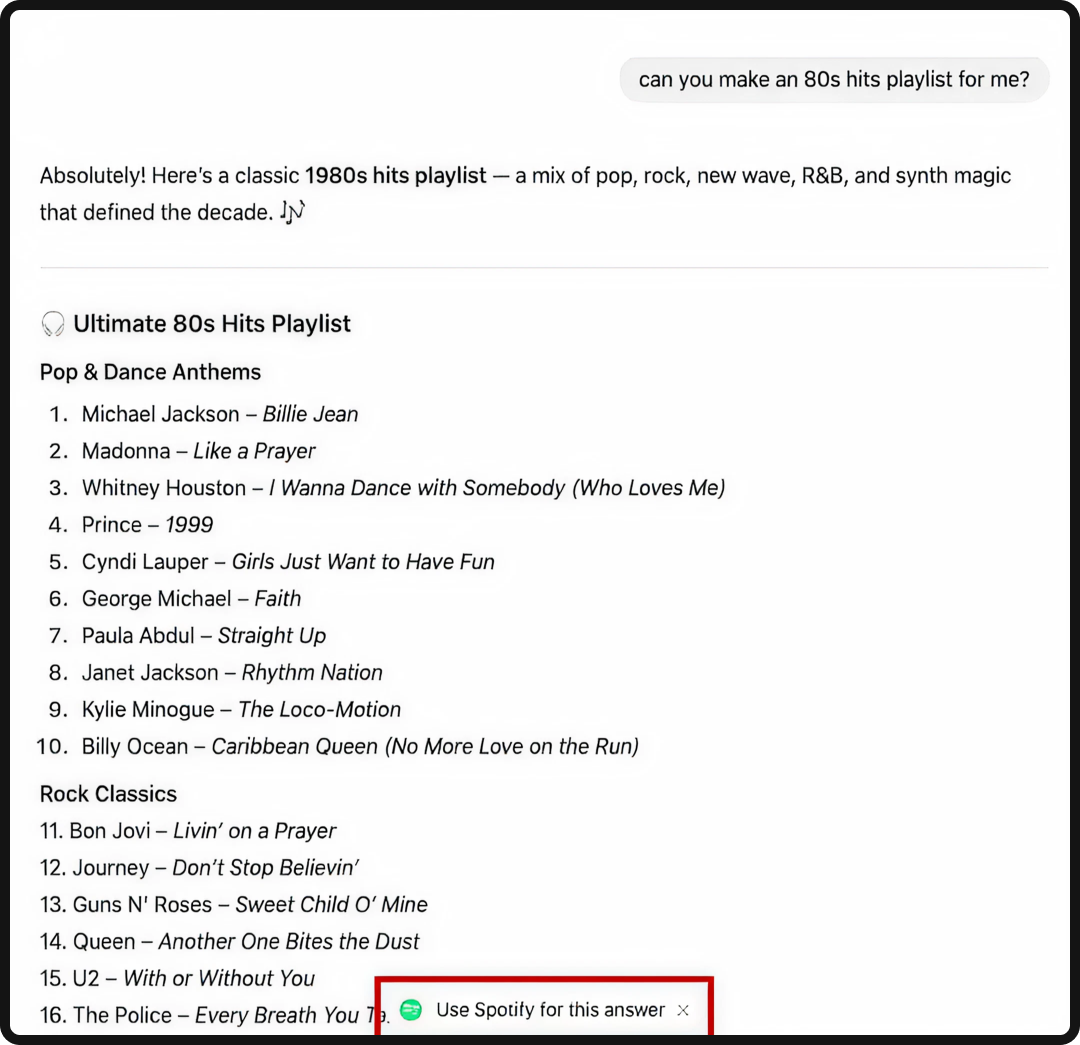
OpenAI recently announced that you can now interact with select apps directly in ChatGPT. That’s right. Now, if you want to create a playlist on Spotify, ChatGPT can do that for you. Looking to create a diagram in Figma? ChatGPT can do that for you, too (and there’s more; a full list of compatible apps can be found here).
This is a pretty big deal, as this is another instance of ChatGPT evolving from a search and conversation engine into an action engine, coming after OpenAI released Operator, an agent that can perform tasks for you in ChatGPT. Why’s this important? Because the integration of apps into ChatGPT have made its agentic capabilities more available to casual users, slowly eliminating the need for the user to navigate to a separate application to complete a task or transaction.
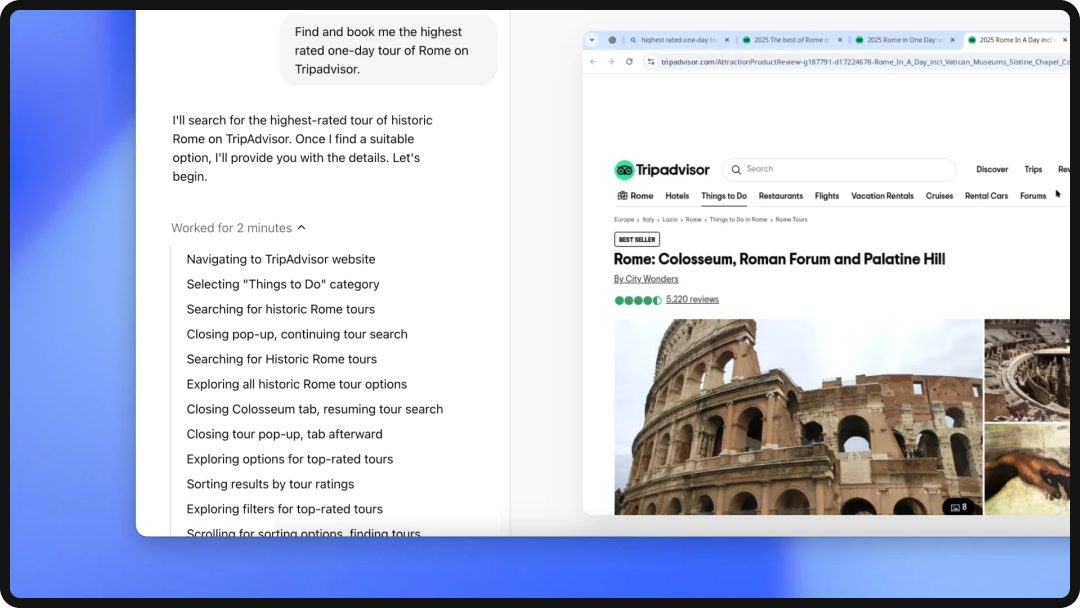
With that being said, the overarching implication of this change is that ChatGPT is slowly positioning itself as the backbone of the digital economy. This means two things: First, convenience now trumps discovery; users will take the path of least resistance. Second, the platform that controls this path effectively controls commerce. Now, if you want to gain conversions, you’re going to have to compete with large businesses that have just gained more power by being integrated within the ChatGPT interface.
This means that if you’re a smaller brand, things just got a whole lot harder. To understand why, let’s look at the apps currently integrated into ChatGPT.
What Apps Connect to ChatGPT?
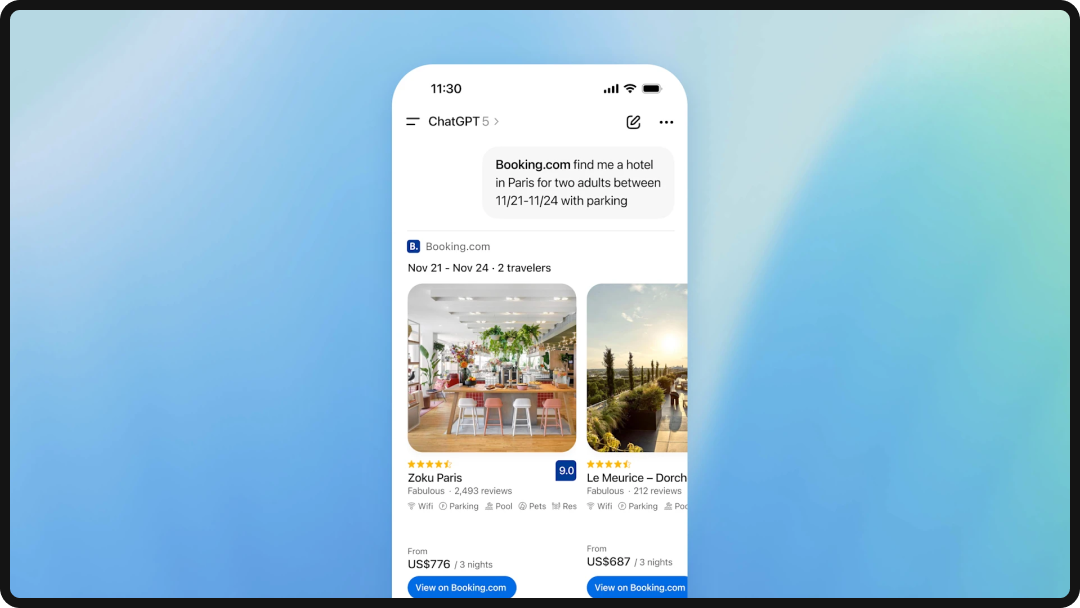
Currently, Booking.com, Canva, Coursera, Expedia, Figma, Spotify, and Zillow can be used within the ChatGPT interface. Later this year, more apps are expected to integrate within the platform, like DoorDash, OpenTable, Uber, and others.
The “Powerful Few” Advantage
These first 7 apps have gotten a massive head start by being among the powerful few that were first integrated into ChatGPT, simply because they have the bandwidth and resources to work within ChatGPT’s Apps SDK. For example, Booking.com and Expedia’s presence in ChatGPT will “steal” traffic from competitor platforms like Trivago. And if major industry players are set to take a hit of this magnitude, imagine the implications for a smaller brand in the tourism and hospitality space.
What also gives these “first brands” an edge is that their presence in the LLM will build brand visibility and loyalty. Typically, you might use Trivago, but if you want to plan your trip within ChatGPT, you’re going to pivot to Booking.com since that’s the available app. By the time Trivago’s integration (potentially) rolls out, you’re probably so used to using Booking.com that you don’t want to go back to using Trivago.
These apps will then become the “defaults,” kind of like when Google pre-installs its apps on a new Pixel phone. Their presence on ChatGPT almost makes it so that users who default to LLMs won’t have a choice but to use it.
The Competitor’s Death Sentence
As we said, imagine what’s going to happen to the user base and traffic of a smaller alternative to Booking.com, like Trivago. While it was hard for them to break out in the market before, it’s just become 100x harder, since they have to cut through both the marketing noise of larger companies and the convenience of being integrated into ChatGPT.
For example, someone using ChatGPT to plan a trip most likely won’t break the flow of conversation they’ve already created in order to navigate to another app or website and continue planning their trip. People love convenience (that’s why they love AI search), and convenience is what makes this update to ChatGPT so powerful.
The Death of the App Store & the Erosion of Native Usership
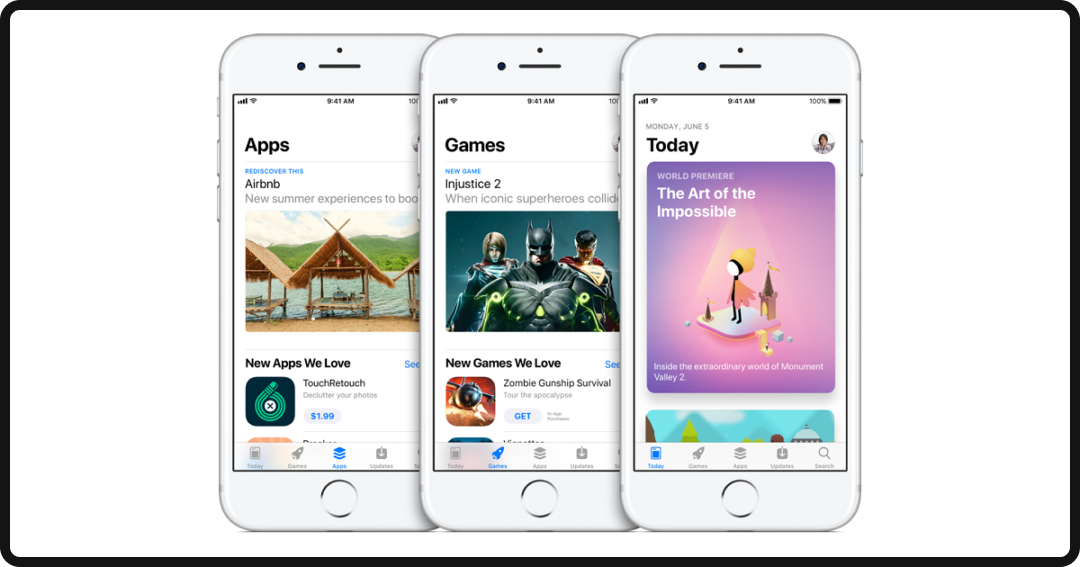
Another effect of this ChatGPT update is the inevitable decline of the App Store (and Google Play Store, Samsung Galaxy Store, etc.) and native app usership; even the apps that are being directly integrated into ChatGPT can expect to see a decline in app installs and usage.
The App Store Becoming the Graveyard of Discovery
With people now able to interact with apps directly in ChatGPT, what are the chances that they decide to open up the App Store to look for an alternative? As we discussed, slim. This means that instead of the App Store acting as a point of first discovery for apps, its relevance just took a massive hit.
This means that you’ll have to pivot from traditional App Store optimizations to optimizing your brand for AI visibility. This means performing answer engine optimization (AEO), which focuses on structuring your data and content so that LLMs like ChatGPT can accurately and effectively surface your brand as a solution.
With fewer people visiting the traditional App Store as a result, it’s overall going to become less important to optimize for the App Store and more important to ensure your ChatGPT app can be easily found within LLM answers.
The Hidden Cost for Integrated Giants
While these brands may be earning conversions via their integration with ChatGPT, their native tool has been devalued, which they probably spent a lot of time hardcoding. This loss of direct usership also translates to a loss of control over the user journey, making it difficult to upsell, collect first-party data, and drive platform loyalty. On top of it, the reliance on a third party for traffic (ChatGPT) also complicates traditional conversion counting and native analytics, requiring these large brands to completely rethink their data strategy.
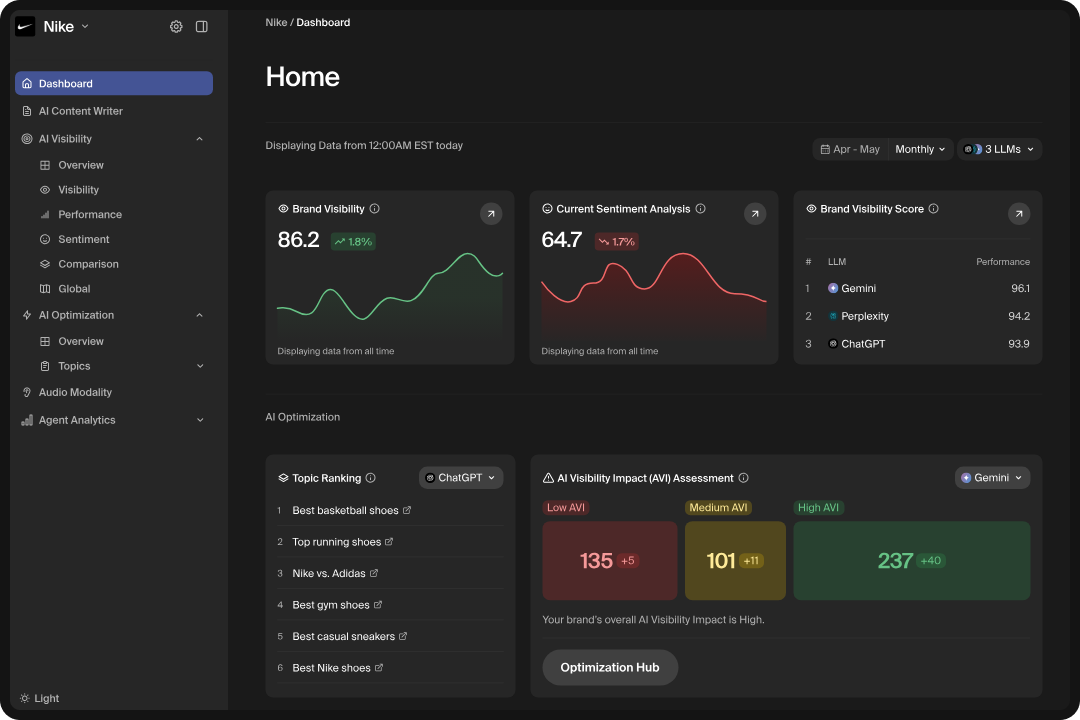
However, there’s a tool to help with that: Goodie, which tracks your brand’s AI visibility and sentiment while providing opportunities to optimize your content for AI. Goodie tells you which LLMs you’re showing up in, the conversations you’re included in, and the sentiment behind them.
The New Rules of The Increasingly Agentic Economy
We’ve already covered what’s going to happen to the brands being integrated into ChatGPT versus the ones being excluded, but how is this update going to change the rest of the digital economy?
Setting the Technical & Design Standard
While the big-name apps we discussed currently have a stronghold on ChatGPT, ChatGPT did release an Apps SDK that’s in preview for developers right now, which is a set of tools to help developers build tools for a specific platform. ChatGPT’s Apps SDK builds upon the pre-existing Model Content Protocol (MCP), which is a standard that lets AI like ChatGPT connect to external apps and tools.
The ramifications of this? It has just become the new standard, overnight. Instead of focusing on iOS, Android, or the internet when developing apps, many developers are going to start constructing apps built for ChatGPT.
If a brand doesn’t optimize its product specifically for ChatGPT’s Apps SDK, it may be completely ignored by ChatGPT’s algorithm. On top of that, ChatGPT is the one deciding how the app is presented, meaning they’re going to have a level of control over the experience that users have with the product. If ChatGPT surfaces the app incorrectly or non-intuitively, brand reputation may suffer. The good thing, though, is that OpenAI provided design guidelines to help developers optimize their apps.
By releasing the Apps SDK and Model Context Protocol (MCP) as the standard for integration, OpenAI has just dictated how all digital services have to function to stay relevant. ChatGPT is now effectively starting to force brands and businesses to adhere to OpenAI’s standards, shaping how the digital economy functions.
The Power of the “Featured Slot” & Algorithmic Bias
While we mentioned context and intent before, we’re wondering: how does ChatGPT choose which app to surface when multiple options exist?
For example, with ChatGPT currently hosting Booking.com and Expedia, when someone asks for help with finding and booking a hotel, what makes ChatGPT surface one app over another? We currently have no insight into this, though we can start to study what triggers a certain app over another. This is the black box in full swing.
Still, without knowing how or why ChatGPT makes its choices, it will be difficult not only for those wanting to optimize their apps, but those developing new apps for the platform.
Obviously, with more and more people using ChatGPT’s Apps SDK to develop a ChatGPT-compatible app, they’re going to make a directory of all of them. But the competition that’s steadily going to increase over time is only going to make it harder for your app to stand out amongst a sea of others. Look at it this way: If you’re not a ChatGPT app, you’re competing with integrated apps to stand out, but even if you are one, you’re competing with integrated apps to be the surfaced solution.
This mirrors something we’re already familiar with: search engine optimization (SEO). In the early days of SEO, it was a big guessing game; when people figured out that backlinking would increase their position on the SERP, links were thrown on every available piece of content. But now, that’s considered a black hat tactic, so the focus shifted toward optimizing keywords and integrating high-value hyperlinks throughout your text, naturally.
The point is, while right now we’re not 100% sure why ChatGPT surfaces one app over another, your focus should be on maximizing semantic relevance (which is the entire point of AI), just as early SEO efforts focused on keywords and links before deeper signals were understood.
The biggest result of all of this is that ChatGPT has transformed from a conversational partner into a promotional tool, pushing apps onto its users, even if they didn’t specifically ask for it.
It’s kind of like how Google runs paid ads; we’re starting to see the potential for ChatGPT to become a promotional and advertising tool beyond organic marketing. So, ChatGPT integrating these tools is a sort of primer. They’re trying to prepare their users for increased promotional features in ChatGPT in the future, and strategically doing it with something we’re all familiar with: apps.
What Smaller Brands Can Do
We mentioned over and over again that smaller brands are going to seriously suffer under this update, but all hope is not lost. There are some actionable strategies you can use to thrive, including:
1. Focus on Specialized Agentic Use Cases
Currently, you shouldn’t even try to compete as a generalist. You’re not going to be able to beat Expedia on “book a flight” or Canva on “make a presentation.”
If you’re a travel app, for instance, don’t just position yourself as a Booking.com alternative, define a specialty; be it sustainability or local expertise that other solutions don’t have. Your goal is to be the only logical choice for a set of high-value queries, thereby diverting traffic away from the default utility and toward your specialized solution.
2. Become an API First
As we mentioned, ChatGPT is the one who chooses how to surface your app; not you. This means you need to take back some control by making your backend data impeccable.
So, you need to shift your mindset a bit: stray away from treating your app as a destination, and think of it more as a utility. This means making your app a robust, clean, and easily consumable API without sacrificing your app’s native performance.
If your API is messy, slow, or inconsistent, ChatGPT will fail its initial integration tests. Worse, when ChatGPT is trying to solve a user’s complex query in real-time, it’ll default to the integrated service that’s fastest and most reliable. For a small brand, this results in immediate obscurity: if your data is messy, your brand is practically invisible in ChatGPT.
3. The “Conversational Gap” Marketing
You have to remember: AI is great at generating basic content, but it sucks at empathy, emotion, and creativity. So what AI lacks, you need to hone in on for your brand.
You can use your marketing budget to advertise the human value that your brand brings to the table, directly undermining AI solutions.
Your headline shouldn’t be something generic that people may suspect is AI-generated. It should be something like: “The Trip Planning Agent That Actually Cares If Your Anniversary is Ruined.” Market the consultation, the expert knowledge, and the hand-holding that AI can’t provide.
The key is to make sure your users know when they absolutely need to pivot out of the chatbot and talk to a human; your brand is a good choice.
The New Digital Economy
The integration of apps into ChatGPT is a win for user convenience, but a hellstorm for brands, as it just transformed ChatGPT into the backbone of the digital economy. This move hands immense power to the first integrated brands, making them the new defaults and likely causing a decline in the relevance of native apps and traditional App Stores. For all businesses, this creates twin challenges: integrated giants lose control over their upselling and first-party data, while smaller brands face unprecedented obstacles to visibility, as the industry standard pivots to ChatGPT’s Apps SDK.
The core takeaway is this: the digital economy is now an ecosystem of utilities where frictionless execution outweighs organic discovery. To survive and thrive, brands need a strategic focus on specialized use cases where LLMs and other tools fail, an API-first mindset, and a commitment to AEO to ensure it’s the chosen solution.