

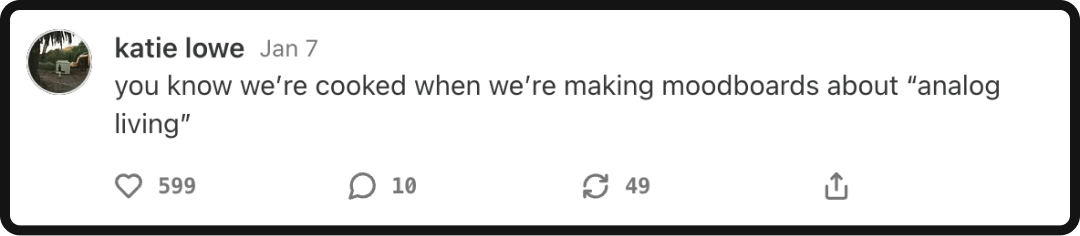
If 2025 was the year of doom scrolling, 2026 is the year of intentionality.
It feels like the whole internet shares the same new year’s resolution for 2026: scroll less by picking up habits that allow you to unplug from the digital world. Pair this with the rise in hobby-hopping, Substack users, learning parties, branded experiential activations, and one thing remains clear: people are in search of tangible experiences.
Rarely does the evolution of our social media behavior feel as easy to pinpoint as it does now, which makes it the perfect time to dive into this shift.
What Is Analog Marketing?
In short, analog marketing consists of all of the “traditional” physical marketing assets that were swept up in a digitized world years ago; I’m talking print media, OOH, direct mail, experiential, and broadcast (that’s TV and radio for my Gen Zs out there).
That being said, it’s hard to submit analog marketing to a single definition because it’s coming to life right before our eyes. In order to understand the full picture of analog marketing, we must first analyze the past decade of social media behavior that led to this phenomenon.
Let’s take a field trip to 2016, a.k.a. the last year that social media actually felt social.
- Instagram was used to see what your friends were doing
- Vine was addictive, but still felt intimate
- Snapchat filters and private stories were booming
- Twitter was still called Twitter (RIP)
Then, 2020 came, and two huge (yet mutually exclusive) things happened in parallel: COVID and TikTok. Just like that, our IRL third places shut down. No more school, office, cafe, libraries, church, or local neighborhood spot.
Naturally, we reached for our phones and learned how to feel socially fulfilled through our algorithms. Flash forward to 2026 (with the rapid rise of AI fatigue), and it’s no wonder that the last six years have caught up to us. It’s from this environment that analog marketing was born.
In a nutshell, analog marketing hinges on the human experience. It’s the opposite of what I like to call “social media Marco Polo”; to put it plainly, we aren’t chasing engagement anymore.
What sets analog marketing apart is the fact that it isn’t built on a trend. There’s nothing to copy, which means brands have to find their own unique ways to participate. Ultimately, analog marketing presents an opportunity for brands to challenge the status quo and form genuine connections with their audience members.
To sum it up:
What Is the Difference Between Analog & Digital Marketing?
Although analog marketing is pretty loosely defined, I like to think of it as a subset of traditional advertising. If traditional advertising is the Mad Men of it all, then analog marketing is the 2026 version. However, even this analogy is imperfect. The distinction between analog and digital is not a hard line in the sand because the two overlap in many areas. Here are a few examples to show the range of analog marketing, *hint hint: many of the best campaigns involve both analog and digital marketing tactics.
Analog Marketing Examples
Financial operations platform Ramp hired Brian Baumgartner (better known as Kevin from The Office) as their new “CFO”, where he worked for over six hours from a glass box. Although this marketing stunt started out as an IRL moment it went viral on social and was amplified by Ramp on their LinkedIn, Instagram, and TikTok channels. Driving online audiences to offline experiences is a key part of analog marketing.

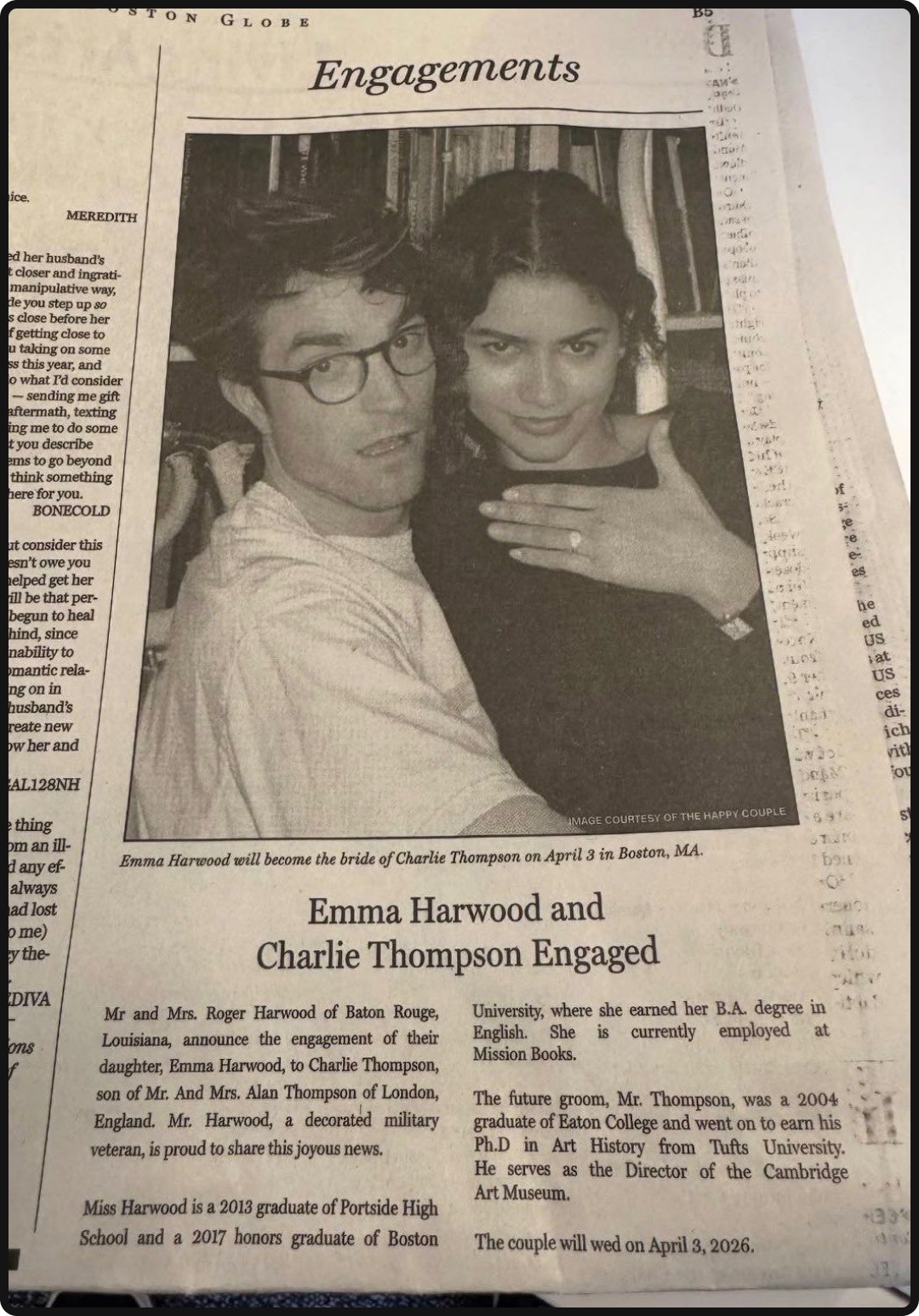
For A24’s upcoming movie The Drama (starring Zendaya and Robert Pattinson), the studios put a real ad in the Boston Globe featuring an engagement announcement for the two main characters. Luckily for A24, whatever they touch turns to gold and this was no different. Immediately following the ad, fans all over social were resharing the photos from their newspapers.
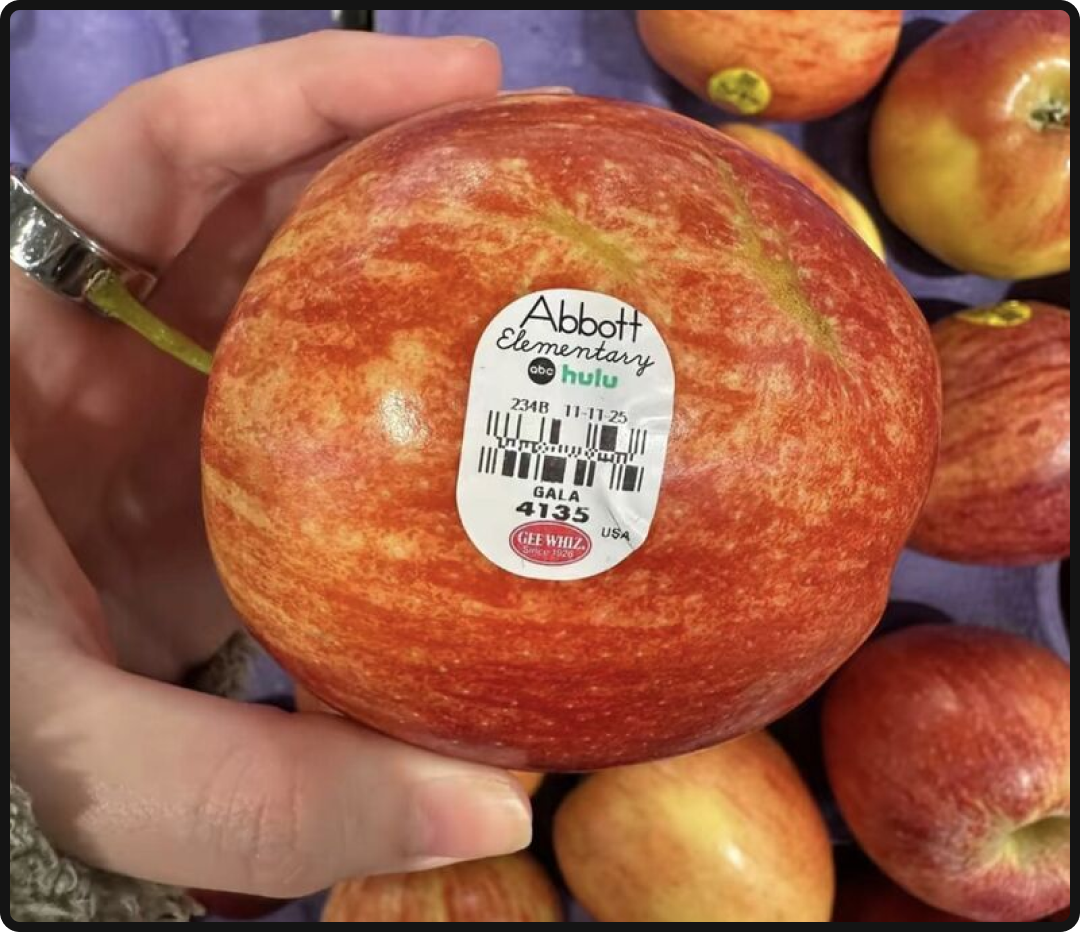
Just when you thought you’ve seen it all, for season five of Abbott Elementary, Hulu put promo stickers on apples at the grocery store. This clever stunt may seem small but it’s exactly the type of analog marketing tactic that surprises and delights people. Even if you aren’t an Abbott superfan, you would definitely remember seeing these apples and, who knows, maybe you’d try watching one episode!
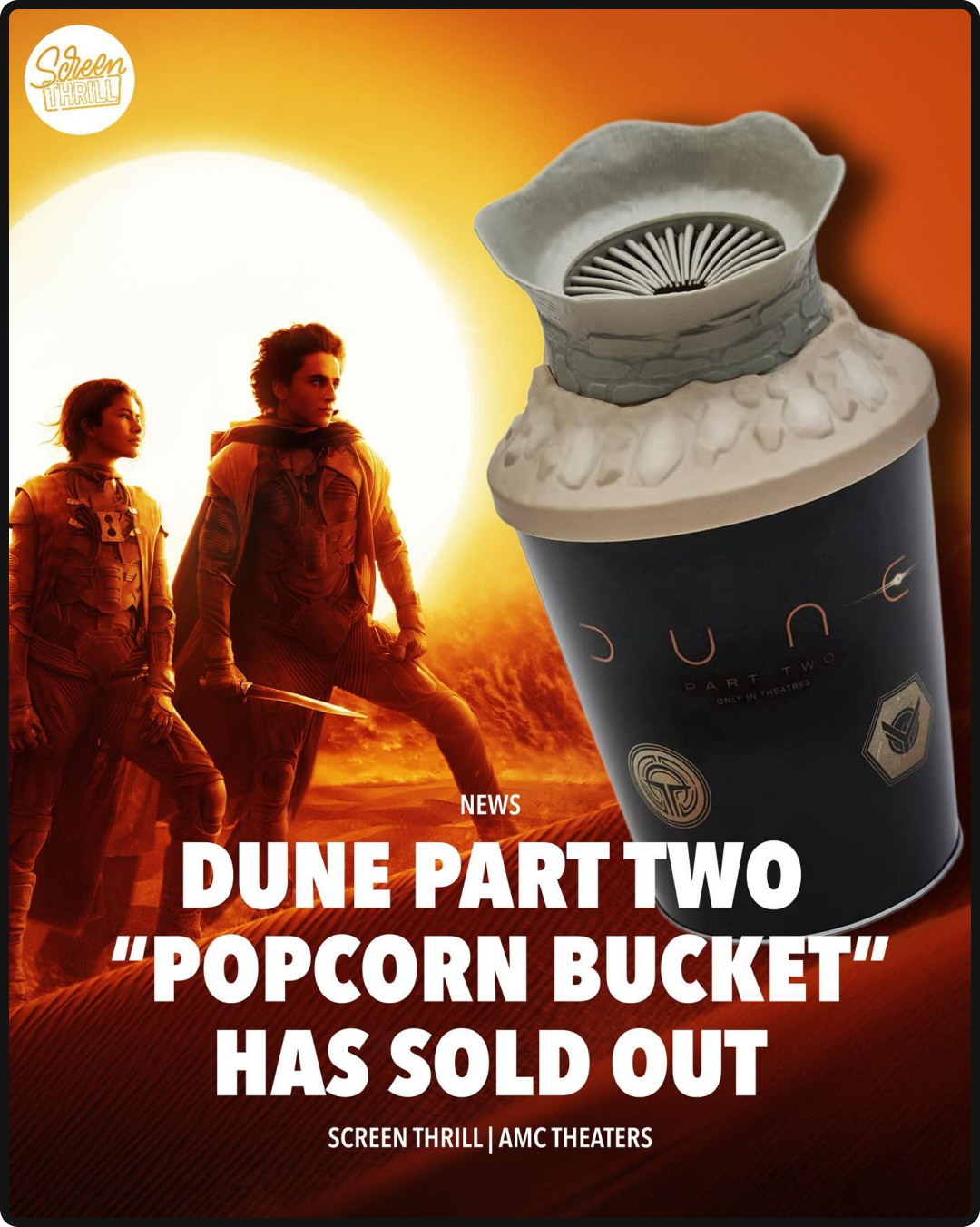
AMC sold the exclusive Dune popcorn buckets that went viral on social (some might say for the wrong reasons; I say it was the kind of happy, funny accident that most marketers dream of). This is the kind of moment that many marketers can only dream of concocting. It was equal parts digital and IRL, the kind of experience that drives people to the scene of the crime and gets them talking about it on social media.
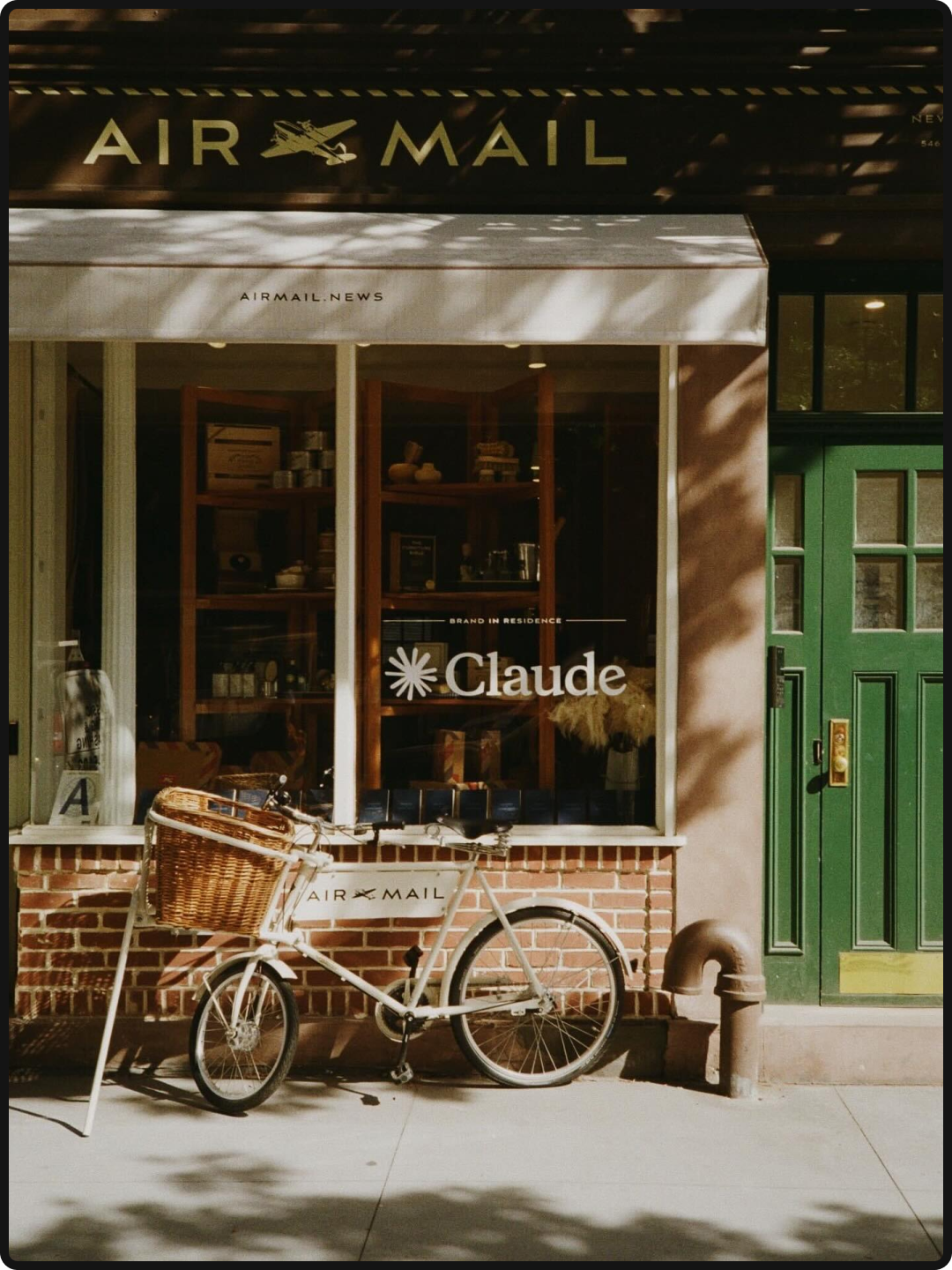
Anthropic hosted a pop-up event in NYC’s West Village at Air Mail, where people were invited to read, work, enjoy a coffee, and think in a creative space (and if you’re curious whether we’ve got more to say on the rise of AI branding, we do; give this article a read). I love this move by Anthropic because it shows their ability to read the room. AI can be hard for people to understand and accept, so to make Claude more approachable Anthropic brought people together, reminding us that people are what give AI power, not the other way around.
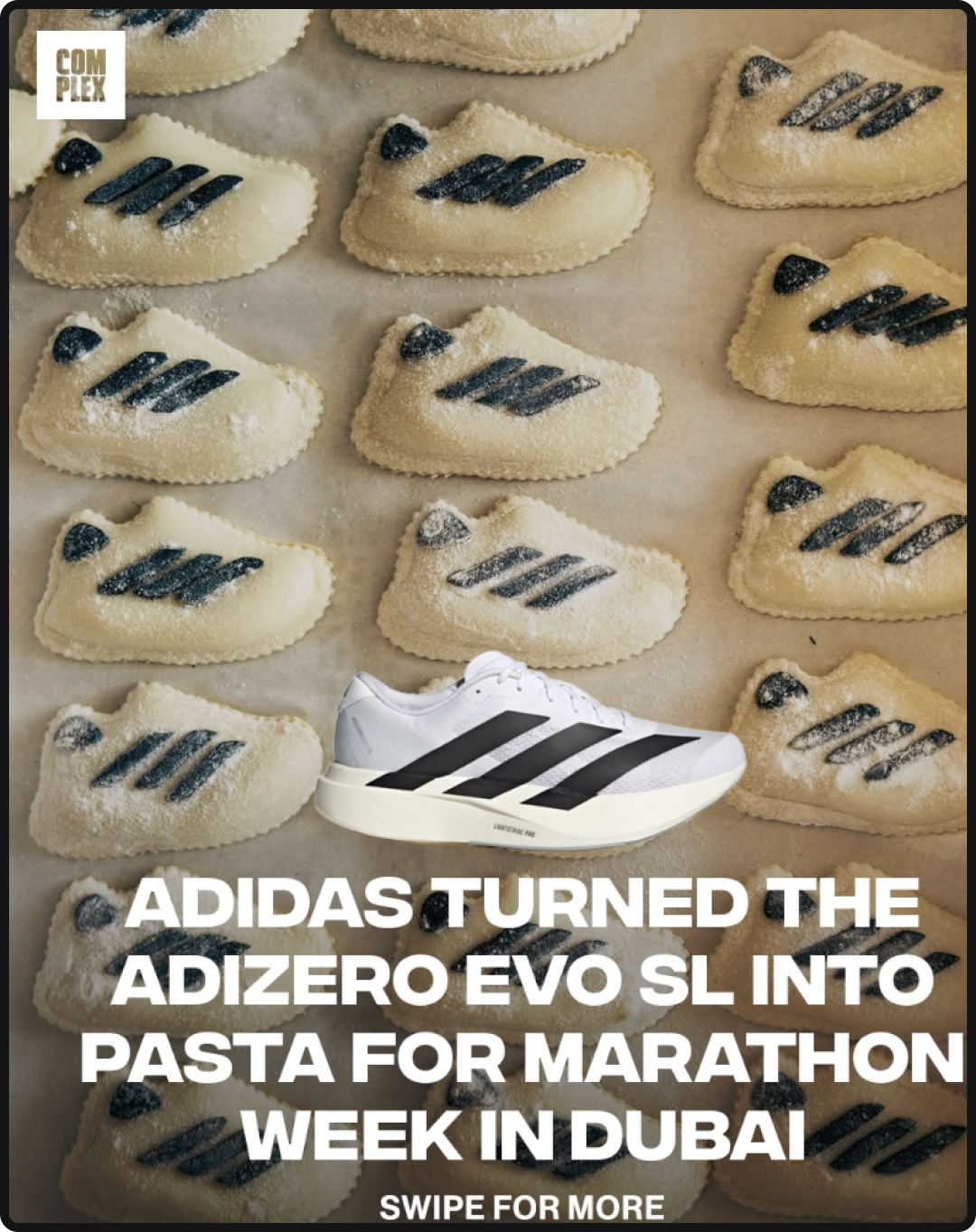
Ahead of the Dubai Marathon, Adidas partnered with local Italian pastificio Sagra for a limited-edition ravioli of the Adizero Evo SL. In the past few years, food has become a symbol of status and wealth. LTO pop ups and collabs have driven a majority of headlines especially on TikTok as the platform becomes one of the most powerful search tools with Gen Z. Adidas smartly banked on their audience’s love of exclusivity and carbs (carb loading is a serious game!) to create this specialty ravioli ahead of the marathon.
Notice what each of these campaigns have in common. Although they started as more traditional advertising stunts, each one became its own unique moment on social and created a whole digital dialogue around the brand. That sweet spot is where analog marketing lives. You might hear people describe analog marketing as traditional OOH with a facelift, but that is untrue and frankly lazy. If traditional marketing was the first wave and digital marketing was the second wave (inclusive of social), then analog marketing is the new third wave. It’s the convergence of all three and there is no blue print. That’s the beauty of analog marketing, it truly is not one-size-fits-all which should be a relief to many brands.
Why the Analog Revival Is Happening Now
Our offline interests and hobbies have become fodder for our online presence. It’s not that we think the digital world is real; rather, we’re starting to see the real world as a place that exists in order to fuel our digital identities (sounds straight out of Black Mirror when I say it like that, huh?)
On socials, this manifests itself in one main way: people are starting to view social media as their personal libraries, one that can elevate their cultural fluency in real conversations.
In short, analog is happening now because we’re seeing the effects of doom scrolling on our mental and physical health, and we’re sick of it. The attention deficit and loneliness epidemic are just the tip of the iceberg, and analog is our lifeboat.
Not convinced yet? The proof is in the pudding, according to CNN searches for “analog hobbies” jumped 136% in the last six months, and craft kit sales are set to grow 86%.
Where analog marketing may have started as the trend of making “old” things cool again, it takes that a step further, going beyond nostalgia. It’s no longer a trend, since it’s not rooted in any one activity. Instead, it’s the general practice of being more intentional with how we spend our time.
As a resident member of Gen Z, I’d like to point out the irony in what people say about us versus how we really feel. Many label our generation as phone-obsessed social media addicts, but that couldn’t be farther from the truth. What we really crave is an existence that has nothing to do with our phones (though I’m not sure I can say the same for Gen Alpha).
For Brands, Intention & Sentiment Are Crucial
Analog marketing can be a touchy subject for some, and requires a level of nuance to be done the right way. For brands, participating in the analog revolution means leaning into the cultural shift without being a vulture.
- On one hand, the spike in conversation around practicing intentionality is something to commemorate, because it shows cognizant awareness of poor social media habits.
- On the other hand, it’s also something we as people (not as users, or customers) feel protective over because it can easily cross over into enemy territory (I’m talking tone-deaf influencers and bandwagon brands).
It’s like when you witness your favorite indie artist break into mainstream culture. You’re happy they’re getting their flowers, but you’re also secretly (or not so secretly) a little bummed that you don’t get to keep them all to yourself. Either way, you find yourself telling anyone who will listen, “I found them first!”
How Analog Marketing Translates to Social Media
It might seem like analog marketing is completely separate from social media, but that’s not necessarily the case. For brands, don’t confuse the decline of doomscrolling with decreased engagement. We still use social media everyday; the change we’re seeking is in the types of content we consume.
Where fast-paced and immediately gratifying content performed best in prior years, this time around we’re craving less addictive, more intentional online experiences. The way I like to think about it is that social media helps us enhance our everyday lives.
We capture our favorite memories on our phones and then edit them on TikTok, or curate them into a carousel on Instagram, because that allows us to relive the moment. It’s true that finding genuine social integrations for analog marketing will be challenging, but that’s never stopped us before.
Examples of Brands Doing Analog Marketing on Social Media Right
Already, I’m seeing a few subtle ways that analog marketing has infiltrated the social scene:
Editorial content makes a comeback. Stationary and journal brand Wilde House Paper has fully embraced editorial content on their Instagram. Beautiful illustrations, thoughtful prompts, and a distinct aesthetic photography style masterfully showcase how brands can develop a unique analog marketing strategy for social.
Long form > short form. Entertainment studio Mythical Kitchen started a TikTok series titled Last Meals where the host interviews celebrities on what their last meals would be, and then they actually eat those meals. Many brands have their own signature series now, and I like to chalk it up to analog marketing. People want to slow down and be more intentional with their scrolling which translates to long form content preferences.
Thought leadership. Beauty brand E.L.F is on top of their LinkedIn game continuously sharing a steady drumbeat of executive, product, and community related news. With analog marketing comes the demand for brands to be multi hyphenates in their own right. A good product will get you far, but consumers expect more and more from brands and the best ones are willing to step up to the challenge.
Shares, saves, comments, and watch/completion rate as the new indicator for an engaged audience. Back in the day (a few years ago) it was much easier for a brand to do an internal wellness check on their socials: are followers, likes, and impressions up? All is well. Unfortunately (or fortunately, I myself am more of a glass half full gal), the formula for growth and engagement is not quite as simple.
With the growing affinity for analog marketing shares, saves, comments, and watch/completion rates are the new testament to a healthy online community. Think about it this way: if your brand wants to be more intentional and deeply connected to your audience, the metrics you measure should follow suit. Follower count and likes are purely vanity metrics, what gives you real intel is how people are engaging with your content. For example, are they saving educational videos and skipping past promotional ones?
Consumer Examples
Analog bags are all the rage these days and often include fun novelty items that can keep the doomscrolling at bay. Things like your journal, a book, and a fun arts and craft project are all examples of what you might include.
Physical bingo or punch cards are the analog versions of two big trends I saw last year and a fun way to involve your community. Essentially creators are sharing how they lean into the analog trend by simply taking things that are typically digital, and making physical forms of them. This goes to show that analog marketing doesn’t have to reinvent the wheel, sometimes it’s a simple reskin.
Lookalike contests were quintessential to the film and television industry last year (as well as giving a boost to the Partiful app), and even extended to general pop culture memes like the performative male lookalike contest in NYC. Stunts like these are always fun because they’re consumer led and come from a genuine love for whatever actor, character, or persona is the chosen focus.

Pen pals are coming back, and you guessed it… this time with a social twist. Instead of writing to your old camp friend or long distance cousin, people are finding new pen pals through TikTok!
How Analog Marketing Enhances Social Media Strategy
Thus far we’ve discussed how the best marketing strategies often combine both digital and analog integrations. It would be easy for me to say, “just spend $1M on a perfect guerilla stunt and then amplify it on social media” but I know that is not most of our realities. Instead, let’s focus on the specific lessons we can take from the big budget campaigns, and how we can apply those same tactics to our approach. It’s all about scale baby!
Highly Shareable Social Content
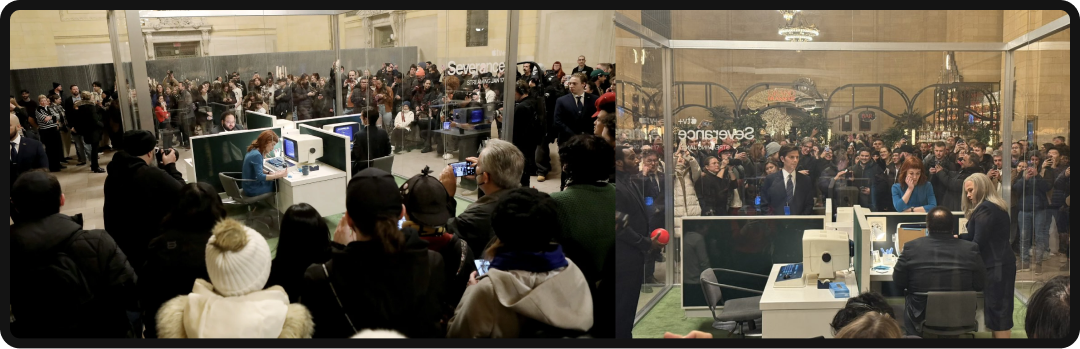
Analog activations create moments that people want to capture and share on social. One of the bigger ones from the past year was the Apple TV Severance Grand Central Station activation. It’s one of my favorites, and it’s a great example of analog marketing that went absolutely viral on social media because they used social media to amplify their analog experience, and vice versa. Further proof that the two can benefit each other in the right setting.
Proof of Authenticity
The importance of physical touchpoints cannot be understated. With the rise of AI and scrolling addictions, we’re in a collective state of social paranoia that can only be cured with real props and souvenirs. Think of analog marketing as a way to create digital tokens of organic connection. The way we consume social media now is supplemental and runs parallel to our IRL experiences. Because of this phenomenon, you can see how stale social media marketing can become and why analog marketing is rising now. A tip for brands: Create feedback loops so every analog moment has a counter social touchpoint. A little tangibility can go a long way.
Conclusion
We’re not abandoning social (or even digital, as if we ever could); we’re making it more meaningful by grounding it in our real world experiences. The future of social media strategy is shifting away from the chronically online syndrome and moving towards campaigns that give people something worth posting about: tangible moments and experiences.
We as a society are coming back to ourselves in 2026, and it’s only fair that we expect brands to follow suit (in a meaningful and genuine way).