

A visibly pregnant Kylie Kelce knocks back a can of what looks to be beer.
“Are you drinking?!”, an onlooker admonishes.
Kelce doubles down: “I’ve had so many of these today–” Her eyes widen, “I wish they would make a huge–”
A rowdy jig starts playing, a huge keg of the same beverage slides down the bar, a chant starts: “Kegs for Pregs– you’re drinking for two!”
For any other beverage brand, pitching this ad concept would get you at least a few odd looks (and a talk with HR). But for the $1.4B company selling fresh mountain water in a can, Liquid Death is not only committing to the bit; they are making this inside joke their entire marketing strategy.
You will find the tallboy decoy distributed at massive scale: concert venues, festivals, concerts, and retail stores like Whole Foods and Target. The company’s punk-rock inspired logo, cans adorned with crazed skulls, and their motto, “Murder Your Thirst”, all point to Liquid Death being the most aggressive way to stay healthily hydrated.

Why Is Liquid Death So Successful? Built on a Standard of Self-Awareness
Let’s take it back to the beginning: during his travels with The Warped Tour, Liquid Death’s founder and CEO Mike Cessario watched the show’s sponsor, Monster Energy, struggle to maintain relevance. The headlining stars were desperate for refreshment, but not from the likes of sugary energy drinks. Cessario noticed the singers filling Monster cans with water, in order to preserve the reality of Monster Energy’s sponsorship, and maintain the illusion to the youth that Monster was the “coolest drink ever”.
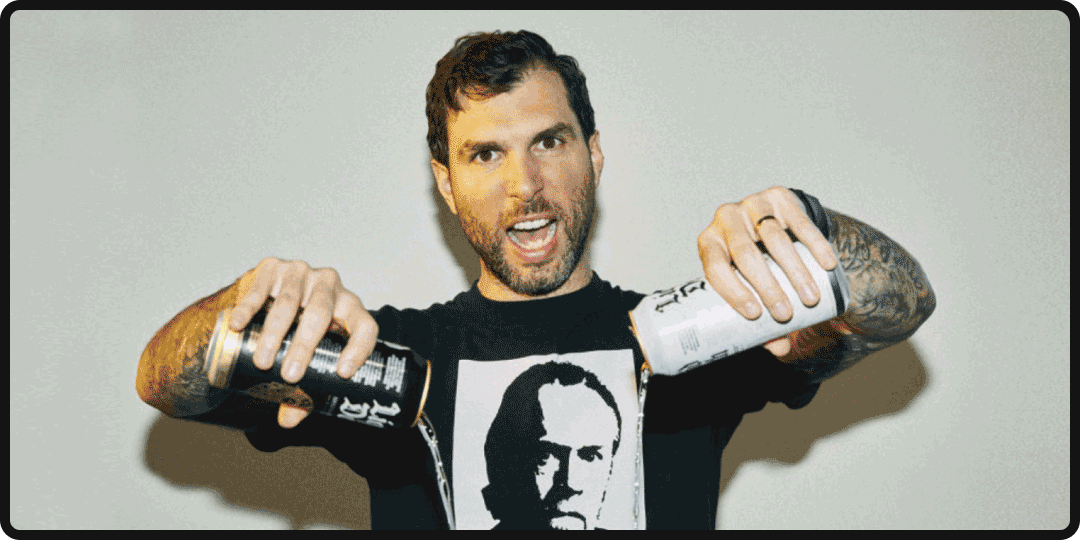
This brought the inspiration behind both the brand Liquid Death and its marketing strategy. The typical water brands (Aquafina, Fiji, Smartwater, you know the ones) all position themselves as pure and clean. Most bottled water companies follow the same recipe: blue, trust-inducing logos, mountains, or gently melting glaciers on their labels. This branding works to:
- Subconsciously address consumer fears that their tap water was unsafe to drink.
- Generate the belief that [insert brand here]’s water was the safest one that you could (or even should) drink.
Liquid Death flips this script. Cessario noted in an interview that, “there’s not really anything that makes this water incredibly different… it’s all just brand differences, and packaging differences, and that’s why people buy things.” Where most businesses that operate within the same industry aim to do essentially the same thing as their competitors are doing (with the braver brands adding but a slight edge), Liquid Death does not try to blend in; they aim to grab your attention, and retain a cult audience of loyal customers to the school of cool 🤘
Taking that “bottled cool” element into consideration, Liquid Death included other components to swim against the current; primarily sustainability and entertainment factors.
Liquid Death’s Focus on Sustainability & Marketing as Entertainment
Another thing that bottled water has a reputation for is being wasteful. Despite the rise of conservation efforts over the last decade, twisted plastic bottles continue to litter landfills; only a small percentage of them actually get recycled.
Liquid Death opts for aluminum cans for its products: a sustainable choice due to its infinite recyclability. Their Death to Plastic initiative raises these same concerns regarding plastic competitors.
Where a potential water bottle company brand fighting for relevance may lean on sustainability of their packaging choices, Liquid Death does not heavily push eco-consciousness to the forefront of their identity.
Why? Allocating their energy (and their dollars) to Liquid Death’s punk-rock, thrill-inducing branding forces customers to take notice of Liquid Death, and Liquid Death only. From tasing participants to tricking audiences into believing children and pregnant people were consuming alcoholic beverages, Liquid Death is not afraid of who they are.
Because of these and other bold strides illuminating the contrast of their brand with the traditional water bottle, Liquid Death cultivated a highly sought-after entertainment factor that pushed them front and center in consumer minds and against water competitors. Let’s take a look at some specific campaigns to give you an idea.
3 Incredible Liquid Death Marketing Campaigns
According to Liquid Death’s Vice President, Andy Pearson, “[they] don’t spend… money on media because [they’ve] decided to prioritize making entertainment instead of making marketing… [they] just make stuff that people genuinely want to see and interact with, and then [they] don’t have to pay money to force people to watch it.”
Here are a few of Liquid Death’s most off-the-rails marketing campaigns to give you a taste of what it means to rebel (and why they’re wildly successful).
1. Deadliest Stuff on Earth
Of all the campaigns in this list, this might be the one that you’ll recognize; after all, Deadliest Stuff on Earth started it all for Liquid Death. This campaign introduces Liquid Death both as an actual product and as a personality. Their team paired inspiration and hopeful orchestrations with shocking statistics and profanity; the video is narrated by a self-proclaimed “professional actor” guiding audiences through to the hysterically horrible twist at the end. Watch it here.
Why It Works
Introductions can be hard, and it’s even more difficult to break the ice when your audience’s attention spans have shortened over time (thanks, screens). That’s why this ad doesn’t give even the viewer a moment to think: quick cuts between actors, action shots, and stock footage retain the audience’s attention well.
There are also multiple storylines at play to pique interest: the actor and their ever-full can of water reach a full circle when the water’s purpose is revealed, while the information narrated shatters the public perception of what water can do when not sitting pretty in plastic bottles, all accompanied by stone-cold delivery on the actor’s part.
All of this makes Liquid Death “a brand that parents will hate, but kids might love… made from the deadliest stuff on Earth.”
2. Lip Embalm
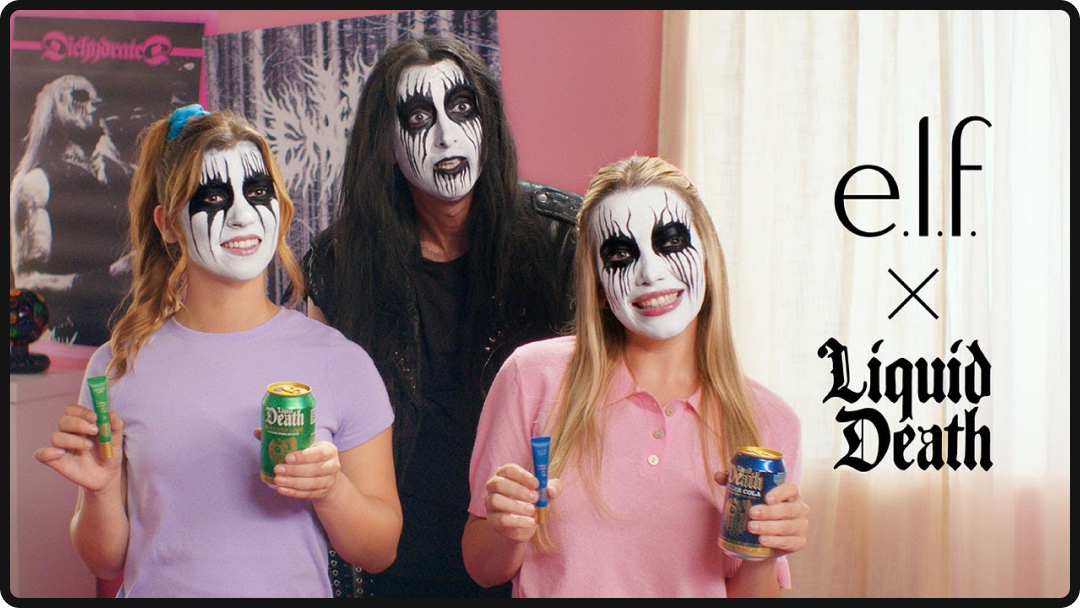
Liquid Death’s 2026 collaboration with e.l.f. Cosmetics takes the gimmick of contrast to an even greater magnitude. In a pink, feminine vignette, a teenage girl prepares for a date, a typical commercial scene for e.l.f., except for the fact that their faces are painted like the band members of 1970s hard rock band KISS.
The girl’s dad bursts through the door and starts parodying a cheesy advertisers jingle, sprinkled with dark humor and references. The script goes familiarly off-kilter at the end, delving cheekily into taboo topics.
Why It Works
It’s no secret that an unexpected collaboration leads to an equally unexpected ad campaign (Liquid Death has done this before with Martha Stewart and MeUndies).
One may see Liquid Death and assume its marketing is based in part on capitalizing on fragile masculinity, maybe to give someone a manly drink to seem tough in a drunk crowd. This collaboration with e.l.f. (which consisted of Liquid Death-flavored chapstick) challenges the gendered niche and uses an unconventional partnership to shock and tease new audiences.
In its parody of the very concept of creative advertising with a cheesy jingle and cartoonish mascots animating on screen, the campaign becomes increasingly self aware and camp. The dark twists become something comfortingly expected, making the audience buy into the subculture, all whilst being fully in on the joke.
3. Blind Taze Test
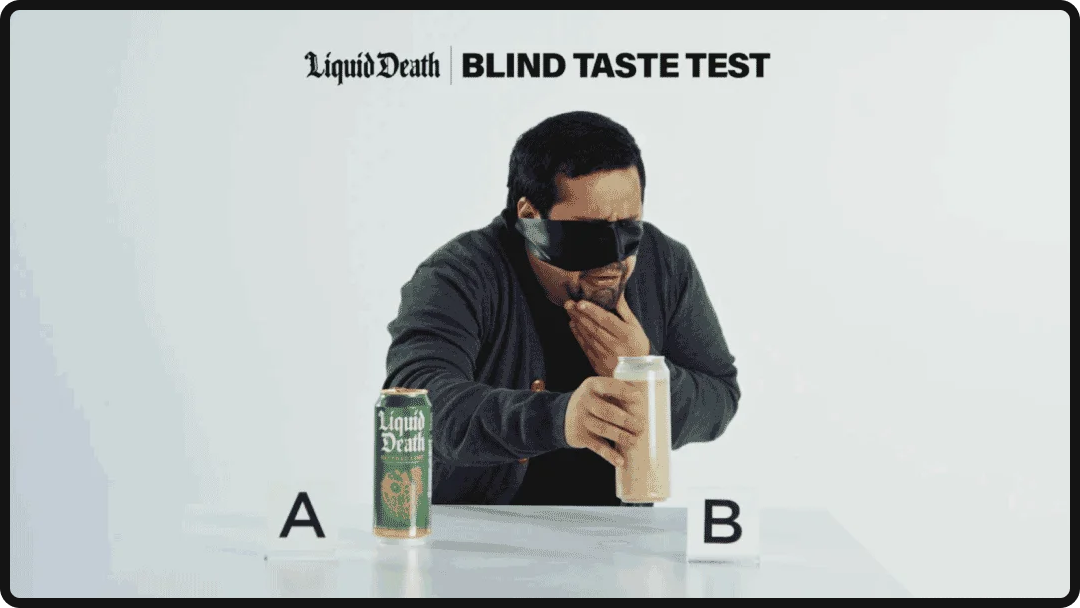
You read that right. Like every brand, Liquid Death has amassed both fans and haters. Instead of replying snidely to disgruntled tweets, Liquid Death brought these haters to their production studio and challenged them to a “taze test”.
What’s a taze test? Well, it’s exactly what it sounds like. Participants were hooked up to a taser and presented with different, unlabeled brands of water. If they could not identify the “worst tasting” water as Liquid Death, they’d receive a zap from the all-too-eager Liquid Death team.
Why It Works
Receiving hate comments is difficult for all brands, and responding to them can be tricky. No one wants to drive potential (or existing) customers away from their brand with a rude reply, but the desire to protect the brand image can sometimes overshadow that judgment.
Liquid Death took their hate comments as an opportunity to clear their name and convert their haters into customers through a shocking (pun intended) game show-esque format that was easy to watch and share.
Other Notes on Liquid Death’s Marketing Strategy
In the name of having a consistent (though outlandish) brand image, across Instagram, TikTok, and X, Liquid Death’s social media posts share the same edgy energy that can be found in their ad campaigns.
- Instagram: As a social platform, Instagram feels the most permanently visible, each post a perfectly placed brick within a company’s feed. Liquid Death’s Instagram presence cross-posts the high-engagement video ads that take over their TikTok, but also high quality CGI shots of their packaging and brand collaborations. This ensures that anyone who comes across their page gets a holistic representation of their brand.
- TikTok: The nuance of their TikTok presence comes from the way in which posts are digested on platform: within a never-ending scrolling page and social sharing. Since TikTok is all about short form video, this is where most of their video campaigns are posted, and where the first 3-second hook is the most important. And for them, their crazed concepts definitely attract attention.
- X: Perhaps the most ephemeral of the three, X is where Liquid Death has the freedom to engage wildly with their audience. Liquid Death reposts unhinged customer comments and lower-brow images and screenshots. This is a unique avenue that allows Liquid Death to react quickly to trends and continue to be culturally in tune.
While each platform calls for varying formats for optimized engagement, the throughline is the same deranged personality that people know and love them for.
All of these marketing elements make Liquid Death stand out in the best (or, if you’re boring, worst) way; while regularly canned water brands still follow the “traditional” and “industry standard,” Liquid Death pokes fun at everyone in their brand ecosystem: their fans, their haters, and even themselves (truly nobody is safe, and they like it that way).
Liquid Death’s approach hinges on the classic notion of marketing that you can always go bigger: the universal need for drinking water becomes more than a virtue touted by wellness experts and health nuts. It’s now also a behavior that can become clad with a fad: an absurd brand that equips anyone with a good chuckle.
What Is the Controversy With Liquid Death?
Amidst its commercial success and high production value across campaigns, Liquid Death faces some cultural controversies. Beyond its intense brand voice, a can of water that looks like beer normalizes drinking culture within society and potentially makes alcohol more appealing to kids. Providing a replica alternative to dangerous substances, even with good intention, can lead a brand to becoming part of the problem and not necessarily a solution.
In striving for virality and pushing boundaries so aggressively, it is not unusual that the brand takes the leap on partnerships with risky individuals.
In 2025, Liquid Death issued a public statement cutting ties and apologizing for collaborating with The Boys’, The Deep. The campaign that put the brand under scrutiny was not necessarily the problem; it was the fact that its figure was filmed burning plastic trash next to children.
Walking the line carefully between shock value and good taste, and acting promptly when mistakes are made, seems to be the key to keeping a trusting audience.
Who Is the Target Audience of Liquid Death?
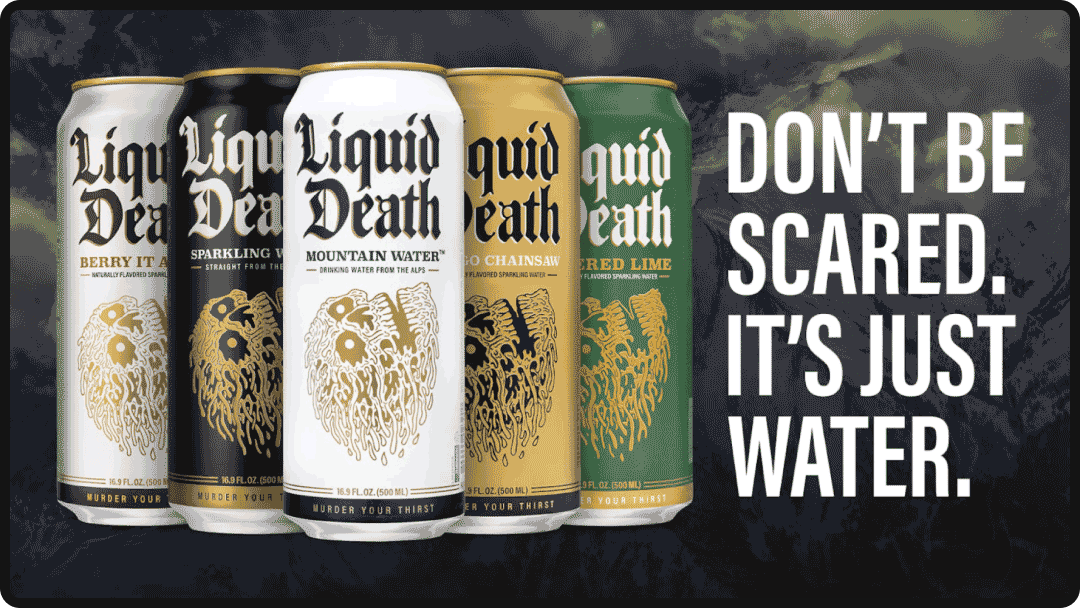
Obviously, Liquid Death’s bold marketing approach isn’t for everyone; their crude humor, profanity-ridden ads, and use of shock value would probably drive your great aunt Kathy away in a heartbeat. Liquid Death parades itself as an accessory to make one interesting.
So, who would buy such a thing? Consider the following:
- Sober Folks: Liquid Death’s packaging helps those avoiding booze appear like they’re holding something that is, helping them feel more at place in a crowd.
- Teens: For similar reasons that some sober folks might appreciate Liquid Death’s branding, teens love the concept too; it makes them cool (without repercussions). It’s an easy way to appear effortlessly interesting that they can purchase themselves, no questions asked (and we can’t deny that it usually looks pretty sick in an Instagram story).
- Heavy Metal or Rock Fans: Take one look at the can’s design, and it’s a no-brainer that this demographic falls under the target audience of Liquid Death (it’s also unsurprising since they were sort of the original inspiration for the product to begin with).
- Gag Gifters: For anyone who appreciates the thoughtfulness of the brand’s art direction, purchasing Liquid Death as a gift for themselves or others represents their aesthetic appreciation or taste in humor.
- Younger, Eco-Conscious Crowds: Liquid Death’s social marketing is geared towards age demographics with high media literacy, as well as an understanding of meme culture. Studies show that two-thirds of Millennials and Gen Z readily choose to buy sustainably, even if it costs them more. These groups also tend to be more averse to traditional wellness marketing.
Liquid Death Marketing Strategy: Final Thoughts
Since skyrocketing to fame through unorthodox marketing tactics, Liquid Death’s ads have popped up everywhere: from your phone screen to the 2025 Super Bowl itself. The brand itself has captured the hearts (and quenched the thirst) of customers across generations: Gen Z, Millennials, Gen X (shoutout cool Gen Xers), and we wouldn’t be surprised if Liquid Death even found a fan in the occasional punk-rock Boomer.
Now we wonder how Liquid Death will continue evolving their brand strategy in ever-changing landscapes, having leaned so hard into irreverence and shock value. Whatever it may look like, the path forward likely involves more surprising collaborations, expanding their product line, and navigating their planned 2026 IPO (a milestone that could fundamentally reshape the company’s trajectory).